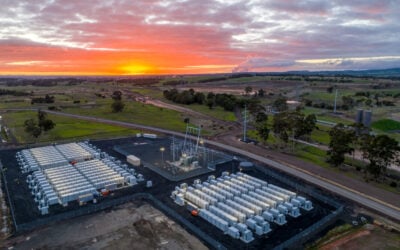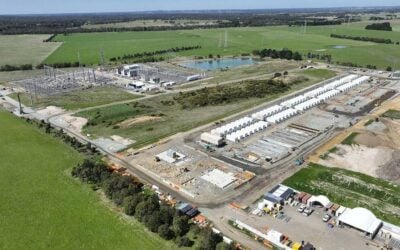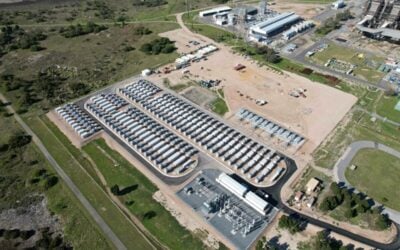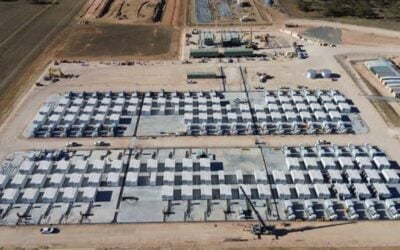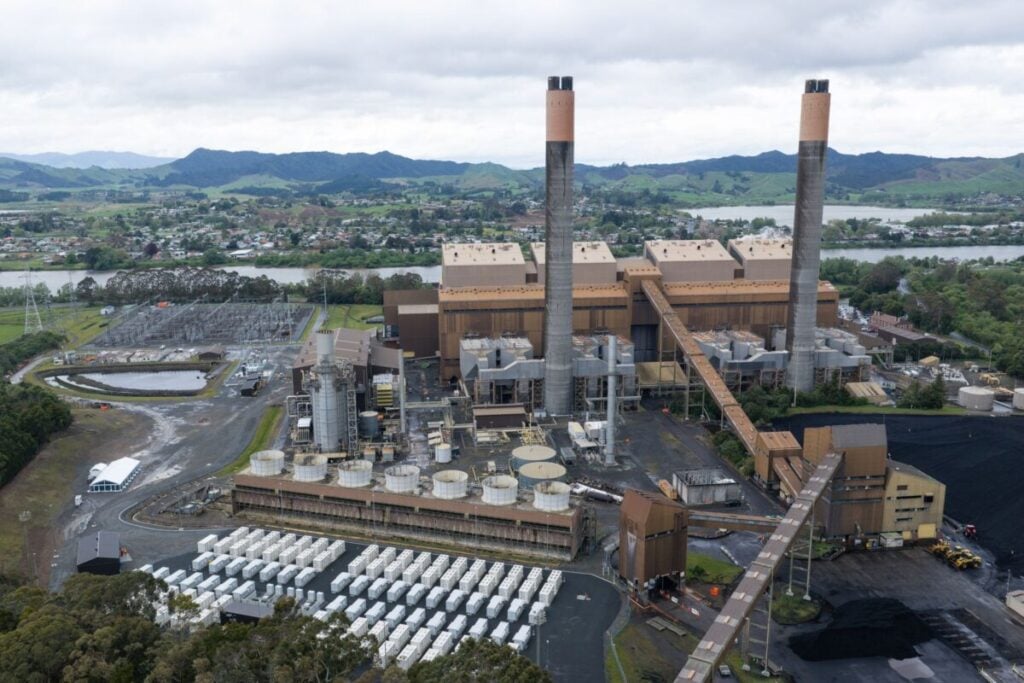
Genesis Energy has officially opened its first grid-scale battery energy storage system (BESS) at Huntly Power Station on New Zealand’s North Island.
The 100MW/200MWh BESS, which has a 2-hour duration, was opened on 15 October at the Huntly site in the Waikato region. Sized at 1,200MW, Huntly is New Zealand’s largest thermal power station and runs on gas and coal.
Genesis, a listed New Zealand electricity generator and retailer, said the system was delivered for around NZ$130 million (US$74 million), more than NZ$5 million below budget, claiming this makes it the “cheapest BESS built in New Zealand to date”.
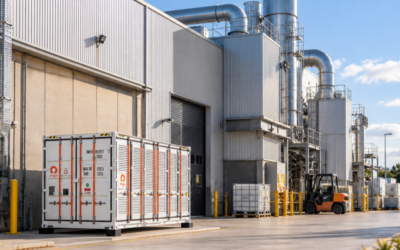
Saft, the French battery storage manufacturer owned by TotalEnergies, supplied the system’s 70 units after Genesis selected it in September 2024 to deliver a turnkey package of lithium iron phosphate (LFP) containers with power conversion and control systems. Northpower, a New Zealand electrical contractor, installed it.
Try Premium for just $1
- Full premium access for the first month at only $1
- Converts to an annual rate after 30 days unless cancelled
- Cancel anytime during the trial period
Premium Benefits
- Expert industry analysis and interviews
- Digital access to PV Tech Power journal
- Exclusive event discounts
Or get the full Premium subscription right away
Or continue reading this article for free
The BESS connects directly to the national grid via the Transpower substation at Huntly. Chief operating officer Tracey Hickman said the connection, and the site’s proximity to the high-demand centres of Hamilton, Auckland and Tauranga, made Huntly well suited to grid-scale battery storage.
Hickman said the BESS adds flexibility to Huntly’s role in Genesis’s portfolio and will support the electricity system during periods of high demand.
“The BESS can be turned on almost immediately, making it the fastest-starting asset at Huntly Power Station,” she said.
Genesis said in June 2025 that construction had started, describing the project as back-up for the national grid at times of peak demand, particularly on cold winter mornings and evenings, when stored electricity can be released.
The opening ceremony was attended by Genesis chief executive Malcolm Johns and Tukoroirangi Morgan, chair of Te Arataura, the executive body of Waikato-Tainui, the iwi (Māori tribal group) of the Waikato region, alongside Craig West, chief executive of Tainui Group Holdings, its commercial arm.
Genesis said the BESS forms part of its Gen35 strategy, under which Huntly’s role is evolving to provide back-up supply when generation from hydro, wind and solar PV falls short.
Hickman said battery storage complements the solar PV plants Genesis is developing, including one at Rangiriri, just north of Huntly.
A second BESS of the same size has been approved for Huntly, with construction due to begin in late 2026 and full operation due in 2028. That would bring the site’s combined BESS capacity to 200MW/400MWh.
It will reuse the land, the grid connection, and the shared plant from the first stage, with Saft again supplying the equipment.
Supply margins tighten as gas declines
The Huntly BESS comes online as New Zealand’s electricity system faces pressure from a decline in natural gas supply. Huntly, which marked its 40th anniversary last year, is described by Genesis as the cornerstone of its flexible generation portfolio.
Transpower, the state-owned company that owns and operates New Zealand’s national grid, warned in its draft 2026 Security of Supply Assessment that the national winter energy margin could fall below its lower security standard by 2031, with a 698GWh shortfall, even if committed projects are delivered on schedule.
Under a lower gas-supply scenario, Transpower said the breach would occur a year earlier, in 2030. It called for thermal fuel and flexible generation to be secured, including the three Rankine units at Huntly, and for consent-ready projects to be brought forward.
Huntly follows two other 100MW/200MWh BESS projects that began operating in New Zealand over the past 18 months. Meridian Energy, the majority state-owned generator and retailer, began commercial operation of its Ruakākā BESS near Whangārei in May 2025, also supplied by Saft.
Contact Energy, another New Zealand generator and retailer, switched on its 100MW/200MWh Glenbrook Ohurua Battery 1 at New Zealand Steel’s Glenbrook site in South Auckland in May 2026, using 56 Tesla Megapack 2XL units.