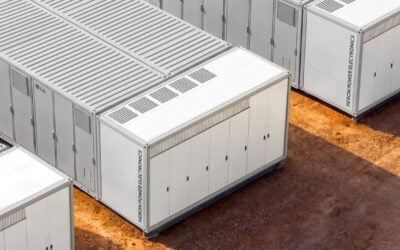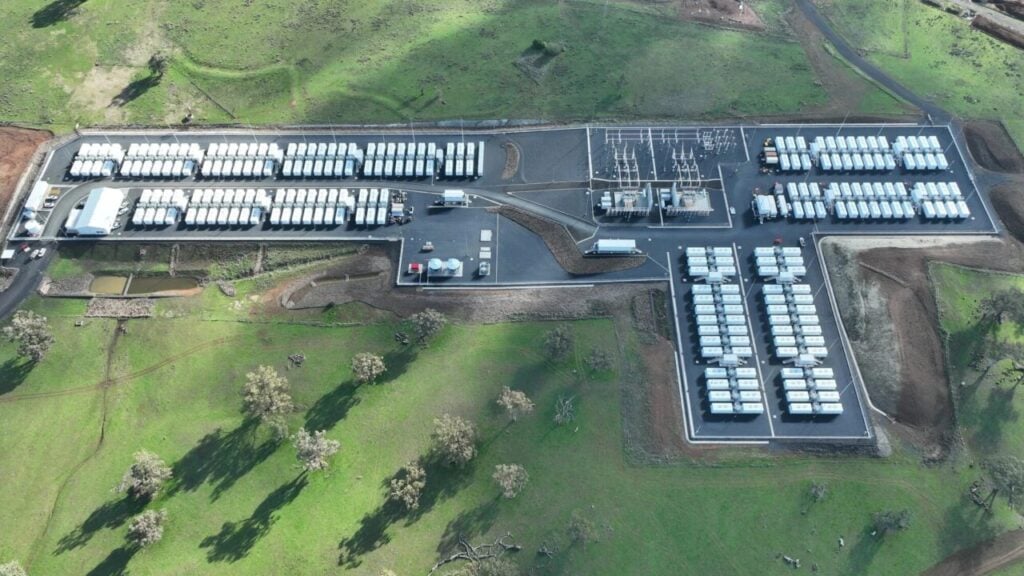
Tesla’s energy storage deployments rebounded in the second quarter of this year, but factors, including a decline in ASPs, had a significant impact on the company’s energy division’s gross margins.
The US electric vehicle (EV), battery energy storage system (BESS), AI and robotics company reported its Q2 2026 financial results and held an earnings call with analysts yesterday.
After a relatively quiet first quarter, in which it deployed 8.8GWh of Megapack utility-scale BESS and Powerwall residential systems, Tesla reported 13.5GWh of deployments in Q2. This was its second-highest quarterly figure to date, after Q4 2025’s 14.2GWh record.
Energy generation and storage revenue, almost all of which is thought to come from the storage side, was US$3.14 billion for the quarter, up 30% from US$2.4 billion in Q1 2025 and up 13% year-over-year from US$2.79 billion in Q2 2025.
Try Premium for just $1
- Full premium access for the first month at only $1
- Converts to an annual rate after 30 days unless cancelled
- Cancel anytime during the trial period
Premium Benefits
- Expert industry analysis and interviews
- Digital access to PV Tech Power journal
- Exclusive event discounts
Or get the full Premium subscription right away
Or continue reading this article for free
While the company was yet to file its SEC Form 10-Q with a detailed financial breakdown at the time of writing, chief financial officer (CFO) Vaibhav Taneja said in the earnings call that energy gross margins declined from 39.5% to 20.4%.
Noting that quarterly demand for energy storage is typically “lumpy,” Taneja attributed the decline to “several dynamics,” including a US$240 million warranty true-up “related to certain vendor cell issues for our legacy deployments.”
Additionally, the company recognised US$200 million in tariff benefits in Q1, which were not repeated. Meanwhile, the CFO said, as stated in previous guidance, the ASPs for industrial energy storage are “coming down amidst growing competition.”
Energy remains Tesla’s highest-margin business line. Automotive segment margins were 19.2% and its other division, services, reported a 14.1% margin for Q2. However, while the services division is broadly comparable in size to energy, with US$4.58 billion in revenue for the quarter, automotive is still by far Tesla’s biggest business, with US$20.5 billion in revenue in Q2.
“Long-term, we believe the energy business should normalise at a gross margin rate in the mid- to low 20% range,” Taneja said, adding that its order backlog is “robust” and Tesla is doing its “best to build based on both existing demand and future demand we expect from data centre growth and overall electrification of the economy.”
Production of Megapack 3 will begin soon from Tesla’s new ‘Megafactory’ in Texas, CEO Elon Musk said in prepared remarks on the call. Musk also said production has begun at Tesla’s lithium refinery and cathode refinery as the company scales up battery cell production.
US LFP production still at ‘early ramp’ phase
However, there was no detailed update on the start of production of lithium iron phosphate (LFP) cells for stationary BESS applications, which Tesla said during Q2 2025 results would begin before the end of last year.
With its BESS cells for US deployments largely sourced from third-party suppliers in China, Tesla had previously noted that its energy storage business saw an “outsized impact” from tariffs.
Since the start of this year, there have also been foreign entity of concern (FEOC) restrictions on the US investment tax credit (ITC) that mean projects using a portion of equipment or material assistance originating from Chinese FEOC companies are ineligible for the ITC. The cost of battery cells accounts for a high enough share of project Capex that, while companies can still do some business with Chinese players, using imported cells is effectively impossible.
US BESS project developers and system integrators are now seeking to source cells elsewhere, ideally from facilities in the US that are also domestic content compliant and can therefore earn an extra 10% bonus adder to the ITC.
Tesla had said in February’s results release for Q4 and the full-year 2025 that 7GWh of LFP production capacity at the Nevada Gigafactory was in an early ramp phase, and according to its investor deck this week, that remains the case.
In March, the company was revealed to have signed a US$4.3 billion LFP supply agreement with LG Energy Solution (LG ES) for US-made cells, to be used in the Megapack 3 units coming off Tesla’s Texas Megafactory lines.
Solar Media Market Research analyst Charlotte Gisbourne told Energy-Storage.news that Tesla is still seeing strong energy storage shipment growth and appears will be trying to expand its presence in the growing Middle East and Africa (MEA) region as well as India.
Gisbourne also noted that despite the Texas Megafactory entering the commissioning stage and the start of Megapack 3 production in 2026, “it seems mass production may be pushed back slightly.
Gisbourne’s team at Solar Media Market Research has ranked Tesla as AAA-rated in its Battery StorageTech Bankability Ratings Report, explained in this Guest Blog from January by her colleague Joe Hennessy.
Tesla was also ranked top for market share among energy storage system integrators globally and in North America in 2025 by Wood Mackenzie Power & Renewables earlier this month, although it did not make Wood Mackenzie’s top three in Europe, Asia-Pacific, the Middle East or Latin America.
Separate rankings of system integrators by Benchmark Mineral Intelligence, meanwhile, put Tesla second globally with a 10% market share in 2025 after BYD (13%); the Chinese manufacturer has also become Tesla’s biggest global rival in the EV space.
While discussion of Musk’s business interests have been dominated by the SpaceX IPO in recent weeks, in a Tesla earnings call that largely focused on automotive sales, full self-driving (FSD), robotaxis and the humanoid robot Musk believes will be “our biggest product ever,” energy storage and solar were mentioned only briefly.
In response to a question from Barclays Bank researcher Dan Levy about expected demand for energy storage and the applications it will serve, including addressing power quality issues at data centres, Musk said that “the solar-battery combination will be how the vast majority of energy in the world is produced in the future.”
Power constraints are a “major issue” for AI, Musk said, especially for AI training runs where load can swing very sharply within milliseconds, explaining that SpaceX has bought “many Megapacks for the data centres.”