Recent moves from the US federal government could prove more damaging to US renewable energy deployment than foreign entity of concern (FEOC) compliance requirements, according to legal and industry experts.
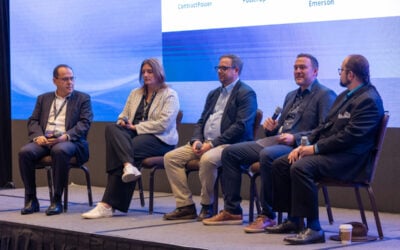
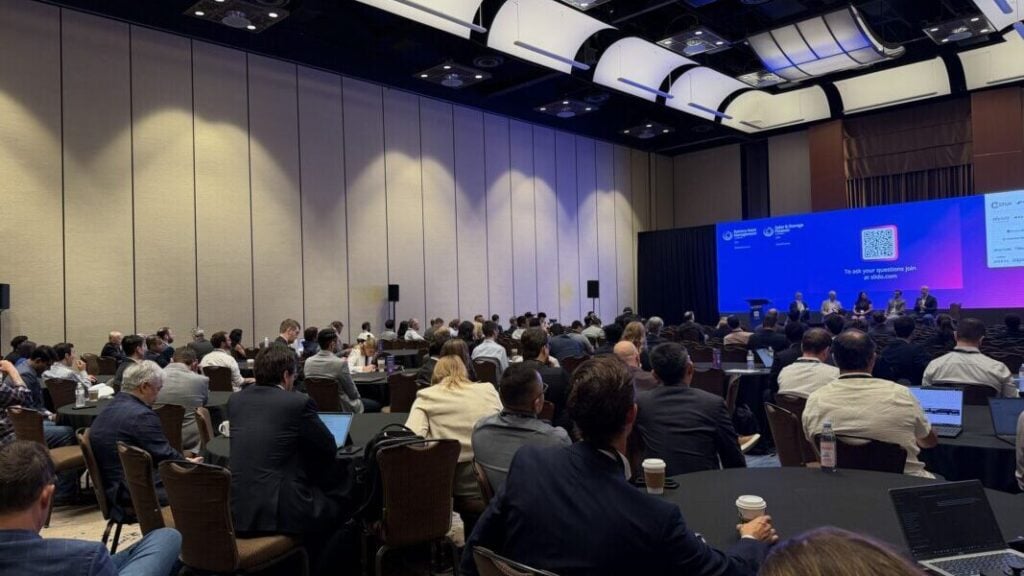
The remarks were made during the 2026 US Battery Asset Management Summit in Garden Grove, California, at a panel moderated by Bart White, global head of structured finance at Santander Corporate & Investment Banking, featuring Sara Kayal, VP of engineering and procurement at developer Ampyr Energy; Keith Martin, co-head of projects, US for law firm Norton Rose Fullbright; Zamiyad Dar, senior director of energy storage at developer Pivot Energy; and Dan Shreve VP of market intelligence at market intelligence and quality assurance provider Intertek CEA.
Titled Navigating a Post-Safe-Harbour World: FEOC’s Compliance Challenge, the panelists highlighted the Federal Communications Commission’s (FCC’s) ban on foreign-produced inverters and US President’s Donald Trump’s executive order banning specific power system equipment, including grid-connected inverters, transformers and battery energy storage systems (BESS).
Martin warned that whilst the Trump administration has attempted to constrain renewables through various policy measures, the FCC ban on inverters may have found the mechanism to significantly slow deployment.
Try Premium for just $1
- Full premium access for the first month at only $1
- Converts to an annual rate after 30 days unless cancelled
- Cancel anytime during the trial period
Premium Benefits
- Expert industry analysis and interviews
- Digital access to PV Tech Power journal
- Exclusive event discounts
Or get the full Premium subscription right away
Or continue reading this article for free
“I think the Trump administration has been trying to squash renewables. Ironically, the pace has sped up. If you place a deadline on when you have to qualify for tax credits, people work a lot faster,” Martin said.
He continued, “I think the one thing that they may have found to kill a lot of this is the FCC ban on foreign-produced inverters. Those affect batteries and solar.”
The concern centres on a directive from the Department of War (DoW) instructing the FCC that the ban covers wired inverters connecting via Ethernet. “Almost every inverter today has an internet port, and so everything is potentially covered by the ban,” Martin explained.
Shreve confirmed the severity of the situation, noting his team has been attempting to contact the FCC repeatedly without response. Martin acknowledged this as “the number one issue” facing the industry.
Uncertainty over equipment qualifications
The FCC ban, announced on 28 July, initially appeared manageable to many developers who believed existing inverter models would remain acceptable. However, subsequent guidance has created uncertainty around which equipment qualifies for exemptions.
Adding to the complexity is confusion over whether inverters previously certified under FCC Rule 15—a supplier declaration of conformity that doesn’t require testing—would satisfy DoW and Department of Homeland Security (DHS) requirements.
“If that’s the case, then that’s going to take a substantial amount of time, because doing that type of FCC testing is rigorous and requires third-party certifications,” Shreve explained.
Martin noted that his firm has submitted numerous questions to the FCC, but the agency “has just clammed up” since 20 August.
FEOC compliance remains critical
FEOC compliance also remains fundamental to project economics. Non-compliance eliminates the entire 30% investment tax credit (ITC) base rate, not just domestic content adders.
“A US battery without the support of Section 48 ITC is not going to be economically viable, even with the tariffs that are inbound for Chinese battery blocks,” Shreve said.
However, Martin suggested the industry has largely come to grips with FEOC requirements. “Those of us who carry around the FEOC statute feel like we largely understand it,” he said, though the tax insurance market has been slower to adapt.
Procurement transformed, economics pressured
The regulatory environment has fundamentally altered procurement approaches. Kayal said traceability has become a bankability issue requiring much earlier equipment procurement decisions.
Dar explained that procurement has evolved from a cost exercise into “a multi-year, multi-layer risk mitigation strategy” focused on compliance documentation and supplier certifications.
The shift has significantly affected project economics. Dar noted that whilst storage ITC rates weren’t reduced, the 30% credit now applies to substantially more expensive batteries—rising from US$100-US$120-per-kWh to US$180-US$200.
“A lot of projects that were just barely clearing the threshold IRR have dipped below it because their capex numbers have gone up,” Dar said. For Pivot Energy, the solution has been abandoning projects that no longer meet return thresholds or reducing battery duration from five hours to three hours to restore viability.
Beyond compliance, the shift away from established Chinese suppliers has introduced operational risks with unproven equipment. “ITC is a fraction of the revenue, but you also earn revenue by performing,” Dar noted. “You need to select equipment that is not just compliant but also reliable.”