
The transition of battery energy storage systems (BESS) from development to operations remains fraught with technical gaps and communication breakdowns.
These issues can delay revenue generation for months after commercial operation dates (COD), according to senior executives from AES Corporation and RWE.
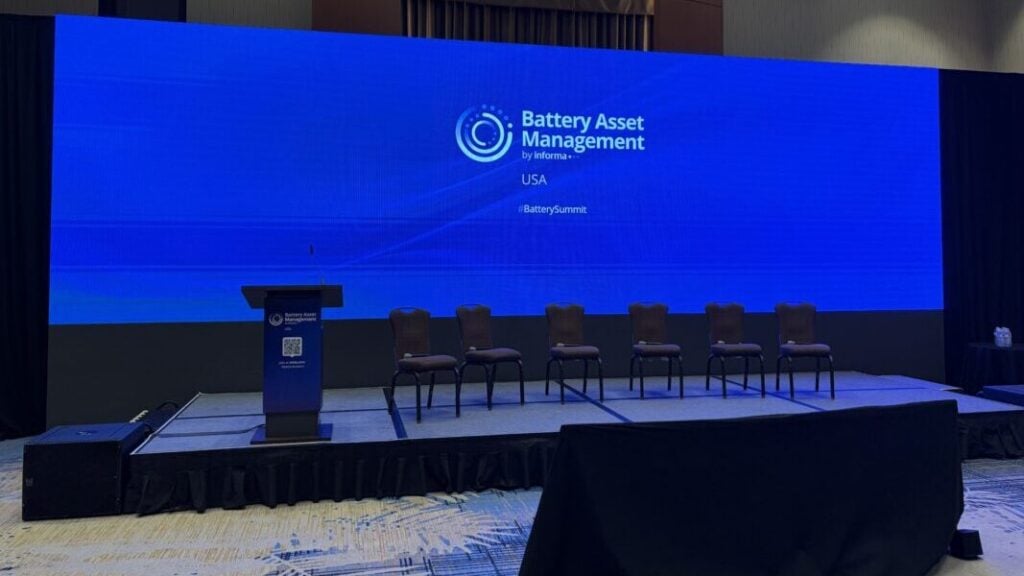
This was explained during a panel at the 2026 US Battery Asset Management Summit in Garden Grove, California, in a discussion between Rohit Patil, senior director of design engineering at developer New Leaf Energy; Christian Lopez, senior director engineering: performance, commissioning & SCADA at power company AES Corporation; and Grayson Zwingelberg, senior manager, asset management, region south at energy firm RWE.
COD doesn’t mean revenue-ready
One of the most significant misconceptions mentioned by the panelists is that reaching COD means a project is fully operational and generating revenue.
Try Premium for just $1
- Full premium access for the first month at only $1
- Converts to an annual rate after 30 days unless cancelled
- Cancel anytime during the trial period
Premium Benefits
- Expert industry analysis and interviews
- Digital access to PV Tech Power journal
- Exclusive event discounts
Or get the full Premium subscription right away
Or continue reading this article for free
“COD is not the only important date. Everyone thinks the next day we’re making money—that’s not what’s happening in reality,” Zwingelberg said. “The EPC could demobilise. There’s still layers of commissioning. There’s a long time between EPC demobilisation and actually making revenue.”
Lopez agreed, noting that AES has implemented internal milestones between COD and what the company calls “execution complete” to address this gap. “Even though the asset might go to COD tomorrow, my team doesn’t walk away from it because we understand that COD might be mainly a tax equity type of finance metric, but not really that the asset is ready for full operation.”
The period immediately following COD is particularly challenging due to equipment failures. “The first couple of months of commissioning, there’s a lot of equipment failures, which could potentially lead to months of revenue delay,” Zwingelberg said.
Lopez emphasised that organisations need to set realistic expectations for first-year performance. “There has to be an understanding that for the first 12 months of operation, the equipment availability factor is going to trend upwards, starting at 88-90%, all the way through 95-98%.”
Technical gaps emerge from siloed processes
Panelists also identified systemic failures in communication between development, engineering, commissioning, and operations teams as the root cause of many handover problems.
“I don’t think there’s a major single technical gap. I think what we’re talking about is a systemic failure of having a standardised process where you can walk through the project lifecycle, especially between commissioning and handing off to operations,” Lopez said.
Critical technical areas that frequently cause problems include metering validation, protection and controls, power system modelling, and grid compliance. “Metering has become one of the major obstacles in our organisation because we didn’t have a metering standard,” Lopez explained.
Zwingelberg highlighted the challenge of bringing asset management teams into projects late in the development cycle. “Asset management gets involved at the end of the project. We’re not always the most technical team. It just went through various layers of engineering and technical expertise, and now asset management has to manage different priorities because accounting is trying to depreciate the asset as soon as possible, tax equity is trying to close the deal. There’s a lot of competing interests.”
Operations teams need earlier involvement
The panel strongly advocated for bringing operations and asset management teams into projects much earlier in the development cycle.
“It’s really critical that asset management operations are part of the process from the very beginning. They should be aware of what the requirements are going to be during the design stages, especially around 60% design, and definitely during the commissioning phase,” Lopez said.
He cited an example where early involvement could have prevented problems: AES designed California’s first DC-coupled BESS project with a solar facility, but the offtaker wanted specific reporting for solar only. “If the operations team had been at the table at the time of reviewing the technical requirements of the PPA, they would have said something.”
To bridge this gap, AES now requires O&M technicians to participate from the beginning of commissioning. “Especially when we are trying a new cooling system for batteries or trying a new OEM, it’s really important that O&M be part of the commissioning process so they can get familiarised with troubleshooting efforts, the new technology, the vendors, the contacts,” Lopez said.
In-house expertise critical for managing delays
When asked how to handle OEM commissioning delays that threaten COD deadlines, Lopez emphasised the importance of building internal technical capabilities.
“At some point, even though you rely a lot on EPCs, you also need to build your internal knowledge of the technology. We do have a very strong commissioning battery integration team in-house that is there to support the EPC, and we are boots on the ground from day one,” he said.
Zwingelberg noted that BESS equipment delays present unique risks. “The BESS is going to be under-supplied equipment. That’s not risk you can pass to the EPC. When it comes to the actual BESS skid delays, that goes to procurement and having the right partners. Make sure you have a Tier-1 supplier because those are the ones that have the bankability, the manufacturing throughput to meet deadlines.”
He also warned that equipment failures during commissioning are inevitable. “There’s always failures. You’ve got stack failures, you’ve got chiller failures delaying commissioning. Those are issues that you need to plan for because they will happen.”
AES is now deploying artificial intelligence to improve commissioning visibility. Lopez is leading development of an “AI Commissioning Agent” that will track meetings and create dashboards for leadership and project teams. “Having a centralised dashboard that can give you information on the day—what’s happening on Project X, we have 30MW of test energy, we are commissioning feeder three—so that you can make better decisions on your commissioning programme is one of the priorities we have,” he said.
