LFP is the de facto choice for the German BESS market today with sodium-ion still far from bankable, but that doesn’t mean choosing a supplier is necessarily straightforward.
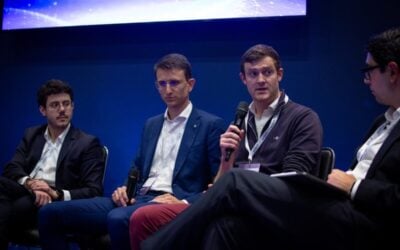
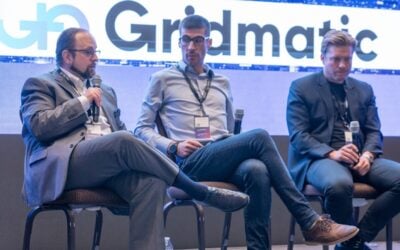
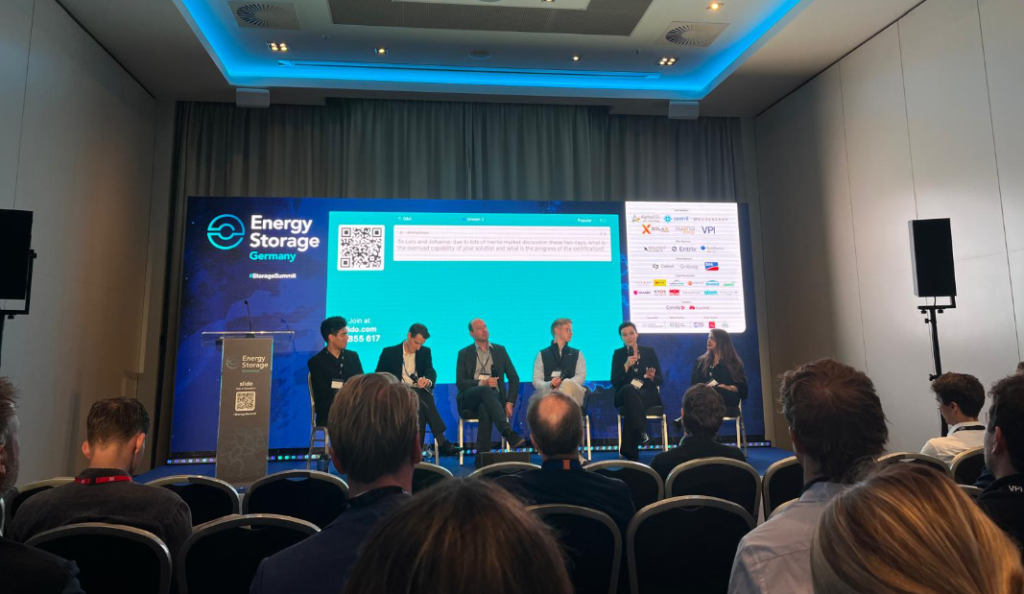
Those were some key takeaways from the ‘Technology Choices in Germany’ panel discussion at the Energy Storage Summit Germany 2026 in Berlin, which concludes today (16 September).
What battery chemistry?
Moderator Benjamin Silcox, senior manager energy & infrastructure for consultancy Teneo, asked panellists whether any of them were considering anything other than lithium iron phosphate (LFP) battery cells for battery energy storage systems (BESS) in Europe.
“For Europe we believe LFP is the technology for the coming years,” responded Johanna Bonilla, business development manager Europe for Jinko ESS Europe, part of the solar PV group Jinko.
Try Premium for just $1
- Full premium access for the first month at only $1
- Converts to an annual rate after 30 days unless cancelled
- Cancel anytime during the trial period
Premium Benefits
- Expert industry analysis and interviews
- Digital access to PV Tech Power journal
- Exclusive event discounts
Or get the full Premium subscription right away
Or continue reading this article for free
“There’s sodium-ion, but is it bankable, do developers want to buy it?” added Lars Stephan, director of policy & advocacy for system integrator Fluence.
Sodium-ion was also commented on by Fabian Herberg, project CEO BESS Germany for CIP Terra Technologies, the EPC arm for investor Copenhagen Infrastructure Partners (CIP).
Herberg: “Sodium-ion is still very much on the fringe. We and our investors are conservative by nature, we see no need yet to deviate from LFP.”
Maximilian Hüls, chief of staff for developer-operator 8Energies, said: “We are less risk-averse (than CIP) but even we are not looking at sodium-ion yet, it’s not yet bankable as we see it.”
Other technology choices
If the battery choice is obvious, Silcox asked, which technology choices are not? Herbergsaid power conversion systems (PCS) were one example, while choosing BESS is relatively straightforward.
However, Mandy Schipke, CEO of analytics firm Novum Engineering, gave an alternative viewpoint to that.
“Choosing a BESS actually is rocket science in some ways. There is 15-30% deviation in performance. How good are they at determining SoC? If you lose accuracy of 1% each day, the BMS might only realise after 30 days. No one is asking about this topic,” she said.
“When it comes to balancing in the BESS, the BESS often says it is full or empty based on the most full/empty cell. Balancing mechanisms in all products are quite weak. Sometimes it needs 30-60 hours to balance a 1% difference.”
Lars Stephan, meanwhile, said that non-technical risk is increasingly something the industry needs to think about, pointing out the EU ban on Chinese inverters for EU-funded solar and BESS projects, a move some think will be extended to all projects eventually.
Inertia market implications for procurement
Inertia and grid-forming services are opening up as a revenue opportunity for BESS in Germany, but what does that mean for procurement?
“It comes into discussion when choosing suppliers,” said Herberg. “No one is certified yet so no contracts are closed yet. But it’s an interesting market, one of a few bright spots in the current situation of squeezed battery business plans. And with no additional cost it’s an easy choice.”
Hüls meanwhile said that 8Energies has not considered inertia in the business case for its current projects (note that the firm is mainly active at the smaller-scale distribution-level, while CIP primarily builds gigawatt-hour projects).
Bonilla and Stephan both said they can provide grid-forming solutions but, as everyone else, they are waiting on clarity regarding the certifications.
Full wrap / split scope
Schipke said she currently sees a ‘Wild West’ mentality in the German market, where everyone thinks they can do BESS because they’ve done solar.
Hüls said his company’s relatively recent entry to the market meant it was being cautious and only using full wrap EPC solutions rather than trying to contract project parts separately, so-called ‘multi-contracting’ or ‘split scope’.
“We saw a 10% saving on the alternative route, but that just was not worth it. So we chose just to focus on development and financing,” he said.
Herberg said that CIP’s scale means that margin is much more significant, so it does some level of split scope.
“It is also a question of what suppliers are willing to do. There are only a few full EPC turnkey providers for the size of project we do,” he said.
Stephan then pointed out that Fluence is delivering a 1GW/4GWh BESS in Germany for power firm LEAG under a full EPC contract.