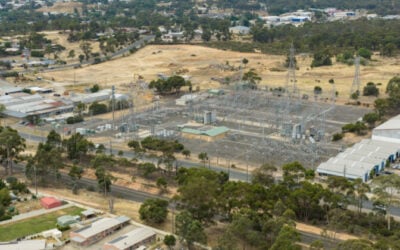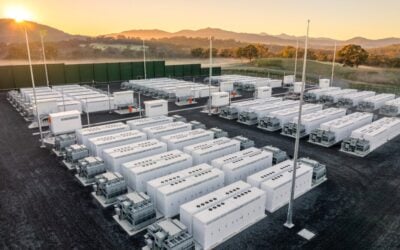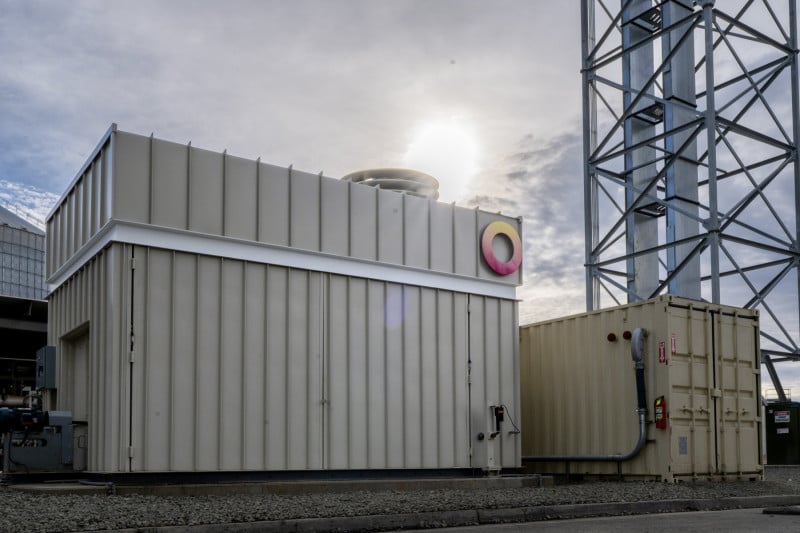
Rondo Energy and Rio Tinto have started engineering and design work on a 360MWh thermal energy storage (TES) project at an alumina refinery in Queensland, Australia.
If it proceeds, the Rondo Heat Battery would be built at Rio Tinto’s Yarwun alumina refinery near Gladstone. It is sized at 360MWh, with 78MW of electrical charging capacity and 30MW of thermal discharge, giving 12 hours of continuous heat output at full discharge.
The companies described it as Australia’s largest TES project, while the Australian Renewable Energy Agency (ARENA), the federal agency that funds renewable energy technology, called it the country’s largest demonstration of industrial heat electrification.
Rondo Energy is a California-based company that stores electricity as high-temperature heat and supplies heat and power to heavy industry. Rio Tinto is a global mining and metals group, and Yarwun produces alumina, the raw material smelted to make aluminium.
Try Premium for just $1
- Full premium access for the first month at only $1
- Converts to an annual rate after 30 days unless cancelled
- Cancel anytime during the trial period
Premium Benefits
- Expert industry analysis and interviews
- Digital access to PV Tech Power journal
- Exclusive event discounts
Or get the full Premium subscription right away
Or continue reading this article for free
ARENA’s funding will be provided in stages, starting with AU$3.6 million (US$2.5 million) for the front-end engineering and design (FEED) study, which works out the project’s technical design and costs. After a successful study, ARENA will provide up to AU$38 million for deployment.
ARENA has also approved up to AU$33.3 million in conditional contingency support. It said this would only be made available in defined circumstances to manage specific project risks, including cost overruns and electricity costs.
The companies said the project would be one of the first large-scale demonstrations of TES for industrial process heat globally, and a world first for the alumina industry.
Rio Tinto Pacific Operations managing director Armando Torres said: “Reducing emissions from alumina refining is complex, particularly when it comes to generating the high-pressure steam needed for our operations.”
“This study will help us determine whether thermal energy storage can provide a technically and economically viable alternative to fossil fuels for part of Yarwun’s steam requirements,” he added.
Dr Kira Rundel, Rondo’s head of Australia, said: “Heat batteries allow manufacturers to use low-cost electricity to produce the reliable, round-the-clock heat their operations need.”
ARENA CEO Darren Miller said technologies such as TES need to be tested in large-scale operating environments before they can be adopted more broadly across Australian industry.
“Industrial heat remains one of the toughest decarbonisation challenges facing heavy industries,” he said.
Rondo said its systems have delivered heat and power at scale since 2023, with operational facilities serving fuels and cement customers in the US and Asia. Its next unit, a 100MWh system for a chemical plant in Europe, is under construction.
The Yarwun project joins other industrial TES projects in Australia. In May 2026, MGA Thermal and industrial solutions company Knode began a FEED study for a 195MWh electro-thermal storage system at chemicals company Tronox’s Kwinana facility in Western Australia, with AU$2.95 million from ARENA.
MGA Thermal stores energy as latent heat in alloy blocks, and in August 2026 Toshiba Group company EtaPRO deployed monitoring, digital twin and predictive analytics technology at MGA Thermal’s 5MWh demonstration plant in Tomago, New South Wales.
In the US, Antora Energy announced in October 2026 a 5.8GWh multi-day TES project to supply heat directly to Pratt Energy’s biorefinery in Pratt, Kansas. Antora stores energy as heat in solid carbon blocks at up to 2,400°C.
How thermal energy storage supplies industrial heat
Alumina refining uses large volumes of continuous, high-temperature steam, which has traditionally been produced by burning fossil fuels. Rondo’s system aims to produce that steam from electricity instead.
The Rondo Heat Battery charges using low-cost midday electricity, which heats refractory brick, the heat-resistant material used to line furnaces and kilns. The stored heat is then released continuously, typically as steam fed directly into a facility’s existing steam network.
Rondo said Australia regularly has 4 to 6 hours of surplus solar-generated electricity in the middle of the day, while industrial facilities need heat around the clock. Its systems are designed to turn those hours of charging into 24-hour heat output, delivered as steam or hot air at up to 1,000°C.
Because the system connects to the existing steam network, the refinery’s processes would run as before, with only the energy source for the heat changing. The FEED study will assess the technical and economic viability of integrating the technology into refinery operations.
The International Energy Agency (IEA) has identified TES as the link between low-cost variable renewable energy and steady industrial heat demand. It noted TES can be built from cheap materials such as sand, cement and bricks, and puts costs at about US$15 to US$20/kWh, well below chemical battery storage.
The project is funded under ARENA’s Industrial Transformation Stream, which supports technologies that can reduce emissions from Australia’s industrial sector. Round 3 of the stream is open for applications.
Never miss an Australian energy storage story. Sign up for our Australia newsletter and get the latest project announcements, policy updates and market analysis delivered directly to you.