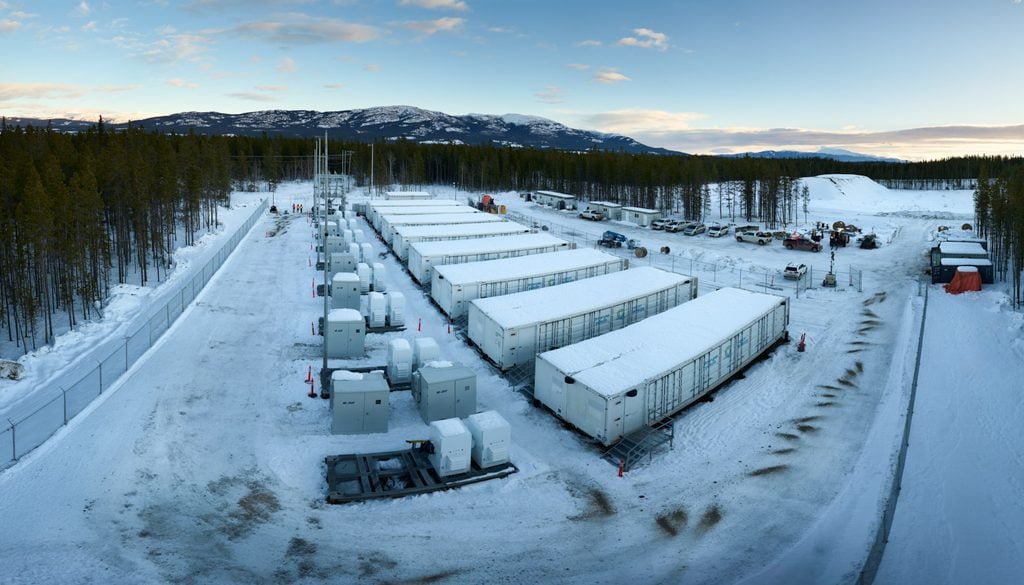
A grid-scale battery energy storage system (BESS) project planned for the Yukon Territory of northern Canada has parted ways with its contractor, Canadian battery storage engineering and construction company SunGrid.
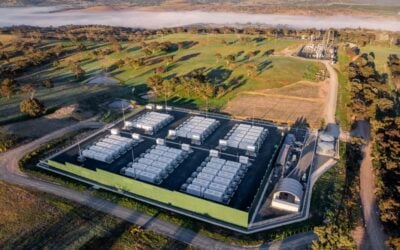
Announced on 23 November by Ted Laking, Yukon’s Minister of Energy, Mines, and Resources, local utility Yukon Energy has “terminated their contract with the primary contractor” for the 7MW/40MWh BESS planned for Whitehorse, near the Alaska Highway.
According to Yukon Energy, the BESS is built on Kwanlin Dün First Nation Settlement Land and within the shared Traditional Territories of the Kwanlin Dün First Nation and Ta’an Kwäch’än Council.
Yukon Energy also claimed that businesses owned by the Kwanlin Dün First Nation and Ta’an Kwäch’än Council have played a significant role in developing the BESS, including through investment, procurement, and contracting opportunities.
Try Premium for just $1
- Full premium access for the first month at only $1
- Converts to an annual rate after 30 days unless cancelled
- Cancel anytime during the trial period
Premium Benefits
- Expert industry analysis and interviews
- Digital access to PV Tech Power journal
- Exclusive event discounts
Or get the full Premium subscription right away
Or continue reading this article for free
Yukon Energy signed a 25-year lease with Da Dan Developments—a subsidiary of the Kwanlin Dün First Nation’s development corporation, Chu Níikwän Development Corporation—for the land needed for the system. Ta’an Kwäch’än Council-owned businesses carried out site preparation, while Kwanlin Dün First Nation-owned businesses helped build the access road.
In 2021, Energy-Storage.news reported that the project would be the largest grid-connected battery in northern Canada.
Following the termination of its contract with SunGrid, Yukon Energy stated that it will assume the role of prime contractor to complete the project.
Yukon Energy said the decision follows SunGrid’s failure to achieve substantial completion of the project within the timeframe set out in its contract. After “carefully assessing the available options, Yukon Energy has exercised its contractual rights and is moving ahead with a new approach to complete the project in 2027.”
Under the new approach, Yukon Energy will act as prime contractor, working directly with specialised subcontractors and procuring the equipment needed to complete the project. Hatch, a global engineering firm, will continue supporting the project with project management services and technical expertise to help coordinate and oversee the remaining work.
The utility said that Hatch brings valuable continuity, having contributed to the project’s original design and engineering. The company also has experience supporting BESS projects elsewhere in Canada.
The remaining project work includes resolving outstanding deficiencies, integrating equipment and systems, and completing the testing and commissioning required before the facility can begin operating. Yukon Energy will also conduct an independent project review and expects to publish its findings once the review is complete in 2027.
Yukon Energy claimed that the project remains on track to be completed within its CA$35 million (US$25 million) budget, pending confirmation of outstanding equipment and subcontractor pricing.
Further, the utility stated that terminating the contract does not mean Yukon Energy is initiating legal proceedings against SunGrid. However, Yukon Energy will continue to pursue damages and other remedies available under the contract.
Yukon listed a current project budget of CA$35 million, with SunGrid’s contract value at CA$25.7 million. Additionally, in 2019, the Government of Canada committed CA$16.5 million to the project through the Green Infrastructure Stream of the Investing in Canada Infrastructure Plan. To date, Yukon Energy said it has received CA$15 million in contributions. The remaining 10% (CA$1.65 million) is withheld until project completion.
SunGrid or TruGrid?
ESN reached out to SunGrid for comment but has not received word prior to publication. Currently, the company’s website directs to an email address for inquiries.
The company’s current status is unclear. In 2024, Hull Street Energy launched engineering, procurement, and construction (EPC) firm TruGrid. In 2025, TruGrid acquired SunGrid.
ESN contacted TruGrid for further information. A legal representative from the company, who notably seemed unsure why this writer would ask about a project pertaining to SunGrid, told ESN that it had no information about the Whitehorse project, stating, “That’s SunGrid.”
Verifying that TruGrid had acquired SunGrid, the representative stated that ESN would need to email SunGrid’s legal department. There is no email listed for SunGrid’s legal department, which the representative also confirmed.
SunGrid’s website leads to a landing page that offers only a general contact email. A phone number can be found for SunGrid, but the options listed when calling, including for the legal department, result in a series of full-mailbox messages.
Currently, Josh Richardson is listed as CEO for TruGrid on the company’s website. SunGrid’s LinkedIn page is unavailable; however, a check of digital archive, the Wayback Machine, shows it was at least active in late October 2026.
The LinkedIn profile of the previous CEO, Joseph “Jody” Snodgrass, lists him as CEO of TruGrid (formerly SunGrid) since 2023. The legal representative from TruGrid confirmed Richardson now holds the role but stated only that Snodgrass is “no longer” with the company, without offering further clarification.
ESN asked for further information and a statement regarding SunGrid, or indeed, TruGrid’s involvement with the Yukon Energy project but did not receive word prior to publication. ESN was also told that SunGrid’s legal representative was “on vacation.” This story will be updated if any further information is shared.