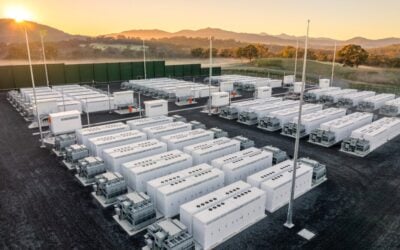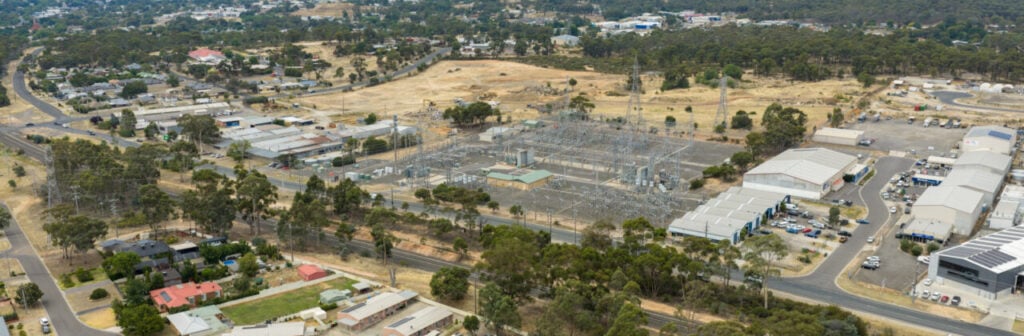
Australian renewable energy generator and retailer (‘gentailer’) Pacific Blue has referred an 855MWh battery energy storage system (BESS) in Victoria to the federal government under Australia’s EPBC Act.
The Bendigo BESS would have a power output of up to 201MW, giving a duration of just over 4 hours, and would be built in Golden Square, Bendigo, in the City of Greater Bendigo local government area.
Pacific Hydro Australia Developments, part of Pacific Blue (formerly Pacific Hydro Australia), is proposing the project.
The BESS would connect to the adjacent Bendigo Terminal Station, operated by Victorian transmission network owner AusNet, through an underground 220kV cable running to the west of the site.
Try Premium for just $1
- Full premium access for the first month at only $1
- Converts to an annual rate after 30 days unless cancelled
- Cancel anytime during the trial period
Premium Benefits
- Expert industry analysis and interviews
- Digital access to PV Tech Power journal
- Exclusive event discounts
Or get the full Premium subscription right away
Or continue reading this article for free
The referral describes the 201MW/855MWh figure as a “conceptual capacity” and neither names a BESS supplier nor discloses project costs.
Planned infrastructure includes a BESS yard, an on-site substation with transformers, protection and control equipment, an operations and maintenance building and water storage for fire-fighting.
The project’s estimated start date is 1 December 2028 and an end date 1 December 2055. Pacific Blue expects the BESS to operate for about 20 to 25 years if it is not upgraded or expanded, supporting seven ongoing maintenance and operations jobs.
The 6.96-hectare project area sits on underused industrial land previously used for mining, storage and waste disposal. The 5.23-hectare disturbance footprint includes the removal of 0.891 hectares of native vegetation.
Pacific Blue said the BESS would have no direct impacts on matters of national environmental significance and is unlikely to have a significant impact on any of them. No threatened flora or listed threatened ecological communities were found in the project area.
Two EPBC-listed species were considered to have a moderate likelihood of occurring nearby, but the referral assessed the likelihood of impact as low because of the limited habitat within the footprint.
A fire safety study found the project capable of complying with the Country Fire Authority’s (CFA) design guidelines for renewable energy facilities and assessed the risk of a fire spreading between BESS units as low.
The BESS would sit on a lot created by an industrial subdivision the City of Greater Bendigo approved in 2025, and Pacific Blue holds an option to lease the land from the subdivision’s developer.
Pacific Blue adds Victorian BESS to pipeline
Pacific Blue said it owns and operates wind, solar PV and hydroelectric assets totalling more than 660MW, including about 370MW in Victoria, with a development pipeline of more than 2.5GW across Australia. It also owns retailer Tango Energy, which has more than 150,000 customers.
The company’s existing storage plans include a co-located 200MW/400MWh BESS at its Haughton Solar Farm, south of Townsville in Queensland, where it secured council approval for a 300MW solar PV expansion alongside the BESS in November 2024.
Haughton forms the second stage of Pacific Blue’s Burdekin Renewables Hub, which also includes plans for a 500MW wind farm and a 250MW 8-hour pumped hydro energy storage scheme.
The original Haughton Solar Farm was referred under the EPBC Act in 2017 and found not to be a controlled action.
The Bendigo referral follows several other BESS submissions in recent weeks. In Victoria’s Gippsland region, Samsung C&T Renewable Energy Australia referred its 200MW/800MWh Darnum BESS to the EPBC Act.
AGL referred its 500MW/2,000MWh Mount Britton BESS in central Queensland, while ACEnergy submitted its 250MW Joel Joel BESS in western Victoria, which would connect to the Bulgana Green Power Hub’s terminal station.
That came shortly after AGL referred its 125MW/500MWh Abermain BESS near Ipswich in southeast Queensland, which the company did not consider to be a controlled action.
In Western Australia, Gingerah Energy referred a 1GW off-grid data centre with a 5,000MWh BESS about 100km south of Broome, to be powered by solar PV and wind.
Never miss an Australian energy storage story. Sign up for our Australia newsletter and get the latest project announcements, policy updates and market analysis delivered directly to you.