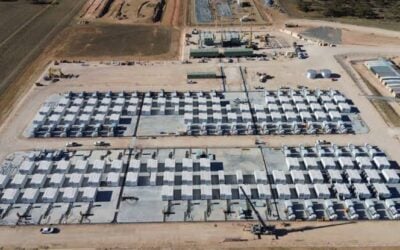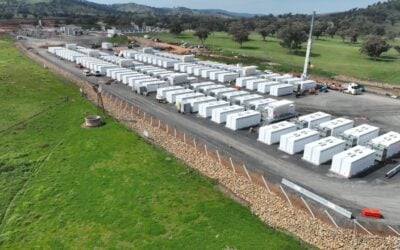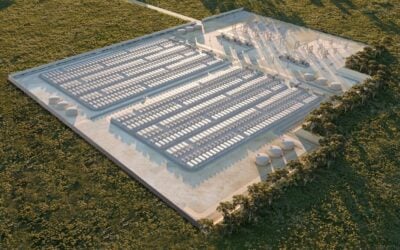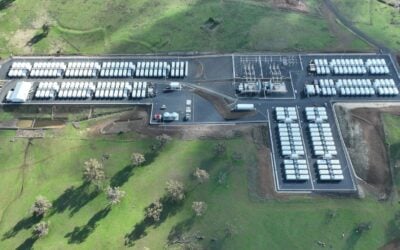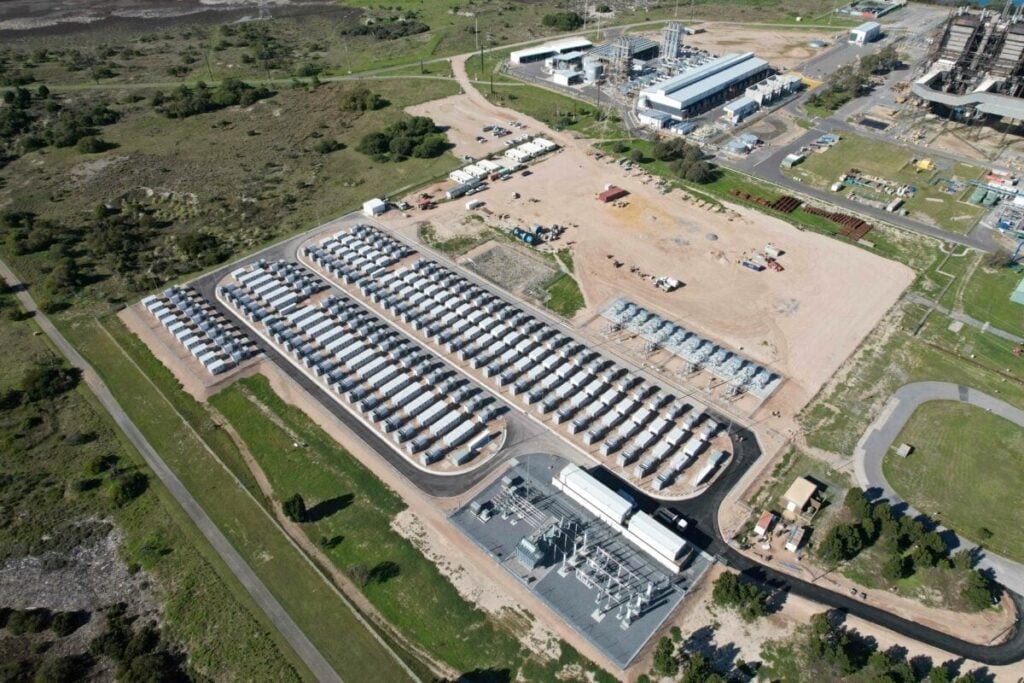
Australian energy company AGL has referred a 500MWh battery energy storage system (BESS) in Queensland to the federal government under Australia’s Environment Protection and Biodiversity Conservation (EPBC) Act.
The Abermain Battery Project would have a power output of 125MW and a 4-hour duration, and be built on Holdsworth Road in Tivoli, in the Ipswich City Council local government area west of Brisbane.
The referral said the BESS would store electricity when it is plentiful and return it to the grid during peak demand or when supply is limited.
It would use enclosed lithium-ion battery units with power conversion systems (PCS), transformers, inverters and switchgear. The site would also hold an operations and maintenance (O&M) building with a control room, and a screening fence incorporating noise barriers.
Try Premium for just $1
- Full premium access for the first month at only $1
- Converts to an annual rate after 30 days unless cancelled
- Cancel anytime during the trial period
Premium Benefits
- Expert industry analysis and interviews
- Digital access to PV Tech Power journal
- Exclusive event discounts
Or get the full Premium subscription right away
Or continue reading this article for free
The project would connect to the National Electricity Market (NEM), Australia’s main grid across its eastern and southern states, through Powerlink’s Abermain Substation, about 100m north-west of the site. A new on-site 275/33kV substation and an underground transmission line would link the two.
Powerlink, the Queensland government-owned transmission network operator, is separately developing the line and any substation upgrades as the Abermain Battery Connection Project, which it would build, own and operate.
Construction would take up to 18 months, after which about six maintenance staff would carry out scheduled inspections.
The BESS would operate for up to 30 years, after which the land would be rehabilitated, although the infrastructure may instead be upgraded to extend its life. The referral does not disclose a project cost or a BESS supplier.
The disturbance footprint covers about 3.3 hectares, including a temporary construction laydown area and site access. About 2.1 hectares is cleared land with exotic grasses and weeds, and the remaining 1.2 hectares is degraded eucalyptus and acacia woodland.
The referral assessed potential impacts on the koala, grey-headed flying-fox, south-eastern glossy black-cockatoo and white-throated needletail, along with several migratory bird species.
It said no listed threatened ecological communities were found in the project area, and proposes koala-exclusion fencing among its mitigation measures.
AGL does not consider the project a controlled action, meaning one that needs federal assessment and approval, and proposes no environmental offsets.
That differs from AGL’s 350MW/1,450MWh Kangaroo Valley BESS in New South Wales, which the company self-assessed as a likely controlled action due to native vegetation clearing.
The Yuggera Ugarapul People are the Aboriginal Party for the area, and an early works cultural heritage management agreement has been signed.
The project was originally developed by Firm Power. AGL agreed to acquire Firm Power in August 2024 for A$250 million, adding a 5.8GW BESS pipeline, 2.7GW of it in Queensland.
Battery storage in Australia’s EPBC Act
Octopus Australia, the Australian arm of UK-based Octopus Group, recently referred its 500MW/2,000MWh Blackstone BESS on a former coal mining site in the nearby Swanbank precinct.
The referral comes after several other large BESS referrals in recent weeks. Samsung C&T Renewable Energy Australia, the Australian renewables unit of the South Korean construction and trading business, referred its 200MW/800MWh Darnum BESS in Victoria’s Gippsland region.
EDF Power Solutions Australia, an indirect subsidiary of French state-owned utility EDF, referred an 800MWh BESS alongside up to 60 wind turbines at its Balala Wind Farm in New South Wales.
Origin Energy, the energy retailer and generator, referred Eraring BESS North, a 500MW/4,942MWh system beside its existing Eraring BESS in New South Wales.
The two Eraring systems would have a combined power output of about 1,200MW and capacity of about 8,600MWh, with Origin citing the planned closure of the Eraring coal plant.
Never miss an Australian energy storage story. Sign up for our Australia newsletter and get the latest project announcements, policy updates and market analysis delivered directly to you.