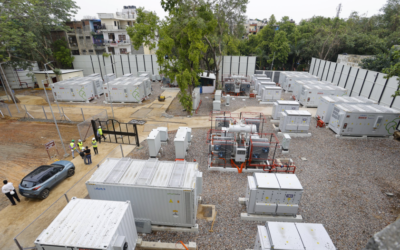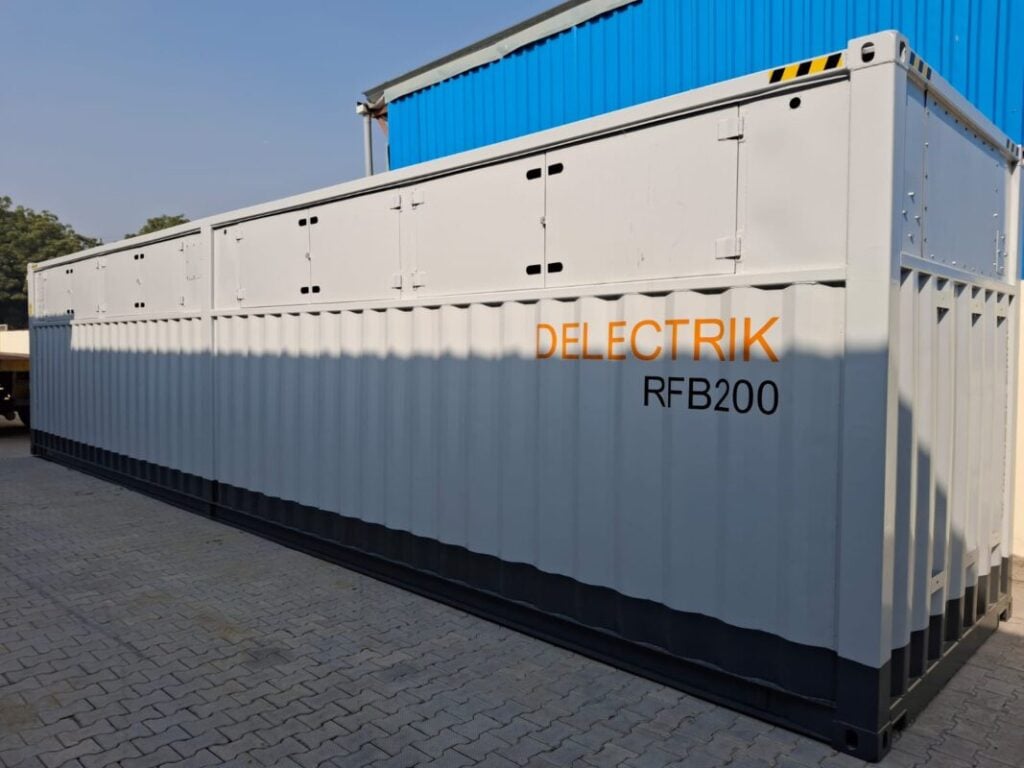
Vanadium redox flow battery (VRFB) startup Delectrik Systems has been awarded a 20MW/120MWh project in Gujarat, India.
The company successfully took part in a competitive solicitation hosted by public sector power generation company Gujarat Industries Power Company Ltd (GIPCL), company founder and CEO Vishal Mittal confirmed to Energy-Storage.news this morning.
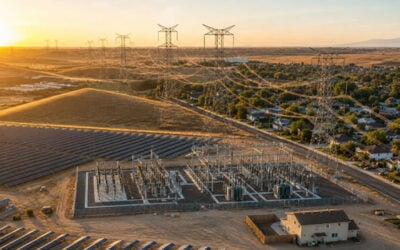
The long-duration energy storage (LDES) project was put out to tender by GIPCL in May. The 6-hour VRFB system will be deployed at GIPCL’s natural gas power plant in Vadodara, leveraging existing site transmission infrastructure, with necessary upgrades.
GIPCL is developing the project, while Gujarat Urja Vikas Nigam Limited (GUVNL), the state’s principal buyer of electricity, has approved it as a pilot of flow battery technology to support grid flexibility and renewable integration, and as a demonstration of the technology.
Try Premium for just $1
- Full premium access for the first month at only $1
- Converts to an annual rate after 30 days unless cancelled
- Cancel anytime during the trial period
Premium Benefits
- Expert industry analysis and interviews
- Digital access to PV Tech Power journal
- Exclusive event discounts
Or get the full Premium subscription right away
Or continue reading this article for free
As explained in an ESN Premium analysis earlier this year, flow batteries uncouple energy and power and so energy capacity can be scaled up with the addition of larger electrolyte tanks, while they also operate without degradation over thousands of cycles and do not carry the thermal runaway risk that lithium-ion (Li-ion) batteries do. They are, however, more expensive on a Capex basis than Li-ion battery energy storage systems (BESS), even if their lower lifetime cost of ownership, that advocates argue can be acheived, make them cheaper in the long run.
GIPCL’s portfolio is majority renewable, comprising 1,859.4MW of generation assets, including 937MW of solar PV and 112.4MW of wind generation capacity. It noted in the flow battery tender documents that its 310MW of combined cycle gas turbine (CCGT) power plants in Vadodara have been out of operation since November 2021 due to elevated fuel costs.
The competitive solicitation called for an engineering, procurement and construction (EPC) contractor. The system will operate at approximately 1.5 cycles per day. An indicative discharging schedule suggested charging from 1am to 5am and from 9am until 4pm; discharging schedule was suggested to be between 6am to 9am and from 6pm to midnight.
As Delectrik’s Vishal Mittal explained to ESN Premium in an interview earlier this year, the flow battery company partners with EPCs to enter bids, as solicitations tend to have commercial requirements startups are unable to meet alone.
For the Gujarat project, Delectrik partnered once again with Bondada Engineering, the same company with which it entered—and won a tender for a 100MWh project, also in Gujarat, through a tender issued by NTPC, India’s largest power company, which is partly state-owned.
In addition to confirming the news of the award to Energy-Storage.news via email this morning, Delectrik’s Vishal Mittal said in a LinkedIn post that the LDES flow battery project “is a true template for upcoming projects to supply firm and dispatchable renewable energy on a round-the-clock (FDRE RTC) basis.”
NTPC 100MWh project awarded in June
The GIPCL project award comes just four months after the NTPC project win was announced. Delectrik initially deployed a 3MWh pilot for NTPC through a 2024 tender. Mittal said that the smaller system has been in successful operation since installation was completed in mid-2025.
The larger NTPC project, meanwhile, will be a 16.7MW/100MWh VRFB system (~5.9-hour duration). It will be deployed at the site of Khavda Renewable Energy Park in Gujarat, a vast 30GW mixed technology development currently under construction by a roster of big-name Indian developers. NTPC put it out to tender in February before awarding the contract to Bondada Engineering with Delectrik in June.
NTPC’s green energy subsidiaries and R&D teams are currently trialling other non-lithium, non-pumped hydro energy storage technologies, including sodium-ion (Na-ion) batteries and carbon dioxide-based mechanical storage.
“The market is now demanding longer duration storage. Even in India, where it started with 2-hour, 4-hour, now that the penetration of renewable energy is increasing, the market really needs these 6-hours+ of storage,” Mittal said in the ESN Premium interview in July.
While India’s future energy system needs have been modelled by the Central Electricity Authority (CEA) as comprising dozens of gigawatts and hundreds of gigawatt-hours of lithium-ion BESS and pumped hydro energy storage (PHES), Mittal pointed out that this is really a case of CEA modelling India’s dual requirement for both short-duration and long-duration storage.
Flow batteries could be a good fit for regions where PHES will be more difficult to site, Mittal said, noting that India would likely need a variety of different technologies to meet its ~74GW/411GWh of energy storage required by 2031-2032. Utilities and state power companies tend to be the entities with the capability to try out newer solutions at scale, the CEO said.