
The energy storage system (ESS) market is quickly entering a new phase of growth. Rising renewable energy deployment and soaring electricity demand, particularly from AI data centres (AIDCs), are creating new opportunities and challenges for power infrastructure. As a result, ESS applications are becoming an ever-more integral part of power infrastructure.
In response to these changes, LG Energy Solution is rapidly growing its business in grid-scale ESS and power solutions for AIDCs.
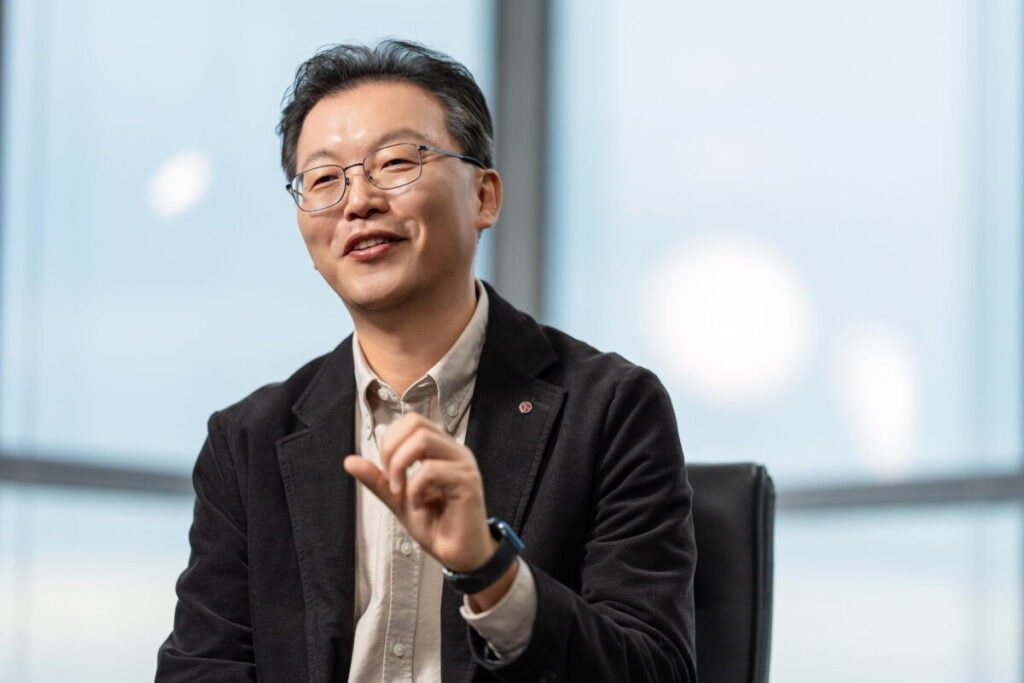
In this Q&A, Chang Beom Kang, Head of the ESS Battery Division at LG Energy Solution, discusses his view of the changing market and the company’s strategy for future growth.
The global ESS market is growing rapidly. How do you see the market evolving?
Try Premium for just $1
- Full premium access for the first month at only $1
- Converts to an annual rate after 30 days unless cancelled
- Cancel anytime during the trial period
Premium Benefits
- Expert industry analysis and interviews
- Digital access to PV Tech Power journal
- Exclusive event discounts
Or get the full Premium subscription right away
Or continue reading this article for free
The energy storage market is reaching an inflection point. Ten years ago, projects were small and were seen primarily as a way to manage fluctuations in renewable energy generation. Today, we have moved far beyond that point. Battery storage deployment has scaled rapidly across the US. Energy storage technology and market understanding have come so far that ESS is now an irreplaceable part of the energy storage grid.
The range of applications for ESS is also broadening. While grid-scale ESS paired with renewable energy has traditionally driven market growth, we are now seeing growing demand for stand-alone ESS and long-duration energy storage (LDES). As AI adoption expands and investment in data centres grows, ESS is also becoming increasingly important for maintaining a stable power supply.
Which areas and applications is LG Energy Solution most focused on in its ESS business?
We are strengthening our capabilities in two main areas to meet growing power demand.
The first is to continue growing our grid-scale ESS business. As customers seek greater efficiency from grid assets, we are expanding our competitive product lineup and maximising high-value capabilities that integrate hardware and software, moving beyond supplying hardware alone.
The second is targeting next-generation power infrastructure markets, including the AI data centre market. Global hyperscalers are increasingly emphasising ‘Speed to Power’: the ability to quickly secure and bring online the electricity required to meet AIDC specifications. As a result, demand for turnkey solutions is growing.
We are focused on the growing number of data centres building their own power infrastructure rather than relying solely on the grid. This shift is driving demand not only for ESS but also for a range of power solutions including uninterruptible power supplies (UPS) and battery backup units (BBUs). This reflects how ESS is evolving beyond a storage asset into critical infrastructure that supports a wide range of power needs.
Competition in the ESS market is intensifying. What are LG Energy Solution’s key differentiators?
I would highlight three of our strengths. The first is our manufacturing capability to support large-scale ESS projects. By the end of next year, LG Energy Solution plans to secure around 70 GWh of ESS production capacity in North America, up from more than 50 GWh by the end of this year. As ESS projects grow in scale, our deep experience in North American manufacturing and ability to supply products reliably when customers need them is an important competitive advantage.
Second is our well-established local presence in North America. We manufacture ESS products at three wholly owned production sites—the Lansing and Holland plants in Michigan, and NextStar Energy’s Ontario plant in Canada—as well as two joint venture plants: L-H Battery Company’s Ohio plant with Honda, and Ultium Cells’ Tennessee plant with General Motors (GM).
We integrate battery cells and packs into energy storage systems at our final assembly facility in Phoenix, AZ. This gives us a production network that can meet customer demand across North America with efficiency and a commitment to quality.
Third is our project execution and operational capability. Through LG Energy Solution Vertech, the company’s US energy storage division, we provide end-to-end solutions from battery design and system deployment to operation and maintenance. In addition to SI turnkey solutions, we are continuously improving our long-term service offerings and advanced software ecosystem to help customers maximise returns.
The AEROS™ software suite provides customers with pre-integrated controls, optimisation tools, and advanced analytical and monitoring capabilities for a full software solution that improves site functionality and maximises ROI.
The suite comprises AEROS™ Onsite and Cloud, supported by AEROS™ Intelligence, a new platform that transforms energy storage system data into actionable insights, helping asset owners, operators, and energy market participants improve performance, increase availability, and maximise long-term returns from their energy storage investments.
Why is North America strategically important to LG Energy Solution’s ESS business?
We see North America as a key strategic market where we can turn the ESS capabilities that LG Energy Solution has built into tangible customer value.
The rapid rise in North American large-scale power demand is reinforcing the value of energy storage and providing opportunities to leverage ESS in broader applications, including data centre power infrastructure. We see this broadening and deepening of ESS applications as a defining feature of the North American market.
LG Energy Solution has a North American production network and local operating base that excels at addressing these needs.
How does LG Energy Solution plan to grow its business in North America?
We’re approaching this continued growth with a focus on advancing product manufacturing and product innovation while expanding support for our growing fleet of in-service projects.
First, we plan to optimise operations across our five North American production sites and expand production capabilities not only for cells but also at the pack and system levels. As the number of large-scale projects increases, it becomes increasingly important to secure sufficient production capacity while also ensuring quality, yield, and delivery reliability. By operating our production sites as a connected network, we can respond more quickly and reliably to project timelines and customer demand.
On the product side, we will continue to strengthen our competitiveness in lithium iron phosphate (LFP)-based batteries while broadening our portfolio to include prismatic LFP battery cells and sodium-ion technology. The North American market encompasses a wide range of applications, from large-scale grid projects to AIDCs and behind-the-meter (BTM) environments.
That is why we believe it is important to offer product options suited to customers’ installation environments and operational objectives.
From a business perspective, we are ready to support customers expanding their energy storage applications and transforming projects into next-generation power infrastructure and services.
What will LG Energy Solution showcase at this year’s RE+?
At this year’s RE+, we are demonstrating how LG Energy Solution is responding to a rapidly changing power environment, including the growth of AIDCs.
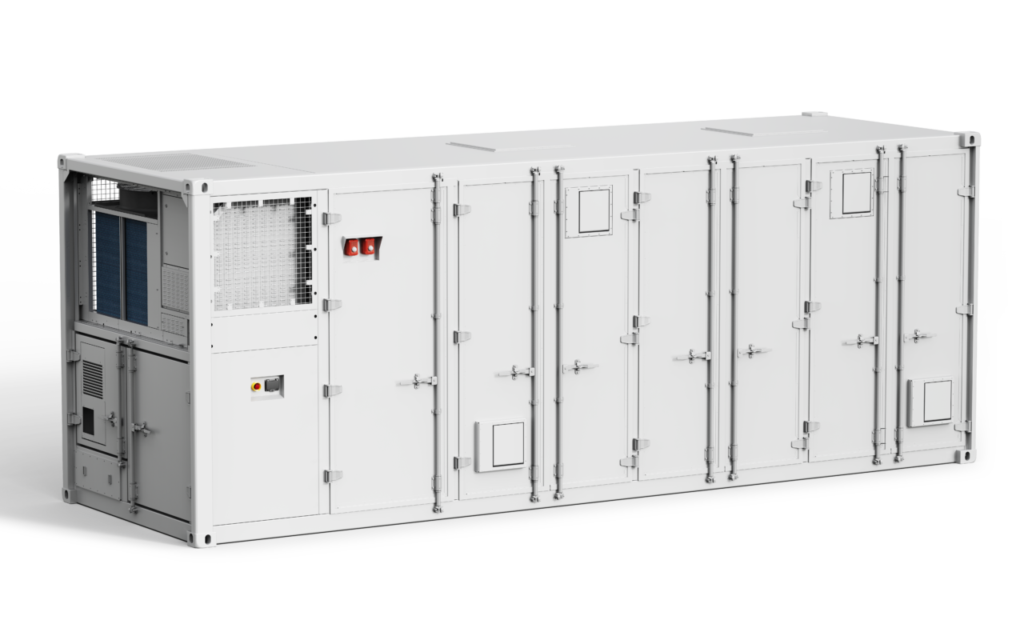
For grid-scale ESS, we will showcase the JF3 LINK, our next-generation integrated LFP-based system. Customer needs for operational efficiency, supply stability, and return on investment are more exacting today than ever. JF3 LINK is a next-generation grid-scale ESS platform being developed in response to these market requirements.
JF3 LINK reduces spacing between links to maximise energy density per unit area on space-constrained sites, enhancing total cost of ownership competitiveness. It also meets the requirements of the National Fire Protection Association (NFPA) 69 and NFPA 855, further enhancing safety.
The system also incorporates digital twin-based cooling control technology that accounts for a range of operating conditions, including electricity prices and battery ageing, to optimise pump speed and coolant temperature. This can reduce auxiliary energy consumption and peak demand during idle periods, lowering overall operating costs. The system is also designed to enhance grid stability and respond reliably to rapid changes in load.
Another highlight of the exhibition is a next-generation ESS concept combining a Solid-State Transformer (SST) with sodium-ion batteries. We are presenting the two technologies together because they are closely aligned with the next-generation power infrastructure requirements of AIDCs. The SSTs provided by our supply partners are a next-generation power conversion technology that can improve power conversion efficiency and simplify system architecture.
One of its key characteristics is its rapid response to power fluctuations. Combined with sodium-ion (Na-ion) batteries, which offer high-power performance, strong low-temperature performance and cost competitiveness, SST has the potential to deliver both the fast power response and system efficiency required by AIDCs.
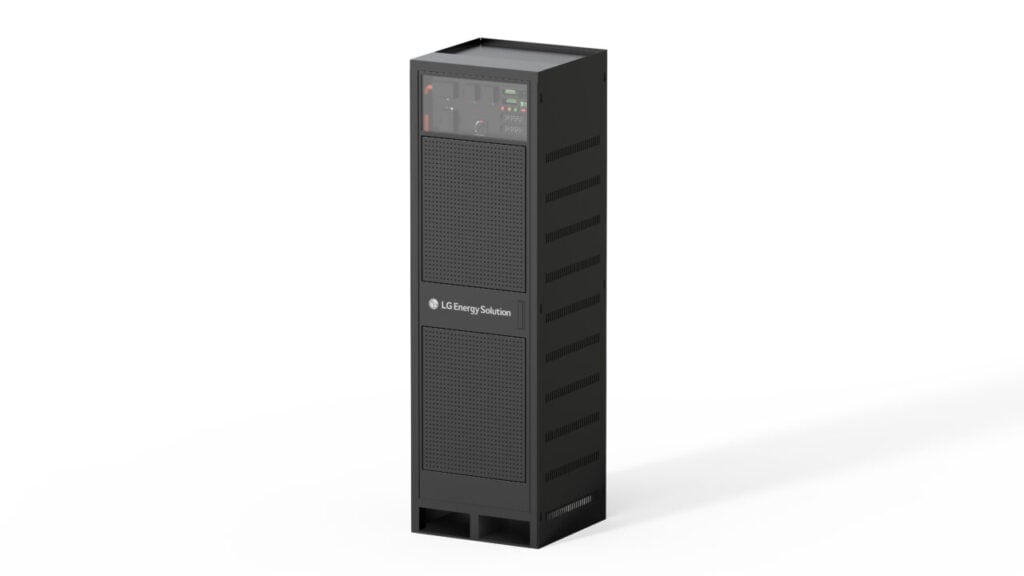
We will also showcase the JP6 UPS rack system and a 2170-based BBU solution. As AIDCs increasingly require stable responses to power fluctuations in addition to backup power, we aim to showcase a portfolio of solutions for a wide range of power needs.
Our goal for this exhibition is to show how LG Energy Solution can serve as a comprehensive energy platform provider for the future power environment, from grid-scale ESS through to AIDC power infrastructure.
Visit LG Energy Solution on the expo floor at RE+ in Las Vegas, US, at Central Hall stand number C4708, from 17-19 November 2026.
