Gujarat Industries Power Co Ltd (GIPCL) is holding a competitive solicitation for a large-scale vanadium redox flow battery (VRFB) energy storage project in western India.
The power generation and utility company, operating under the Gujarat state government’s Energy and Petrochemicals Department and traded on the Bombay Stock Exchange (BSE) and National Stock Exchange (NSE), launched the bidding process last week (21 May).
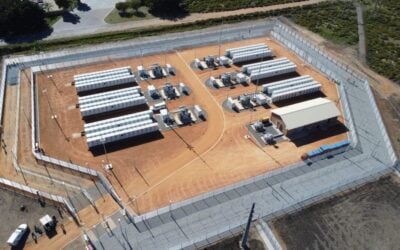
GIPCL plans to develop a 20MW/120MWh (6-hour duration) battery energy storage system (BESS) using VRFB technology at its 165MW natural gas power plant in Vadodara.
It will leverage some existing transmission infrastructure at the gas plant site, although the successful bidder’s scope of work will include a new power evacuation system up to 11kV, a transformer and a transmission line.
Try Premium for just $1
- Full premium access for the first month at only $1
- Converts to an annual rate after 30 days unless cancelled
- Cancel anytime during the trial period
Premium Benefits
- Expert industry analysis and interviews
- Digital access to PV Tech Power journal
- Exclusive event discounts
Or get the full Premium subscription right away
Or continue reading this article for free
GIPCL will develop the project and is seeking an engineering, procurement and construction (EPC) contractor to design, engineer, supply & procure, construct, erect, test and commission it, with the bid submission window open until 25 June 2026.
The power company’s generation portfolio has a total installed capacity of 1,859.4MW, including two lignite plants, combined cycle gas turbines, and 1,049.4MW of renewable energy across various locations in the state.
It aims to use the flow battery as a pilot for the grid-scale deployment of long-duration energy storage (LDES), supporting grid flexibility, renewable energy integration and demonstrating the technology.
The project has already received in-principle approval from the state-owned power holding company Gujarat Urja Vikas Nigam Ltd (GUVNL).
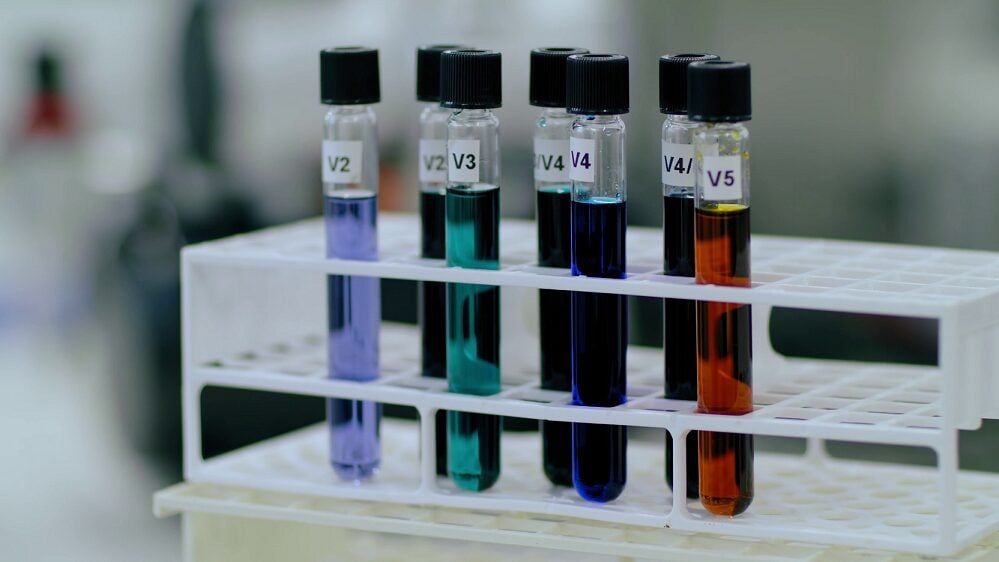
VRFBs store energy in tanks of liquid electrolyte, rather than within the electrode, unlike the more common lithium-ion (Li-ion) battery storage technologies.
As explored in a recent deep dive article for ESN Premium, this means VRFBs and other types of flow battery can withstand many thousands more cycles of charge and discharge without degradation and the energy capacity can be scaled up by increasing the size of electrolyte tanks, meaning they can potentially provide longer durations of storage without the same sort of incremental increase in cost as might be see in Li-ion BESS projects.
They are also perceived to pose less fire risk than lithium, as there are no cells that can go into thermal runaway. However, although flow battery companies argue that the technology advantages mean a lower cost of lifetime ownership, the upfront costs are still higher than for Li-ion BESS of equivalent size.
This, along with the technology maturity of Li-ion, which makes it more bankable, is currently a barrier to the widespread adoption of flow batteries.
VRFB’s daily cycling profile ‘will mean favourable LCOS’
GICPL said its 6-hour VRFB will be operated at approximately 1.5 cycles per day, charging from roughly 1am to 5am and from 9am to 4pm each day and then discharging from 6am to 9am and again from 6pm to midnight.
Bidders must either have previous direct experience of deploying at least 5MWh of VRFBs within the past 10 years, comprise a partnership between a renewable energy EPC and VRFB manufacturer, or a partnership between an industrial EPC and flow battery manufacturer.
Full bid documents and further information can be found on the GICPL website.
While a vast majority of electrochemical energy storage deployments worldwide continue to rely on lithium, flow batteries are among the most popular non-lithium technologies being chosen for LDES applications.
As it has in Li-ion, China has led the way in installations, including a 200MW/1,000MWh project in Xinjiang, which VRFB manufacturer Dalian Rongke Power and infrastructure company China Three Gorges Corporation brought online at the end of 2025.
That’s the world’s biggest VRFB project to date, although a few days ago, Anglo-American VRFB provider Invinity Energy Systems was selected as strategic partner for a 2.1GWh project in development at a data centre complex in Switzerland.
Meanwhile, in India, which is mostly deploying Li-ion and pumped hydro energy storage (PHES) capacity to meet its renewable energy integration and system flexibility needs, a subsidiary of state-owned power producer NTPC said in February that it plans to deploy a 100MWh VRFB system at a hybrid renewable energy park in Khavda, also in Gujarat.
Vishal Mittal, founder of India-headquartered vanadium flow battery company Delectrik Systems, commented on LinkedIn that, due to its 1.5 cycles per day, the GICPL project will see a favourable levelised cost of storage (LCOS).
“What works for Gujarat utility works for every electric utility in India,” Mittal wrote.
“We will be seeing a lot more of the grid-scale flow battery projects in the coming times!”
Energy Storage Summit India 2026 will take place 22-24 October at India Expo Mart, Greater Noida, India. Hosted by Energy-Storage.news publisher Solar Media, the event aims to unlock grid capacity and drive energy storage development in India. See the official event website for more details.