
What are semi-solid-state batteries, what potential do they hold for battery energy storage system (BESS) applications, and when are we likely to see them come to market?
“Solid-state” battery technology being developed is actually semi-solid state
There’s a lot of talk about how all-solid-state batteries (ASSBs) can provide a much higher density than liquid electrolyte lithium-ion (Li-ion) batteries. There are many companies which state that they are developing solid-state technologies. There are also companies which state that they have commercial ‘solid-state’ battery products. However, this is a bit of a misnomer because any ‘solid-state’ battery commercially available on the market today is a semi-solid-state battery—which is a system that is in between an ASSB and a liquid electrolyte battery.
There are some companies which market these batteries as semi-solid-state but there are other’s which deliberately make it vague, which makes it appear that ASSB technology is already commercially here—but it is not. They are also known as quasi-solid state or hybrid solid state batteries, and there’s nothing wrong with the technology, as it is a key part of the transition to ASSBs, but the distinction needs to be clear from manufacturers.
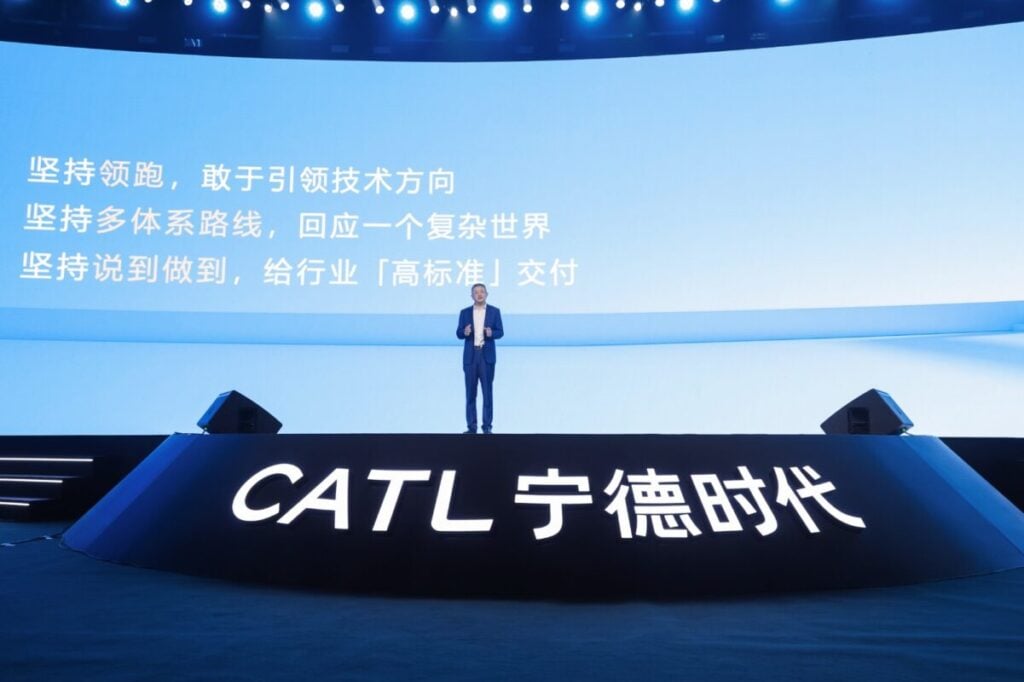
The commercial development and market penetration of ASSBs is only expected to occur by the end of this decade and into the 2030’s. Small-scale production of ASSBs is expected by the end of the 2020’s—with some automakers in the EV industry pushing for 2027-2028—while full-scale mass production is expected from 2030 onwards. The Chinese government has also set targets to reach full manufacturability for solid-state technology from 2030 onwards. CATL and Gotion are some of the major Chinese battery OEMs working on the technology.
Try Premium for just $1
- Full premium access for the first month at only $1
- Converts to an annual rate after 30 days unless cancelled
- Cancel anytime during the trial period
Premium Benefits
- Expert industry analysis and interviews
- Digital access to PV Tech Power journal
- Exclusive event discounts
Or get the full Premium subscription right away
Or continue reading this article for free
So, for now, the technology available is semi-solid-state, but there’s still only a handful of manufactures actively involved with semi-solid-state batteries, as many are waiting until they have developed ASSBs that are commercially viable at scale. One of the big reasons is that semi-solid-state batteries still have some of the same manufacturing challenges as ASSBs, in that they are difficult to manufacture at scale. So, for a lot of manufacturers, if the challenges are similar and require a lot of time and money to develop, a lot appear to be saying that waiting for ASSBs is the better investment.
Not all are convinced by semi-solid-state. Edward Rackley, head of energy storage at commodities intelligence firm CRU Group, told us recently he’s not convinced that ASSB is the ‘holy grail’ technology that many make it out to be.
“My concern is that most full solid-state systems need to be pressurised to prevent degradation—lithium can bridge the positive and negative electrode, causing a short circuit that effectively kills the cell. A lot of the ways that’s been addressed involve using pressure, which requires more equipment” stated Rackley.
“At the storage level, that means more space taken up within the container, and you’re probably losing some energy capacity to accommodate it—even though the system should be more stable and less flammable overall”.
So, while some might be waiting for ASSBs, and putting more money into their development, there might also be a business case for developing semi-solid-state batteries at scale as well.
But the market will soon dictate this, and we will have a better picture by 2030 as to the directions that the industry is going in.
What are semi-solid-state batteries?
Semi-solid-state batteries are hybrid electrochemical cells that sit between a conventional liquid electrolyte cell and an ASSB—which uses a completely rigid and solid material as the electrolyte. The electrolyte material phase is in between the two and is a either a ceramic solid that retains around 5–10% wetting liquid by weight or a gel-like material known as a gel polymer electrolyte.
The solid material is commonly an inorganic solid ceramic electrolyte layer such as LLZO (Lithium Lanthanum Zirconium Oxide) or LATP (Lithium Aluminium Titanium Phosphate). The 5–10% liquid electrolyte that is left wets the interface between the solid electrolyte and the electrode and helps to facilitate a low charge-transfer resistance inside the cell. Wetting the electrode with the residual electrolyte liquid also closes any solid-solid contact gaps between the solid electrolyte material and the active electrode particles without the tens of MPa of stack pressure that are needed in ASSBs.
Semi-solid-state cells that use a gel polymer electrolyte use in-situ polymerisation. In this approach, polymeric monomers (the polymer building blocks) are injected into the cell as a liquid during manufacturing. This wets the electrode before the cell is vacuum sealed, and the liquid monomers are polymerised inside the cell using a controlled heat process to cure the liquid into the gel polymer material.
The rest of the architecture is similar to a conventional Li-ion cell. There is an anode, cathode and separator like a Li-ion battery, although there are some semi-solid-state batteries that have an anode-free design (like some ASSBs do).
The energy density of a semi-solid-state battery lies between conventional Li-ion and ASSB battery architectures, typically at least 360Wh/kg. ASSBs are known to have a much better thermal runaway than Li-ion architectures, and while semi-solid-state is not as thermally robust as ASSBs, they are much more resistant to thermal runaway than liquid electrolyte cells. The semi-solid electrolyte is of interest because they have the safety and energy density benefits associated with ASSBs, while not losing ionic conductivity that can occur in ASSBs if the interfaces are not engineered well and there are a lot of grain boundaries in the solid material.
What could semi-solid-state batteries bring to BESS
There are benefits and trade-offs for different cells in BESS applications. Some of the main benefits include a higher energy density, cycle life, and safety compared to liquid Li-ion cells. One of the big trade-offs for asset owners is the cost. It’s estimated that a semi-solid-state cell could be around 10-15% more expensive than a liquid electrolyte cell, so it is a more premium option, but it’s also estimated that they could last around 20% longer.
So, BESS owners and site developers need to weigh up CAPEX vs OPEX when choosing between semi-solid-state and liquid electrolyte cells. Even though semi-solid-state cells are going to be cheaper than ASSBs, with an expected starting cost of US$130–$160 per kWh, they are going to be more expensive than conventional Li-ion technology that is around US$80–$100 per kWh on average.
On the energy density, liquid electrolyte cells don’t often deliver a gravimetric energy density beyond 280Wh/kg without causing significant thermal runaway risks. On the other hand, semi-solid-state cells have an energy density range of 360–420Wh/kg without thermal risk, which is a significant increase.
The higher energy density could be beneficial for BESS sites, if owners are happy to pay the extra CAPEX, as it could help to increase the site energy density by providing more energy per area on site. This not only means that a higher energy density can be achieved within the same footprint to make large sites a lot more profitable if they participate in energy markets and grid services, but it could also be very beneficial for smaller sites too as it will allow more energy to be added to sites that can’t expand as easily or where space is at a premium—such as in urban environments.
Safety is another important aspect for large installations and installations in urban environments—as toxic off-gassing is also a risk to populations alongside the fire itself. Semi-solid-state cells have a thermal runaway onset temperature of 260°C–300°C compared to 150°C–180°C for liquid electrolyte cells, so they are much safer and less likely to catch fire. It’s also been shown that semi-solid-state cells have a lower internal temperature rate rise than liquid electrolyte cells, and this helps to stop thermal runaway conditions from manifesting in the first place.
Semi-solid-state cells also tend to have better cold weather performance than liquid electrolyte cells. Liquid electrolytes can thicken in the cold, which degrades their conductivity, whereas solid-liquid hybrid matrices can still achieve a high conductivity down to -30°C. However, semi-solid-state cells have a slightly higher interfacial impedance compared to liquid electrolyte cells but nowhere near the impedance of ASSBs.
One of the benefits that semi-solid-state cells have over ASSBs is their compatibility with conventional Li-ion manufacturing processes. ASSBs require almost completely new assembly lines and CAPEX, with around 20% of existing lines being reusable. On the other hand, semi-solid-state cells are a lot more compatible with existing assembly lines and around 75-85% of current Li-ion manufacturing equipment can be reused for semi-solid-state manufacturing.
While semi-solid-state batteries have better performance specifications than liquid electrolytes, ASSBs will likely push them further with an energy density of 400–500+Wh/kg and a thermal runaway onset temperature of at least 350°C. Whether they get adopted for BESS applications will depend heavily on their cost and how easy they can be manufactured at scale without issue, as it’s expected that the first cells will be at least $250 per kWh, which is much higher than semi-solid-state batteries and liquid electrolyte cells. Until these cells are commercially available at the back end of this decade and into the next, semi-solid-state batteries that bridge ASSBs and conventional Li-ion cells are going to beneficial for some asset owners while most will likely continue to use liquid electrolyte cells as they are cheaper and will still be more widely available.