Two big developments for India’s emerging long-duration energy storage (LDES) sector, with contracts awarded for pumped hydro energy storage (PHES) and the country’s first large-scale flow battery.
SECI pumped hydro tender
The Solar Energy Corporation of India (SECI) has awarded a total of 1,344MW of capacity through a competitive reverse auction process to three pumped hydro project developers.
SECI, set up by the Indian government and administered by the Ministry of Power’s Ministry of New and Renewable Energy (MNRE), announced that developers Tata Power, Greenko and Torrent Energy Storage Solutions had won through a Request for Selection (RFS) under tariff-based competitive bidding guidelines.
The tender was launched in late 2025, seeking up to 1,000MW of 8-hour duration (8,000MWh) pumped hydro, later revised upwards to 1,500MW/12,000MWh. SECI offered long-term power purchase agreements (PPAs) under which the corporation will buy pumped storage capacity and sell it to a Buying Entity, such as a utility or distribution company (‘discom’).
Try Premium for just $1
- Full premium access for the first month at only $1
- Converts to an annual rate after 30 days unless cancelled
- Cancel anytime during the trial period
Premium Benefits
- Expert industry analysis and interviews
- Digital access to PV Tech Power journal
- Exclusive event discounts
Or get the full Premium subscription right away
Or continue reading this article for free
Greenko bid for 720MW capacity and won the full amount. Torrent Energy Storage Solutions bid for 300MW and got the full amount, while Tata Power bid for 660MW but was awarded 324MW.
SECI calculated the annual fixed charges for Tata Power’s e-Reverse Auction bid at INR10,841,826.5/MW/Annum (US$112,662.41/MW/Annum) and total storage cost at INR13,510,000/MW/Annum.
For Greenko’s bid, the annual fixed charge equivalent was INR10,967,479.7/MW/Annum and total storage cost INR13,490,000.
For Torrent Energy Storage Solutions’ bid, SECI calculated the equivalent annual fixed charge at INR10,975609.8/MW/Annum and the total storage cost at INR13,500,000/MW/Annum.
Project developers are awarded their contracts on a ‘build, own, operate’ basis.
Yesterday, the national Press Information Bureau (PIB) of India offered an update on PHES development—also known as pumped storage projects (PSP)—across the country.
There are presently 11 PSPs with an aggregate capacity of 15,870MW under construction, while a further six projects, totalling 8,140MW, have been approved by the Central Electricity Authority (CEA) and are awaiting the start of construction.
PIB noted measures taken by authorities to increase adoption of pumped hydro, including streamlining of environmental and statutory clearances processes, support for associated infrastructure spending, the creation of tariff-based competitive bidding guidelines and a waiver on Inter-State Transmission System (ISTS) charges for 25 years from the start of commercial operation.
According to the CEA’s 2023 National Electricity Plan (NEP), India is estimated to require 74GW/411.4GWh of energy storage by the 2031-2032 financial year. This would include around 47.24GW/236.22GWh of battery storage and 26.69GW/175.18GWh of pumped hydro energy storage.
By 2047, the CEA forecasts a need for as much as 90GW/540GWh of PHES, within a total 320GW/2,380GWh of energy storage alongside 230GW/1,840GWh of battery energy storage systems (BESS).
Delectrik wins Khadva Solar Park flow battery tender
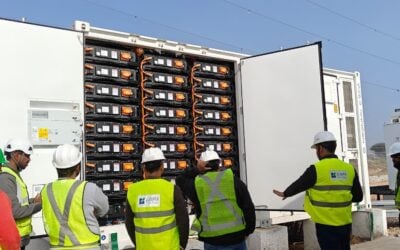
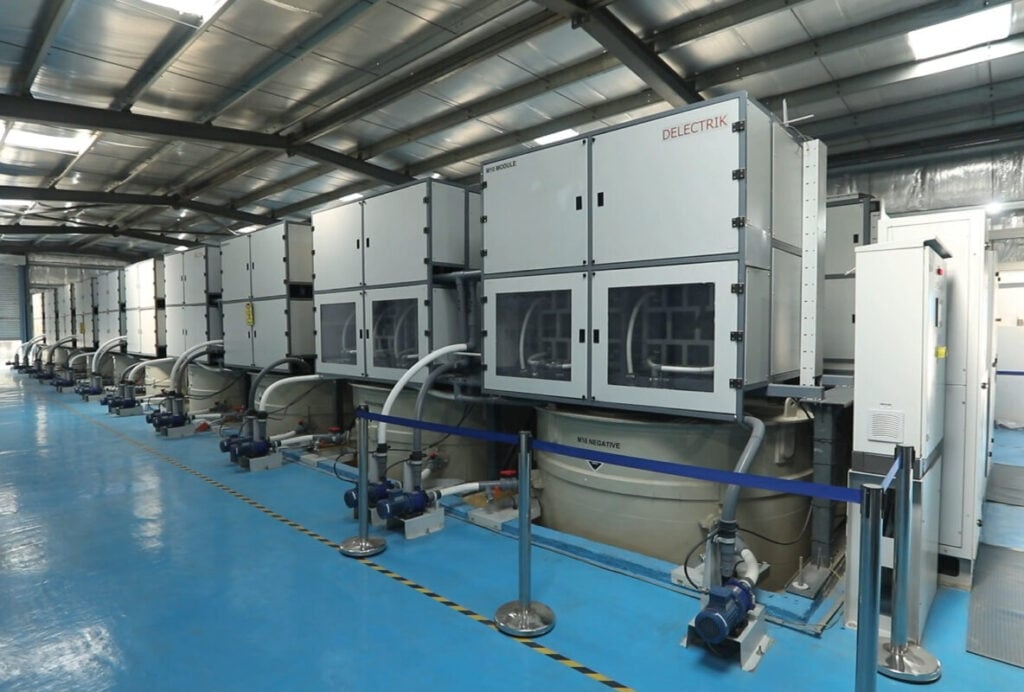
Indian startup Delectrik has been selected to provide a 100MWh vanadium redox flow battery (VRFB) energy storage system at a 30GW renewable energy park in Gujarat.
Gujarat Hybrid Renewable Energy Park, also known as Khavda Solar Park or Khavda Renewable Energy Park, is a multi-developer, mixed technology project which already features around 10GW of operational solar PV and wind generation.
The site is strategically located in an area of western India that is rich in solar and wind potential, with available land for facilities to be built contiguously and connection to an existing ‘green corridor’ for generated electricity to be transmitted through high-capacity lines.
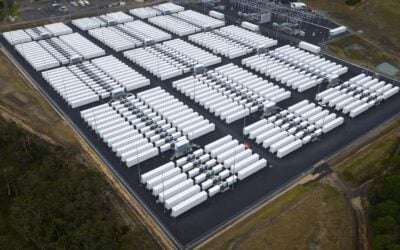
One of its lead developers, Adani Green Energy, recently reached 3.37GWh of cumulative lithium-ion (Li-ion) BESS capacity at Khavda.
In February, NTPC Renewable Energy, a subsidiary of state-owned power producer NTPC launched a solicitation to deploy the long-duration flow battery at the Khavda park. An invitation for bids (IFB) for engineering, procurement and construction (EPC) of the VRFB listed the facility’s output at 16.7MW, implying 5.9-hour discharge duration at maximum rated output.
Delectrik Systems, headquartered in Gurgaon, India, said this morning that its bid with infrastructure solutions provider Bondada Engineering had won the tender to provide the 100MWh system.
Delectrik did not disclose financial terms of the contract but said the system will be deployed next year.
Delectrik had also won a previous tender hosted by NTPC Renewable Energy’s parent company NTPC for a 600kW/3MWh flow battery in 2024. It was deployed at an NTPC R&D centre in Greater Noida, Uttar Pradesh and was co-developed with another infrastructure company, Rays Power Infra.
The company launched a 2MW/10MWh VRFB energy storage system in late 2024, designed to provide a footprint of about 200MWh per acre.
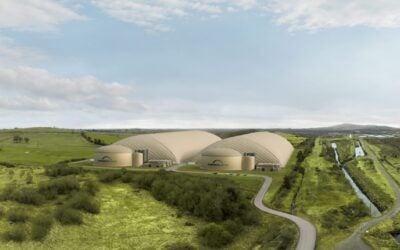
NTPC is also currently trying out another non-lithium long-duration energy storage technology, the CO2 Battery developed by Italian startup Energy Dome. NTPC is building a 20MW/160MWh CO2 Battery pilot project at a thermal generation plant site in Karnataka. The CO2 Battery stores energy in compressed carbon dioxide gas in a closed loop process.