Demand for 8-hour battery energy storage in Australia is “completely artificial” and relies on government underwriting, according to Tesla, which said asymmetric registration can help such projects earn more.
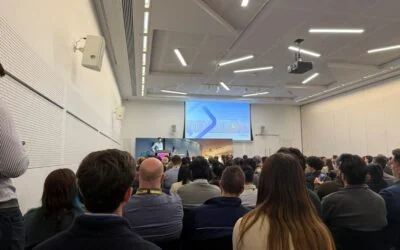
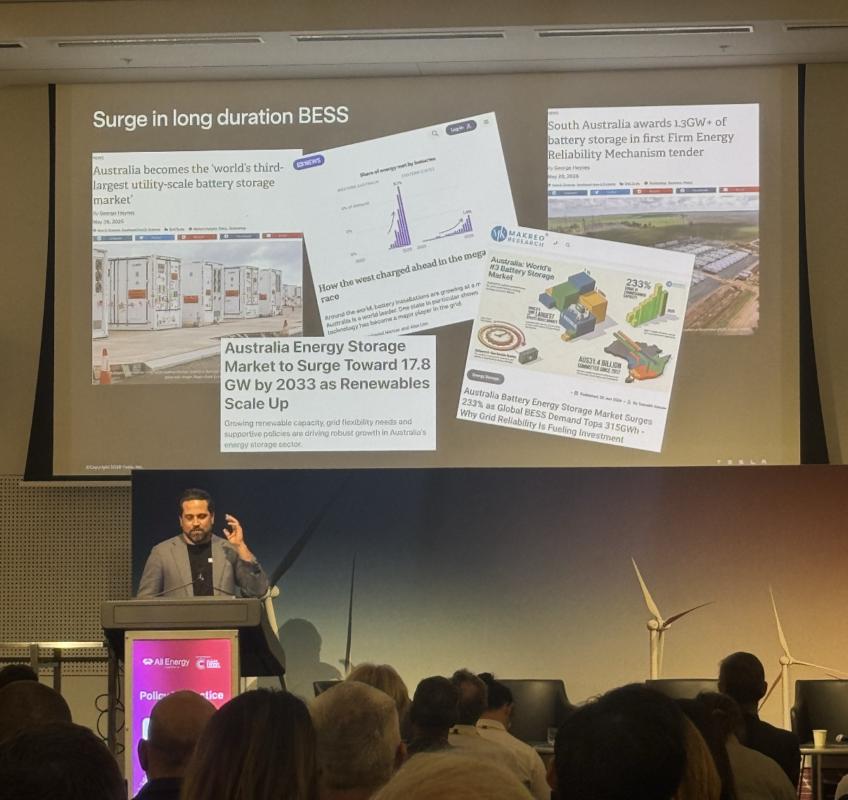
Speaking at All-Energy Australia 2026 in Melbourne, Shane Bannister, head of business development & sales, energy APAC, Tesla, said there was “no market for 8-hour storage” outside capacity contracted by federal and state governments.
Australia’s market signals do not reward longer-duration storage while coal generation stays in operation, Bannister said, which is why governments have stepped in.
“Are they perfect? Absolutely not. Are they better than nothing? Yes, absolutely,” he said of the schemes.
Try Premium for just $1
- Full premium access for the first month at only $1
- Converts to an annual rate after 30 days unless cancelled
- Cancel anytime during the trial period
Premium Benefits
- Expert industry analysis and interviews
- Digital access to PV Tech Power journal
- Exclusive event discounts
Or get the full Premium subscription right away
Or continue reading this article for free
He opened by acknowledging a flat mood in the sector, with market revenues down.
“It feels a bit doom and gloom for the renewables industry in Australia at the moment,” Bannister said, adding that lowering wholesale power prices had been the industry’s objective all along.
Speaking at the same event, Matt Grover, director, energy markets APAC at Fluence, argued that algorithmic bidding was not the “boogeyman” of Australia’s National Electricity Market (NEM), saying the number of participants controlling dispatchable peaking capacity had more than doubled in 10 years, which he said was part of the reason for current wholesale prices.
That comes even as Australia has become the world’s third-largest utility-scale battery storage market, behind the US and China, according to the Clean Energy Council, the industry body and host of All-Energy Australia.
Bannister pointed to long-term load growth from electrification across households and industry, as well as EV charging, electric trucking and data centres.
“We just got to repivot the use case for storage,” he said, describing storage as “one of the most flexible assets.”
The comments come as Tesla’s own energy storage business reported lower revenues in Q3 2026 despite its second-highest quarterly deployments.
The best-known long-duration energy storage (LDES) scheme in Australia is the Long-Term Energy Service Agreement (LTESA) programme in New South Wales, which requires 8 hours of dispatch, and South Australia’s Firm Energy Reliability Mechanism (FERM) is following, he said.
The latest NSW round awarded LTESAs to six BESS projects totalling 1.17GW/12GWh, while South Australia’s first FERM tender was technology-neutral but ended with contracts going only to battery energy storage system (BESS) projects, an outcome ASL, the body running the tender, discussed in an interview with ESN Premium.
A BESS that charges and discharges over 8 hours performs poorly on capacity utilisation, Bannister said.
“Sure, it’s doing the job that’s being contracted to do, but it’s leaving value on the table,” he said.
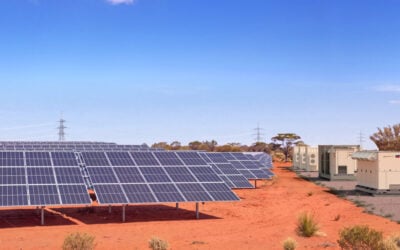
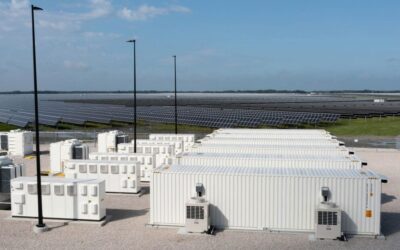
Tesla worked with RWE, the German energy company, to register its LTESA-backed Limondale BESS in New South Wales as an asymmetric asset. The 50MW/400MWh project near Balranald, which uses Tesla Megapacks, was officially opened by RWE in June 2026 as Australia’s first 8-hour BESS.
Its discharge capacity is 50MW for 8 hours, meeting the LTESA requirement, but it is registered to charge at 100MW.
That leaves 50MW of additional capacity outside its LTESA obligations, which can be offered into ancillary services markets.
“That changes the business case,” Bannister said, adding that it lets developers “bid more aggressively for those 8-hour products because they’ve got an extra revenue stream.”
Charging speed also matters, he said, because the overlap with renewable energy generation leaves about 4 hours a day of low-cost, sometimes negative-priced, energy.
“If you imagine trying to charge an 8-hour asset, your cost of charging goes up, which ruins your entire business case,” Bannister said.
The extra inverter headroom can also provide inertial response and system strength, he added, describing it as “value stacking on top of everything else to try and get that project over the line.”
Virtual transmission and data centre load
Bannister said Australia was on a load growth trajectory “that I don’t think we’ve understood yet as a country”, while new transmission was slow to build, citing Project EnergyConnect between South Australia and New South Wales and the VNI West interconnector.
Australia’s transmission lines are designed for N-1 redundancy under worst-case conditions, he said, so “there is stacks of capacity in the existing transmission network.”
In his example, a 400MW corridor made up of two lines, each able to carry 400MW, runs each line at 200MW so one can take the full load if the other fails.
Adding a 200MW BESS at one end, similar to System Integrity Protection Scheme (SIPS) projects such as the 850MW/1,680MWh Waratah Super Battery, which Akaysha Energy operates under a SIPS contract with Transgrid (Premium access), and Neoen’s 300MW/450MWh Victorian Big Battery near Geelong, would allow the corridor’s capacity to rise to 600MW, Bannister said.
If one line trips, the remaining line carries 400MW and the BESS covers the 200MW shortfall for the 2 to 4 hours the network needs to reconfigure, avoiding 400MW of new transmission. He said a 200MW BESS could be deployed in 12 to 18 months.
“This isn’t the solution for everything, but this is the solution to keep Australia growing,” Bannister said, adding that new transmission infrastructure was still needed.
On data centres, he drew on Tesla’s two sites at its Austin, Texas factory, one 130MW behind-the-meter and one 125MW front-of-meter, and on xAI’s Colossus data centre in Memphis, which he said runs over 250MW of compute.
Shaping a flat data centre load to fit available network capacity is “not rocket science”, he said. The harder problem is that data centres switch to uninterruptible power supplies (UPS) as soon as voltage or frequency dips, disconnecting their load from the grid.
He cited an 800MW data centre announced in South Australia, roughly equal to Adelaide’s minimum daytime demand. Losing that load at once could cause a system blackout, Bannister said, recalling South Australia’s 2016 statewide blackout, which he lived through.
His answer was load mimicking: when the data centre disconnects, a co-located BESS starts charging at the same moment, so the grid sees no change in load while the data centre stabilises and re-syncs.
“That’s probably the biggest thing that’s holding up data centre connections in Australia,” Bannister said, adding that some connection agreements already signed had not addressed it.
AI training loads pose a further problem, though Australia is mostly seeing inference and low-latency data centres for now, he said. At Colossus and Tesla’s own sites, training caused power swings of 50% to 80% of system capacity multiple times a second.
At off-grid US data centres, those swings also strain gas turbines. “We’re tearing gearboxes apart because of the loads and the training chips,” Bannister said, presenting data showing the load seen by the grid with and without Tesla’s Megapack BESS. Tesla has also begun producing its 5MWh Megapack 3 at a new facility in Brookshire, Texas (Premium access).
Never miss an Australian energy storage story. Sign up for our Australia newsletter and get the latest project announcements, policy updates and market analysis delivered directly to you.