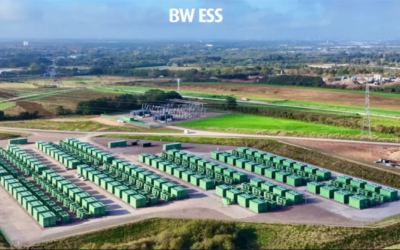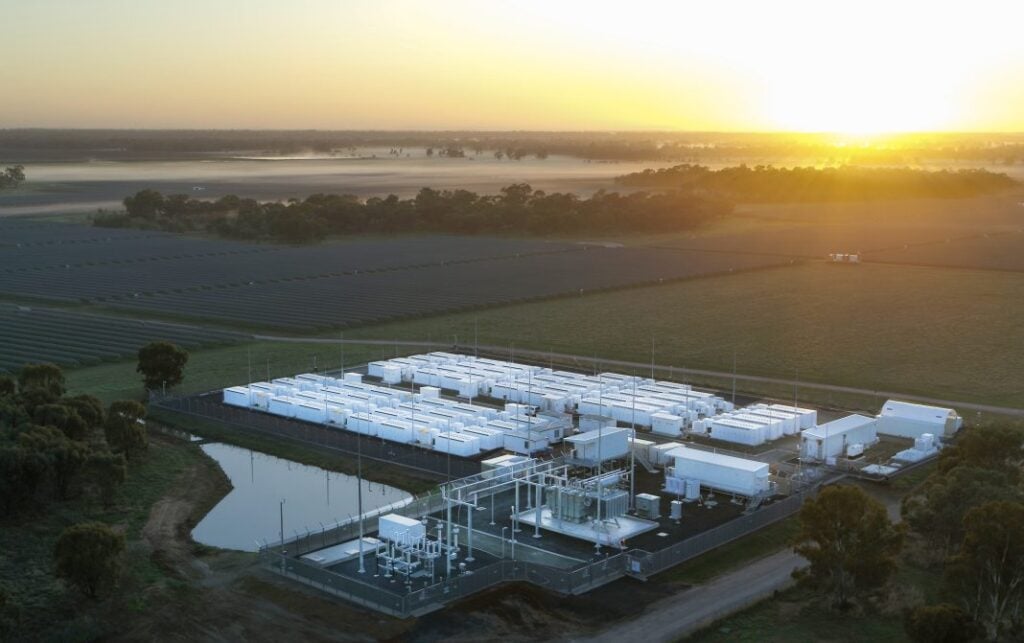
Tesla’s energy storage business deployed 13.7GWh in Q3 2026, its second-highest quarterly figure to date, but saw a 16% year-on-year decline in revenues for the division.
The US-headquartered electric vehicle (EV) manufacturer reported its financial results for the quarter ended 30 September earlier this week (21 October).
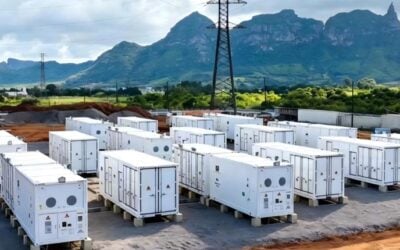
CEO and ‘Technoking’ of the company Elon Musk said Tesla’s Megapack large-scale battery energy storage system (BESS) solution is “almost sold out” for 2027, with production ramping “as quickly as possible to meet demand.”
That was one of the few brief mentions the company’s energy business received in an earnings call held after markets closed. The Tesla energy business includes a very small contribution from solar PV equipment sales and associated services but is dominated by energy storage.
Try Premium for just $1
- Full premium access for the first month at only $1
- Converts to an annual rate after 30 days unless cancelled
- Cancel anytime during the trial period
Premium Benefits
- Expert industry analysis and interviews
- Digital access to PV Tech Power journal
- Exclusive event discounts
Or get the full Premium subscription right away
Or continue reading this article for free
Perhaps unsurprisingly, company executives’ comments, shareholder questions and all but one question from an analyst focused squarely on Tesla’s self-driving and Robotaxi offerings, the Optimus humanoid robot and Tesla’s in-house chip assembly ambitions. Questions and discussion around the planned SpaceX-Tesla merger were ruled off-limits.
If energy storage was barely referenced, mentions of Musk’s activities outside of Tesla, including the Project Meridian task force he currently leads for the US military and his political ‘activism,’ were even more conspicuously absent from company materials and the earnings call.
Tesla Q3 2026 energy storage results & earnings call at-a-glance
- 13.7GWh energy storage deployments in Q3 2026, 36GWh total deployments in first nine months of year
- Energy storage quarterly revenues were down 16% year-on-year, and nine-month revenue down 6%
- Energy business gross margin improved slightly in quarterly terms, from 31.4% in Q3 2025 to 33.1% in Q3 2026, but were down year-over-year
- US government tariff refunds provided a US$786 million boost to quarterly revenues
- Energy storage customers’ tariff refunds totalled US$339 million
- Tesla invested US$2 billion in SpaceX common stock during the nine months ending 30 September
- US$729 million in accounts receivable due to Tesla from SpaceX for Megapack sales for AI data centre applications
- Tesla appears to be the first company to have adopted the terminology super intelligence (SI) when discussing artificial intelligence (AI)
- Tesla share price was down 16.57% since 23 October 2025 at the time of writing, while Nasdaq Composite has risen 13.37% in the same period
The company’s best-ever quarter so far for energy storage deployments was Q4 2025, when it recorded 14.2GWh of installations. Its next best after the quarter just gone was the previous one, with 13.5GWh deployed in Q2 2026.
However, after warning of expected margin compression in its energy division last year, that came to pass in Q2, with energy gross margins almost halving from 39.5% to 20.4% sequentially. This time out, energy gross margins bounced back to 33.1%.
Total revenues, including automotive, energy and services, were just over US$28 billion for the quarter, seeing almost no change year-on-year from Q3 2025. Total revenues for the nine months ended 30 September were US$78.7 billion, up from US$69.9 billion for the same period last year.
Quarterly energy generation and storage revenue fell 16% year-on-year to US$2.9 billion from US$3.4 billion. Nine-month revenue for the segment saw a smaller decline of 6% from US$8.9 billion to US$8.4 billion.
Overall gross profit was US$5.5 billion for Q3 2026, a 9% increase from US$5.05 billion in Q3 2025, but January-September gross profit increased by a much bigger 24%, with US$14.97 billion in the first nine months of 2026 versus US$12 billion in the same period of 2025.
The gross margin improvement in the energy business was largely due to US tariff refunds recognised during the quarter, Tesla CFO Vaibhav Taneja said in the earnings call.
According to Tesla’s quarterly Form 10-Q filing, the invalidation of tariffs introduced when the US government invoked the International Emergency Economic Powers Act (IEEPA) resulted in refunds recognised during the quarter, which reduced cost of revenues by US$526 million for its energy generation and storage business and US$260 million in its automotive business (total US$786 million).
However, during the quarter, Tesla also recognised a US$339 million reduction in energy generation and storage revenues as it paid refunds owed to customers under contract.
Speaking of tariffs, Tesla’s energy storage business had seen an “outsized” impact from tariffs due to the continued use of imported battery cells from Chinese manufacturing partners, as referenced by Taneja in previous earnings calls.
CFO Taneja said that production of Tesla Megapacks using the company’s own lithium iron phosphate (LFP) cells has now begun during the quarter at Gigafactory Nevada, which is thought to be ramping to an initial 7GWh annual production capacity.
The lack of scrutiny of Musk’s non-Tesla activities is ongoing, with neither shareholders nor analysts asking any questions on the subject, less than a year after his historic executive compensation package, worth US$1 trillion pending milestone completion, was approved.
Among ‘Risk Factors’ cited in the company’s annual report 10-K for 2025 was Tesla being “highly dependent on the services of Elon Musk,” noting that while Musk “spends significant time with Tesla and is highly active in our management, he does not devote his full time and attention to Tesla.”
The political dimensions of Musk’s extra-Tesla activity, whether relating to Ukraine’s access to Starlink, interjection into the political process in Britain and Germany or previous and current work with the US federal government continue, at least to outside observers, to be an elephant in the room that shareholders and analysts are either not interested in or are unwilling to discuss.