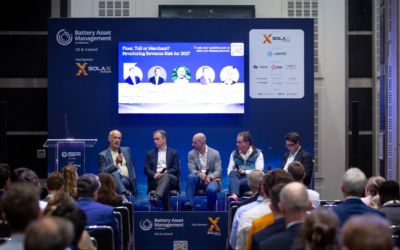
Algorithmic bidding systems used to trade battery storage do not threaten competition in Australia’s National Electricity Market (NEM), according to Fluence.
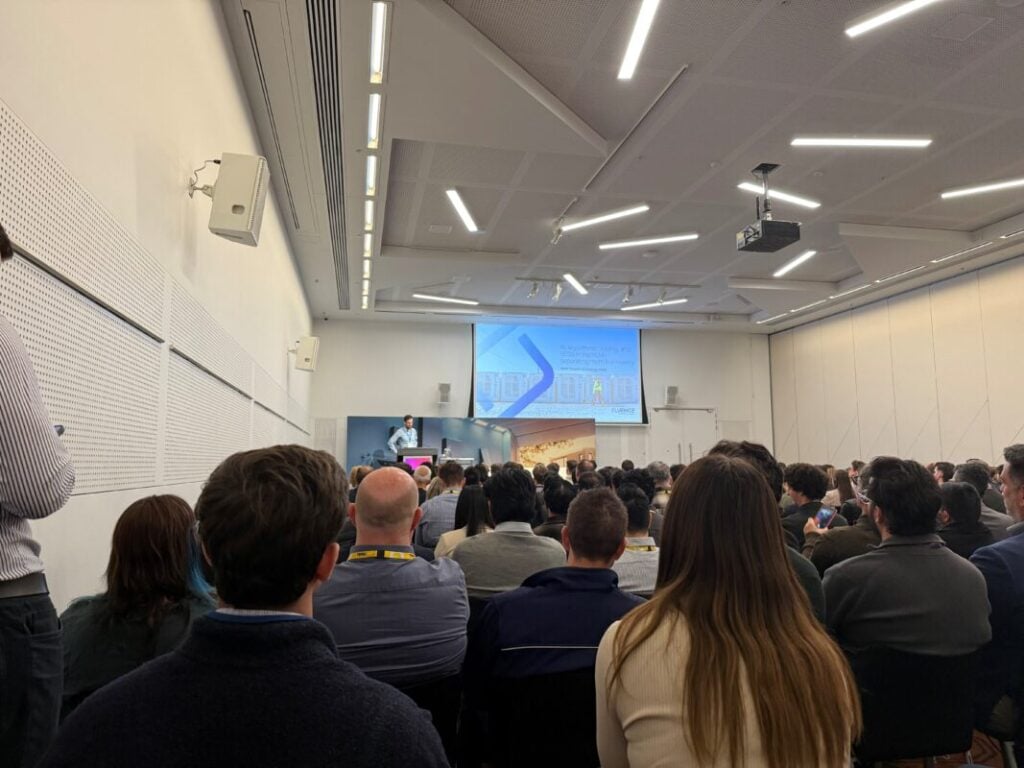
Speaking at All-Energy Australia 2026 in Melbourne, Matt Grover, director, energy markets APAC at Fluence, said the number of participants controlling dispatchable peaking capacity in the NEM had more than doubled in 10 years.
“I think the boogeyman is the same boogeyman as always has been, which is the concentration of control of dispatchable capacity,” Grover said, arguing that algorithmic bidding systems were not the threat to competition some had suggested.
Using NEM registration data from the Australian Energy Market Operator (AEMO), Grover said that 10 years ago the market had 20GW of dispatchable peaking capacity, including coal units that routinely set prices in peak periods, controlled by just 15 market participants.
Try Premium for just $1
- Full premium access for the first month at only $1
- Converts to an annual rate after 30 days unless cancelled
- Cancel anytime during the trial period
Premium Benefits
- Expert industry analysis and interviews
- Digital access to PV Tech Power journal
- Exclusive event discounts
Or get the full Premium subscription right away
Or continue reading this article for free
Today there is about 60% more of that capacity, controlled and traded by 39 participants, after two coal plants retired and 11GW of BESS was built over that period.
“Competition basically has never been so good in the NEM, and it’s part of the reason that you’re seeing the wholesale prices you’re seeing at the moment,” he said.
The Australian Energy Regulator (AER) made a similar finding in its latest market report, saying new BESS capacity is reducing market concentration during peak periods, although it warned that competition risks remain overnight and in the evening peak.
Grover leads the team responsible for Mosaic, Fluence’s algorithmic bidding system, which he said has been used in the NEM since 2019 by dozens of market participants to bid wind, solar PV and BESS assets into wholesale markets.
Its users include Akaysha Energy, which selected Mosaic for 3.64GWh of BESS projects, including the Waratah Super Battery in New South Wales (NSW).
He framed his presentation as a set of five myths about BESS trading, saying several regulators had raised questions about algorithmic bidding in the last year, including whether it needed regulatory intervention and whether AI could harm competition.
Those questions remained open following the NEM Review chaired by Griffith University Associate Professor Tim Nelson, he said, whose draft report proposed reforms to address inefficiencies in bidding practices and improve visibility of BESS state of charge.
Fluence uses AI and machine learning to forecast prices and model scenarios, Grover said, but not in the optimisation that produces bids. That step relies on “decades-old operations research techniques” run on modern computing, so there is “no possibility of like hallucination happening or a decision or a bid being made that was not explainable,” he said.
Given the market rules and the physical limits of a BESS, he added, “there’s really no room for unexplainable AI models to come in and wreak havoc.”
Grover also said bidding systems existed primarily for compliance rather than revenue.
“They exist for compliance-based reasons,” he said, because BESS in the market have so many obligations to so many parties that “they need automation and algorithms to help them achieve their obligations and remain compliant.”
The most important of these is meeting dispatch targets set by AEMO. Bids are firm commitments on where a BESS will be in five or 10 minutes, accounting for auxiliary load, temperature derates and state of energy (SOE), which he said no human could manage.
Grover previously told Energy-Storage.news that trading BESS in a maturing Australian market demands software solutions, from grid constraints to auxiliary loads.
If operators relied on humans to make these commitments to AEMO, Grover said, BESS would miss them and “would quickly have lost their social licence to even participate in the market.”
He rejected the idea that algorithms were doing the trading. “We at Fluence don’t do any trading or make any commercial decisions for any of our market participant customers,” he said, adding that participants set strategy and have 24/7 trading and control obligations.
In one anonymised example he presented, traders set SOE targets the night before, specified the prices they would accept for midday charging, spread the system’s energy over a longer period in the late afternoon and adjusted regulation service pricing for the evening peak.
Nor did a shared bidding system mean identical behaviour, Grover said. The fleet tends to move together because every asset faces the same regional reference price, and it now has a large influence on prices: AEMO data shows BESS set prices in 32% of NEM trading intervals in Q1 2026, overtaking hydro.
Yet output profiles he showed from three BESS on the same day, each run by a different participant using Mosaic, were “quite distinct,” Grover said.
Price spikes and ‘percent of perfect’
Grover challenged the common claim that BESS miss price spikes. On one recent day in Victoria, the morning price spiked to AU$300-400/MWh (US$209-279/MWh) for about an hour, but only once the BESS fleet ran out of energy.
“It’s kind of the other way around,” he said, explaining that the spike only happened because the fleet had no energy left to dispatch. In the evening peak on the same day, the fleet held more energy and the price stayed flat at around AU$150/MWh.
In South Australia on 9 October, a single interval spiked to AU$3,200/MWh, but only seven BESS totalling 90MW cleared. Adding more BESS capacity would have reduced the spike or removed it entirely, Grover said.
He said back tests claiming a simulated BESS would have captured such spikes deserved scepticism unless they treated price elasticity carefully, and that “percent of perfect” analysis shared online was “a problematic metric for assessing performance”. If the entire BESS fleet had been there, he said, the spike would not have happened at all.
Never miss an Australian energy storage story. Sign up for our Australia newsletter and get the latest project announcements, policy updates and market analysis delivered directly to you.