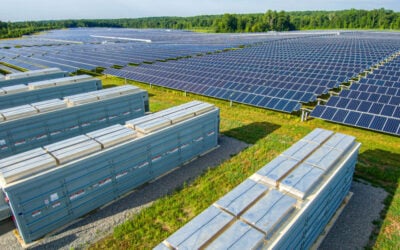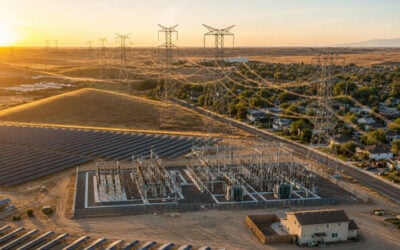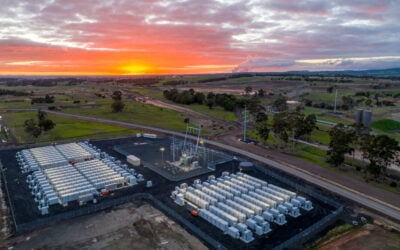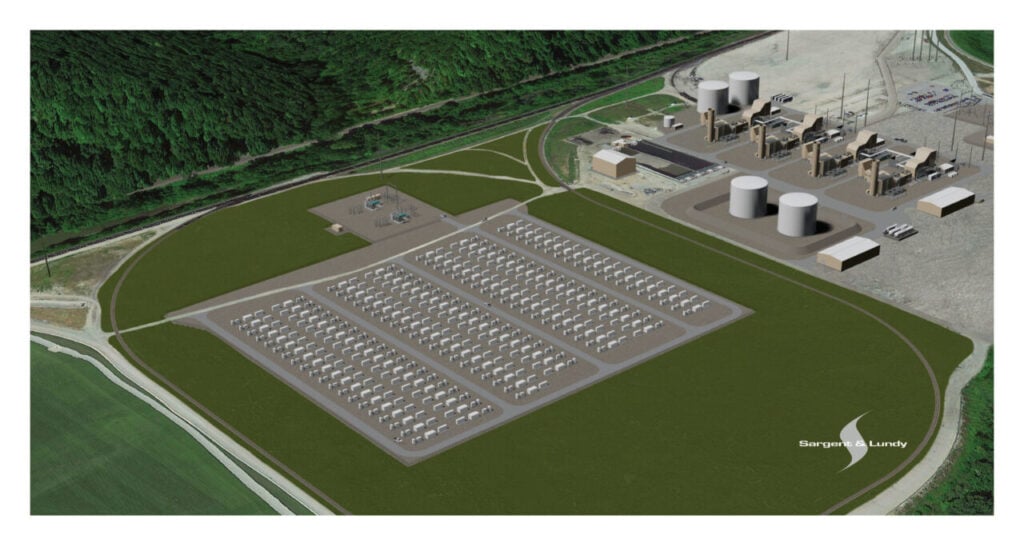
Three US utilities, Ameren Missouri, DTE Energy in Michigan, and Black Hills Energy in Colorado have recently submitted IRPs with highlighted BESS project additions.
Ameren Missouri updates IRP with 2,400MW of BESS planned by 2030
Utility Ameren Missouri has updated its integrated resource plan (IRP) outlining a 20-year energy roadmap, including expanding battery energy storage system (BESS) capacity with 2,400MW planned by 2030.
Announced 28 September, Ameren stated the 2026 IRP was selected from over 20 potential plans. The final plan reflects long-term considerations, forecasted customer energy needs, economic growth, available energy resources and associated costs.
Ameren’s IRP includes “accelerating and expanding the addition of battery storage, with 2,400MW planned by 2030, to keep energy available when energy needs are high and customers need it most.”
Try Premium for just $1
- Full premium access for the first month at only $1
- Converts to an annual rate after 30 days unless cancelled
- Cancel anytime during the trial period
Premium Benefits
- Expert industry analysis and interviews
- Digital access to PV Tech Power journal
- Exclusive event discounts
Or get the full Premium subscription right away
Or continue reading this article for free
The IRP states that Ameren has secured certificates of convenience and necessity (CCNs) for 400MW of BESS at Big Hollow, and has applied for CCS for another 545MW at Castle Bluff, the 250MW Millcreek BESS, and the Huck Finn project, with approval expected in Q4 of this year.
It also includes 1,300MW of new solar generation resources by 2030 and an additional 2,300MW by 2045. The plan calls for the addition of 1,500MW of wind energy resources after 2030.
Ameren’s IRP includes combined-cycle natural gas generation resources, with 2,100MW scheduled to be in service by 2031, another 2,800MW by 2035 and a further 1,400MW by 2042.
The utility plans to build 1,900MW of on-demand simple-cycle natural gas generation resources by 2029, with an additional 2,400MW after 2040 and will add 500MW of natural gas fuel cells by 2030.
It is also planning for 1,200MW of nuclear generation by 2040. Notably, neither a location nor a technology has been selected yet, both advanced large-scale reactor designs and small modular reactors are being considered. Ameren Missouri continues to expect to seek an extension to operate the 1,190MW Callaway Energy Centre beyond 2044.
Ameren Missouri’s IRP is filed with the Missouri Public Service Commission every three years and may be updated more frequently as part of its ongoing planning process.
DTE Energy files IRP with planned 4.5GW of BESS
Michigan utility DTE Energy has filed its IRP with the Michigan Public Service Commission (MPSC), which includes a planned 4.5GW of BESS.
Announced 24 September, DTE claimed the plan is expected to be US$3.5 billion less expensive than the company’s 2022 IRP after accounting for multiple factors including evolved pricing and other market dynamics, as well as changing energy laws.
The planned 4.5GW of BESS includes 1.7GW of long-duration energy storage (LDES), which includes approximately 1,663MW of compressed air energy storage (CAES) and 50MW of iron-air storage.
DTE is preparing to end its coal use in 2032. The first phase of the Monroe Power Plant closure will take place in 2028, with the final phase occurring in 2032, retiring approximately 3GW of generation capacity. DTE noted that in 2005, coal accounted for 62% of its generation capacity. By 2033, DTE intends to not operate a single coal plant.
The new IRP reduces carbon dioxide emissions by a reported 84%, driven by the retirement of Monroe Power Plant, the addition of renewables and BESS and the addition of natural gas plants.
DTE stated that once carbon capture and storage is implemented, more than 90% carbon emissions reductions will be achieved.
DTE’s IRP upgrades the Fermi 2 nuclear plant with an additional 177MW production capacity. It adds two new natural gas plants totalling 2.1GW, and notably, includes a virtual power plant (VPP) that would make use of participating batteries located in homes and businesses to help reduce grid demand.
Earlier this year, DTE stated that it would forego customer rate increases for two years, dependent on the success of a US$16 billion data centre campus built for tech company Oracle, involving a BESS.
Black Hills Energy files IRP with 200MW of BESS
Utility Black Hills Energy has filed its 2026 IRP with the Colorado Public Utilities Commission (CPUC), proposing approximately 200MW of BESS.
Filed on 11 September, the plan builds on the company’s 2022 Clean Energy Plan and outlines generation developments designed to support Colorado’s emissions reduction targets whilst maintaining grid reliability over a 25-year planning horizon.
The utility’s preferred portfolio proposes to add approximately 100MW of wind energy, 200MW of BESS, and 125MW of gas-fired generation. The final mix of resources will be determined during a competitive solicitation process to be held in 2027, subject to review and approval by the CPUC.
The utility’s modelling identified 200MW of BESS as a cost-effective resource to help achieve the company’s goals of maintaining reliable electric service, keeping energy cost-effective, and meeting Colorado’s requirement to reduce greenhouse gas emissions by 80% by 2030, based on 2005 levels.
Black Hills Energy stated that because of the intermittent nature of renewables, the utility “must have a consistent source of generation available to be dispatched at all times.” It further stated that natural gas-fired generation is the most efficient means of maintaining reliable service to customers around the clock.
The proposed 125MW of natural gas capacity forms part of the portfolio designed to balance emissions reductions with system reliability requirements.
The acquisition of new generation resources will be determined during the second phase of the regulatory proceeding, after the CPUC has reviewed and approved the electric resource plan.
Black Hills Energy expects to issue a request for proposals (RFP) in 2027, open to all energy developers. Through a competitive solicitation process, independent evaluators will determine the most cost-effective resources to achieve the utility’s goals.
The proposed resource mix is not final, and the company will evaluate proposals from a variety of energy providers and technologies.
As part of the company’s 2022 Clean Energy Plan, Black Hills Energy is moving forward with construction of a 50MW/200MWh BESS facility at its Pueblo Airport Generating Station. The battery project was approved by the CPUC in 2025 and is expected to begin supplying power to customers in late 2027.
The utility is also proceeding with a power purchase agreement (PPA) for 200MW of solar energy. The utility-scale solar project will be located in Pueblo County and is anticipated to be placed into service in 2029.