US utility DTE Energy has said it will forego customer rate increases for two years, dependent on the success of a US$16 billion data centre campus involving a battery energy storage system (BESS).
DTE Energy will supply 100% of the power for data centre developer Related Digital’s campus in Saline Township, Michigan, US, built for tech company Oracle, and augmented by a BESS.
On 23 April, DTE announced its intention to forego asking for rate increases for at least two years following its upcoming filing with the Michigan Public Service Commission (MPSC) today, 28 April.
Joi Harris, president and CEO of DTE noted, “As long as the first data centre project we’re supporting comes online as planned by the end of 2027 and we’re able to receive other regulatory approvals, we will refrain from filing another rate request until at least 2028—providing customers two years without an increase in rates after the current request is complete.”
Try Premium for just $1
- Full premium access for the first month at only $1
- Converts to an annual rate after 30 days unless cancelled
- Cancel anytime during the trial period
Premium Benefits
- Expert industry analysis and interviews
- Digital access to PV Tech Power journal
- Exclusive event discounts
Or get the full Premium subscription right away
Or continue reading this article for free
The utility claims its two data centre contracts, one already approved and one currently with the MPSC for approval, will contribute approximately US$9 billion to improving DTE’s electric system through 2045, which would help to reduce the total amount needed from other customers.
On 28 April, DTE will make a formal request for US$474.3 million, which the utility claims will support several billion dollars of investment in the electric grid and power generation, and mark the beginning of an approximately 10‑month regulatory review process.
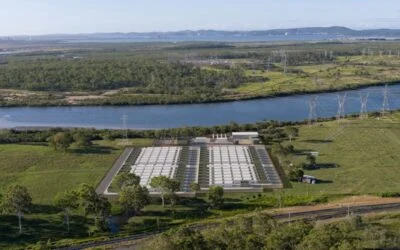
The revenue request supports the conversion of DTE’s Belle River Power Plant from coal to natural gas and the development of the 220MW/880MWh Trenton Channel Energy Center, which DTE said is “expected to be the largest stand-alone battery energy storage facility in the Great Lakes region when it is commissioned.”
DTE began construction on the BESS in 2024. The utility received approval to begin construction from the MPSC for the Trenton BESS project in March of that year, as the coal-burning Trenton stacks were demolished, as reported by Energy-Storage.news. At the time, the MPSC stated the expected cost of the project would be around US$460 million.
It was later announced that battery storage system integrator and manufacturer Powin would supply the BESS technology for the project, using its Stack800 platform. In 2025, Powin, and most of its assets were acquired by software-focused energy storage system integrator FlexGen.
On 30 April 2025, prior to Powin’s acquisition, DTE said in a filing with the MPSC that it missed the delivery date for the Trenton Channel BESS equipment and failed to implement a recovery schedule. On 19 May, DTE proactively terminated its contract with Powin.
On 9 June, when Powin filed for bankruptcy, it took steps to find a new supplier for the project.
In November 2025, DTE filed for an ex parte approval from the MPSC for an equipment supply agreement (ESA) between itself and system integrator subsidiary of LG Energy Solution, LG Energy Solution Vertech (LG ESV). DTE stated this move achieved a cost reduction of over US$30 million.
A final decision by the MPSC on the US$474.3 million request and any potential rate changes are not expected until late February 2027.
First data centre secures financing
On 24 April, DTE announced it would supply power for the Related Digital data centre. The utility claimed that the project is expected to create US$300 million in savings for DTE’s existing customers due to the project’s contribution towards the fixed costs of grid maintenance and improvements.
Related Digital has secured financing for its data centre campus, including equity from Related Digital and funds affiliated with Blackstone, and fixed-rate, long term debt financing anchored by Pacific Investment Management Company (PIMCO)-managed funds and accounts.
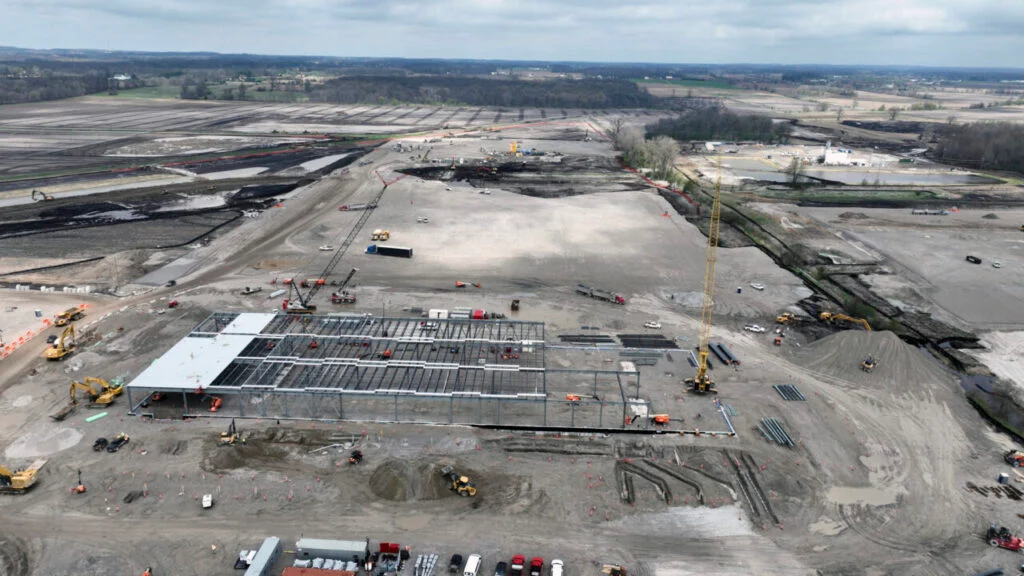
In November 2025, Oracle and OpenAI announced, with Related Digital, the companies’ plans to develop a data centre in Saline Township. This project has been named The Barn, after a historic red barn on the site of the project.
Michigan real estate office, The Perna Team, wrote of the project at the time of the announcement, “With over 1GW of computing capacity, the complex will draw an estimated 1.4GW of electricity at full tilt. Utility DTE Energy notes this is about 25% of its entire current power generation capacity, roughly equivalent to the output of a mid-sized nuclear reactor.”
Oracle will finance in its entirety, a new BESS for DTE, to support the data centre.
In March, the MPSC approved six BESS projects for DTE totalling 1,332MW of capacity in the state.
Three of these six projects, the 132MW Fish Creek Energy Centre, the 100MW Cold Creek Energy Centre, and the 100MW Pine River Energy Centre will support the Red Barn data centre.
Under the approval terms for the data centre, Oracle, operating as Green Chile Ventures, will cover the costs over 15 years to develop the BESS for the project. DTE Electric will be responsible for developing, owning, and operating the facilities, while Oracle will earn any market revenues generated from operating the facilities in the wholesale market.
Related Digital has claimed Red Barn will create over 2,500 union construction jobs, 450 onsite jobs, and more than 1,500 jobs across the county.
It further stated that millions in new tax revenues will support the Township, Washtenaw County and Michigan schools, US$14 million will be seen in direct benefits for the fire department and community investment, the data centre will use a closed loop system to help protect the state’s water resources, and that more than 750 acres of farmland and wetland will be preserved.
Related Digital’s tax benefit claims are common among data centre developers, though, Good Jobs First, a nonprofit watchdog on tax subsidies and incentives, noted in an April 2025 report that at least 10 states lose more than US$100 million per year in tax revenue to data centres.
Additionally, the report stated that “of the 32 states with tax incentives to data centres, 12 fail to disclose even aggregate revenue losses.”
US Securities and Exchange Commission (SEC) filings revealed that the site, potentially located in Van Buren Township, will be dubbed Project Cannoli, and will utilise 400MW/1,600MWh of BESS and develop 50MW of long-duration energy storage (LDES). Google has also agreed to fund the solar and storage resources.