Renewables developer D. E. Shaw Renewable Investments (DESRI) and Ford Motor Company’s energy storage subsidiary, Ford Energy, will partner to deploy energy storage in the US.
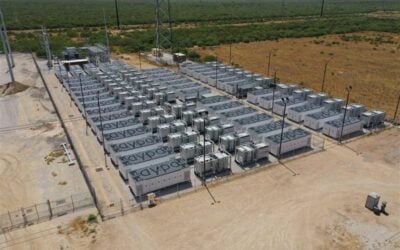
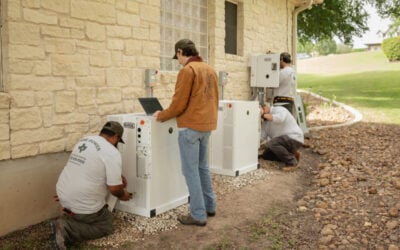
Announced 4 November, DESRI and Ford Energy are partnering to deploy US-assembled battery energy storage systems (BESS) and increase the availability of dispatchable capacity resources to the grid.
DESRI’s co-founders previously held roles in companies First Wind and Deepwater Wind before officially launching DESRI in 2010.
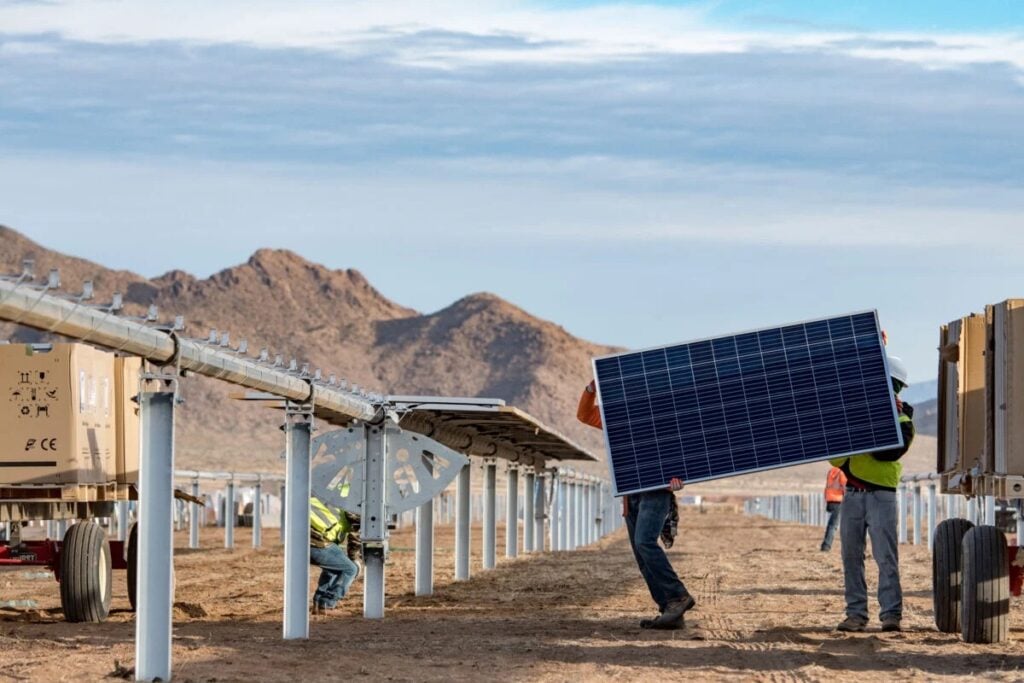
After acquiring and operating its first utility-scale solar project, the company shifted focus toward long-term power purchase agreements (PPAs) with utilities and other corporations.
Try Premium for just $1
- Full premium access for the first month at only $1
- Converts to an annual rate after 30 days unless cancelled
- Cancel anytime during the trial period
Premium Benefits
- Expert industry analysis and interviews
- Digital access to PV Tech Power journal
- Exclusive event discounts
Or get the full Premium subscription right away
Or continue reading this article for free
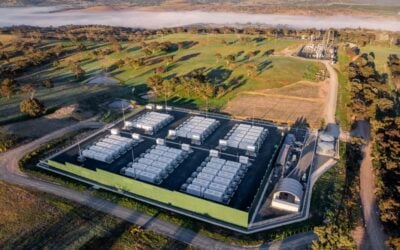
DESRI made landmark deals for its involvement in BESS with projects such as Arroyo Solar and Storage, a 300MWac solar PV plant with 150MW/600MWh of co-located BESS in New Mexico’s McKinley County, and the 130MW solar, 260MWh BESS Carne Solar and Storage project, also in New Mexico.
Early this year, DESRI signed a preferred equity investment in IPP Linea Energy’s 235MW/470MWh Duffy BESS in Matagorda County, Texas.
Ford Energy was launched in May of this year. Its flagship product is the Ford Energy DC block, a standardised 20-foot ISO containerised BESS designed around 512Ah lithium iron phosphate (LFP) cells and available in 2-hour and 4-hour configurations.
The Ford Energy DC block is built at the company’s Kentucky gigafactory, with a 20GWh annual capacity and full US assembly, for foreign entity of concern (FEOC) and prohibited foreign entity (PFE) compliance.
As observed in greater detail this August by Energy-Storage.news Premium, this puts Ford in the emerging 500+Ah cell category, though rivals like CATL, EVE, REPT, Hithium and CALB are already using larger 587-628Ah cells with higher container ratings (around 6.25MWh) and published energy density figures Ford has yet to disclose.
Ford’s system has a 20-year calendar life and an operating range of -35°C to 55°C, broadly comparable to competitors, though its efficiency and energy density remain undisclosed. Designed for short-duration grid services, such as frequency regulation, arbitrage, and demand response, first deliveries are expected in late 2027.