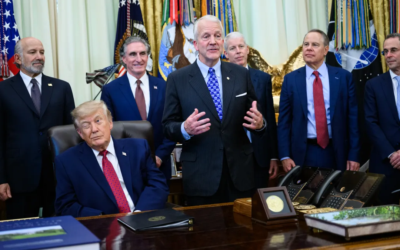
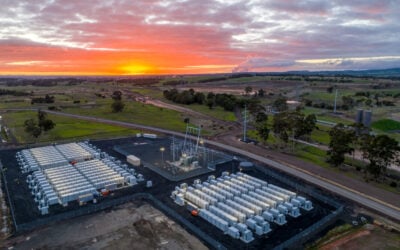
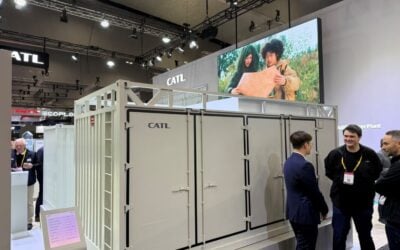
The Democrats have won the House and the Senate in the US Midterm elections, dealing a blow to the Trump administration and sending Chinese and Korean battery company share prices upwards.
The provisional results came out this morning (4 November) and the double Congressional win should make it more difficult for the Republicans to implement tax-based and legal dampeners on the clean energy industry.
It’s still early days to draw any conclusions beyond that, but this could in theory mean a more stable policy environment for the sector and those looking to sell into it. While no one is suggesting a reversal of the Trump administration’s anti-renewables tax and tariff measures, the lessened prospect of substantial moves in the near-term may reduce risk.
That makes the share prices of Chinese and Korean battery and battery energy storage system (BESS) companies worth looking at. Analysts and investors may already be pricing in a stabilising policy environment.
Try Premium for just $1
- Full premium access for the first month at only $1
- Converts to an annual rate after 30 days unless cancelled
- Cancel anytime during the trial period
Premium Benefits
- Expert industry analysis and interviews
- Digital access to PV Tech Power journal
- Exclusive event discounts
Or get the full Premium subscription right away
Or continue reading this article for free
The share prices of 12 major Chinese battery and BESS firms including CATL, BYD and Sungrow have jumped by an average of 3.26% in today’s trading (price at the time of writing compared to yesterday’s close).
The two major listed Korean companies, LG Energy Solution and Samsung SDI, have done even better, jumping 9.5% and 11.3% respectively.
Note that the Shenzhen Index has increased more, at 4.2%, while Shanghai’s is up 2.3%. Shenzhen’s stock exchange is more tech-focused, so the country’s wider tech sector appears to have done better than its battery-specific ones.
See the table of the companies below. Currencies are in Chinese RMB for all but the two Korean companies, LG ES and Samsung SDI, which are in Korean Won. We used both of CATL’s Shenzhen and Hong Kong listings because of its size, but just used one for the others. Canadian Solar manufactures in China but is listed on the Nasdaq.
| Company | Current/closing price | Yesterday’s close | Percentage (%) change |
| CATL (Shenzhen) | 252.88 | 249.5 | 1.13 |
| CATL (HK) | 377 | 361 | 4.4 |
| Sungrow | 81.17 | 75.7 | 7.2 |
| EVE Energy | 49.91 | 48.94 | 1.9 |
| CALB | 13.72 | 13.57 | 1.1 |
| BYD | 85.15 | 84.97 | 0.2 |
| HyperStrong | 166 | 154.36 | 7.5 |
| REPT BATTERO | 7.215 | 6.875 | 4.9 |
| Trina Solar | 10.71 | 10.43 | 2.7 |
| Canadian Solar (Nasdaq) | 11.53 | 10.68 | 0.8 |
| Sunwoda Electronic | 18.35 | 18.09 | 1.4 |
| Jinko Solar | 4.18 | 4.08 | 2.5 |
| LONGi Green Energy | 12 | 11.73 | 2.3 |
| LG Energy Solution (KSE) | 355000 | 324119 | 9.5 |
| Samsung SDI (KSE) | 545000 | 489500 | 11.3 |
| Average 12 Chinese companies | 3.26 | ||
| Shanghai Index (SSE) | 3,686.17 | 3603.5 | 2.3 |
| Shenzhen Index | 11,335.69 | 10879.90 | 4.2 |