
Welcome to our latest BESS Industry Buzz, this week featuring the US midterms, ultra-rapid BESS commissioning, how to calculate RTE and a cybersecurity incident shutting down a solar-plus-storage project in Chile.
US Blue Wave ‘not a mandate to spend on clean energy without results’
Former US Secretary of Energy Jennifer Granholm said midterm election results represent a “new opening” for clean energy as well as another “political wake-up call” for data centre developers, highlighting that AI’s social license is now a political issue. While it means solar, wind, batteries, geothermal, transmission and industry employment will all enjoy renewed attention, “don’t mistake this election for a mandate to spend money without demonstrating results,” Granholm wrote.
“Voters want LOWER energy bills, more jobs and an economy that works for them. Clean energy has to deliver on all three,” Granholm, now president and CEO of Granholm Energy, wrote.
Sungrow’s 20-day commissioning
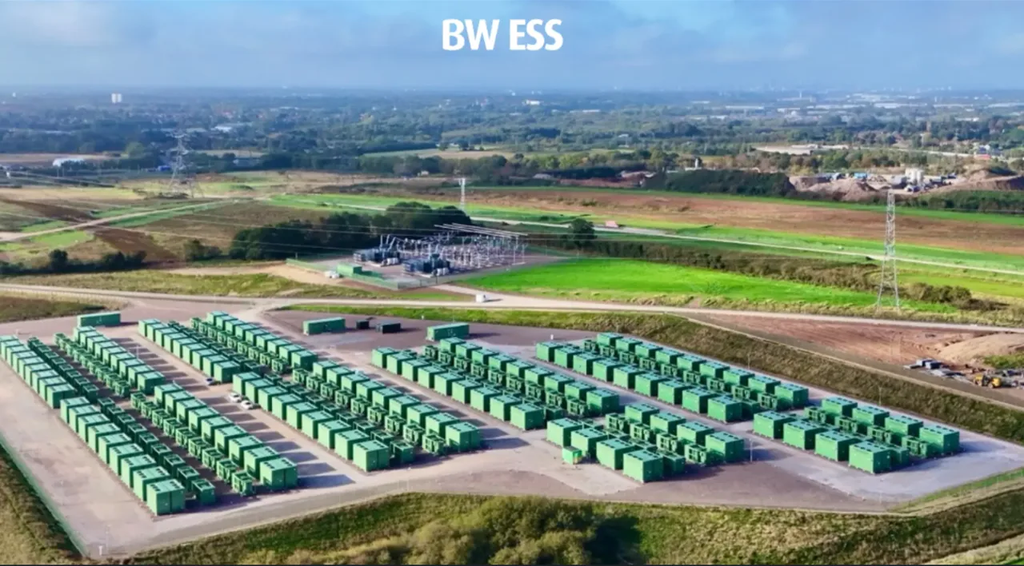
BW ESS and Sungrow made a big deal of 20 days it took the latter to go from grid connection to commercial operation at the firms’ Hams Hall BESS in the UK. It’s not always obvious when something like that is truly noteworthy, but posts from various independent industry sources indicate it is. One from Independent BESS advisor Konstantin Groeneveld explains why, see it here.
Try Premium for just $1
- Full premium access for the first month at only $1
- Converts to an annual rate after 30 days unless cancelled
- Cancel anytime during the trial period
Premium Benefits
- Expert industry analysis and interviews
- Digital access to PV Tech Power journal
- Exclusive event discounts
Or get the full Premium subscription right away
Or continue reading this article for free
The talent gap
We hear a lot about financing, regulation and grid as the key challenges the industry faces. One we hear less about is workforce, particularly engineering workforce. Recruiter Jude Jones gave an example of how the challenges of recruiting engineers can affect projects in Germany, see his post and the discussion about it here.
Chile solar-plus-storage project down for two months after cybersecurity incident
A few people have posted about this one: the Huatacondo solar-plus-storage project in Chile has been down for two months after it was taken offline, with ‘cybersecurity’ mentioned in the operator’s logging of the event. There isn’t much information about this out there, but power systems engineer Praveen Kr Agarwal’s post and discussion is useful reading on it.
Sonnen’s collapse continues to stoke discussion
The insolvency of German home battery and VPP pioneer Sonnen continues to be discussed in the corridors of LinkedIn. This is particularly because the news came just two months after it was sold by oil and gas major Shell to a family office investment firm. We included a post on it in last week’s BESS Industry Buzz too.
Accure Battery Intelligence CEO Dr. Kai-Philipp Kairies this week provided some useful context with an overview of the residential battery market’s development in Germany, see his post here.
No agreement on how to calculate round-trip efficiency (RTE)?
Arthur Claire, director of technology at technical compliance and quality engineering consultancy Sinovoltaics, recently posted about RTE and the difficulties in agreeing on a precise definition. See his post and the discussion here.
Poland, Finland lead Clean Horizon BESS revenue index
BESS assets in Poland and Finland saw the highest revenue opportunity among 15 European markets tracked by consultancy Clean Horizon’s Storage Index from January to August, the company posted. Polish battery storage assets of 2-hour duration could earn EU587k/MW/year during that time, although that should not be any indicator of potential revenues over, say, a 15-year timeline, the consultancy noted.
BESS technology pioneer McDowall celebrates five decades in energy storage
Battery storage consultant Jim McDowall will be a familiar figure to many readers. The gregarious but extremely sharp-minded industry veteran posted that 2026 is his fiftieth year in the industry, from a first half working with pocket-plate nickel batteries, moving into BESS later on. This led, while working at Saft, to a key role in delivering a project in Alaska in 2003 that won a Guinness World Record in 2005 as the World’s Most Powerful Battery. How times have changed, but McDowall noted that that project, for utility Golden Valley Electric Association (GVEA) in Fairbanks, Alaska, is still in operation.
Fluence interim CEO has ‘complete confidence in our future’
Following the sudden departures of Fluence’s CEO Julian Nebreda and CFO Ahmed Pasha, interim CEO Axel Meier said that, having sat on the company’s board since 2020, he has had a “front row seat to the company’s impressive growth.” This close-up knowledge of the business and its “incredible team” gives Meier “a clear line of sight and complete confidence in our future,” he posted.
ERCOT BESS revenues eroding even as their importance to system grows
Despite the critical role batteries played in helping the Electricity Reliability Council of Texas (ERCOT) keep the lights and air-conditioning on during summer this year, BESS revenues are shrinking, Scott Burns, SVP at ‘carbon intelligence platform’ Quintrace wrote. While it may not require a market redesign, Burns urged that action be taken to build revenue frameworks, rather than “wait for the next crisis to do it for us.”
