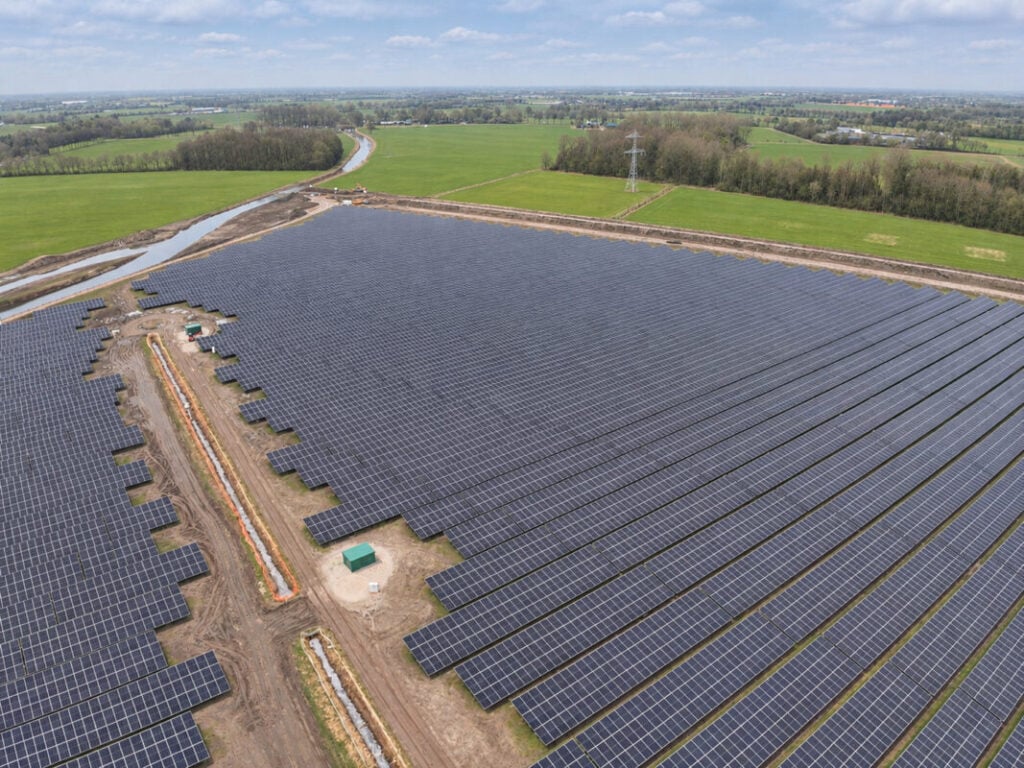
Statkraft has signed a 10-year agreement with Ampyr Solar Europe covering the Snelle Loop co-located solar PV and battery energy storage system (BESS) project in the Netherlands.
The deal, announced by the companies on Wednesday (18 November), combines a power purchase agreement (PPA) for the solar PV plant with a tolling contract for the BESS. It took effect on 1 October 2026.
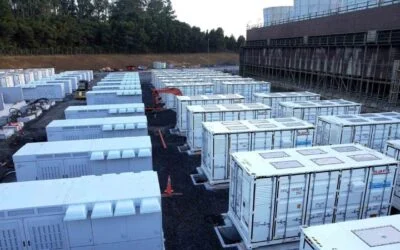
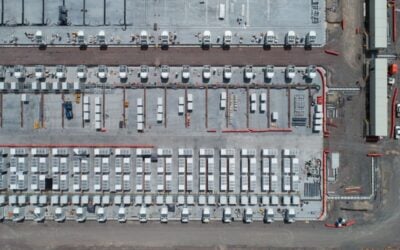
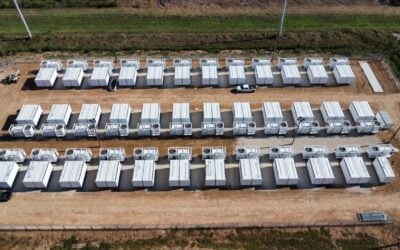
Snelle Loop, in Beek en Donk in the southern Dutch province of North Brabant, comprises a 27MW solar PV plant and a co-located 10MW/40MWh BESS, giving the storage component a 4-hour duration.
Under the agreement, Statkraft will provide a combination of route-to-market (RTM) and optimisation services for the project. The companies said the BESS contract combines tolling and merchant elements but did not say how the two are split.
Try Premium for just $1
- Full premium access for the first month at only $1
- Converts to an annual rate after 30 days unless cancelled
- Cancel anytime during the trial period
Premium Benefits
- Expert industry analysis and interviews
- Digital access to PV Tech Power journal
- Exclusive event discounts
Or get the full Premium subscription right away
Or continue reading this article for free
Tolling has been used to underpin the business case for other Dutch BESS projects. Developer Return, for example, secured financing and a tolling agreement with Vattenfall for an 800MWh BESS in the Netherlands.
Ampyr Solar Europe, the project’s owner, is an independent power producer (IPP) active in the Netherlands, Germany and the UK. In 2023, it secured a €200 million (US$215 million at the time) facility from Dutch bank Rabobank to fund 350MWp of solar PV across Europe, starting with three Dutch projects.
The companies did not name the BESS technology supplier, the grid connection point or the financing for Snelle Loop. According to Ampyr’s website, the 26.9MWp solar portion of the project was connected to the grid in March 2026, although it is not clear how far advanced installation of the battery storage is at the time of writing.
“Our collaboration with Ampyr Solar Europe is once again an important step in expanding our range of market solutions in the Netherlands,” said Pieter Schipper, managing director at Statkraft Markets GmbH, in comments translated from Dutch.
“Projects such as Snelle Loop show how renewable energy generation and flexibility increasingly go hand in hand to support the energy transition,” Schipper said.
He added that combining Statkraft’s expertise in renewable energy markets and BESS optimisation with Ampyr Solar Europe’s development capabilities could help “extract more value from these assets” while supporting a more flexible and reliable energy system.
Statkraft, which describes itself as Europe’s largest renewable energy producer, has been active in the Netherlands since 1998. It said it has recently started offering PPAs and flexibility purchase agreements (FPAs) in the country to owners of renewables and flexible assets, and to large energy users.
The Snelle Loop deal follows Statkraft’s 10-year tolling agreement with Greenvolt Power covering 400MW of BESS across two operating projects in Poland, signed in October and reported by Energy-Storage.news as the largest BESS tolling agreement in the EU.
Co-location and congestion in the Dutch market
Pairing BESS with solar PV has offered developers a route around grid congestion in the Netherlands. In 2023, developer PowerField planned to site its first large-scale BESS at solar PV plants so they could connect to the congested Dutch grid, sharing grid connections with existing sites.
At that time, the largest BESS in the Netherlands was Giga Storage’s 48MWh Giga Buffalo project. Since then, Return has put the Netherlands’ largest BESS online, while Giga Storage has taken its gigawatt-hour scale project strategy to Germany.
The merchant exposure in Snelle Loop’s BESS contract reflects a Dutch market that has become harder to trade. In a guest blog for Energy-Storage.news, Omer Bumin, founder and chairman of trading software company Powerlys, said Dutch imbalance dynamics had “shifted structurally”.
Bumin wrote that the share of settlement periods in which the system is regulated in both directions rose from around 8% in 2023 to 31.8% by June 2025. The Netherlands logged 963 negative-price hours through July 2025.
“As SDE++ gives way to merchant exposure, the gap between what an operator commits and what it delivers settles at those prices, every 15 minutes,” he wrote, referring to the Dutch renewables subsidy scheme.
His analysis of what six months of Dutch market data tell us about the true worth of renewables and BESS dispatch optimisation modelled a hybrid site with 8MWp of solar PV, 6MW of wind and a 5MW/10MWh BESS behind a 15MW grid connection.
Over 183 days, an optimiser earned 13.3% more, about €145,000, than simple threshold rules. Against a competent one-cycle daily BESS schedule, its edge was 1.7%, or about €20,000.
Bumin said most of the gain came from cycling the BESS on purpose rather than from the algorithm itself, adding that the right dispatch strategy “depends on how your market settles surplus and shortfall”.