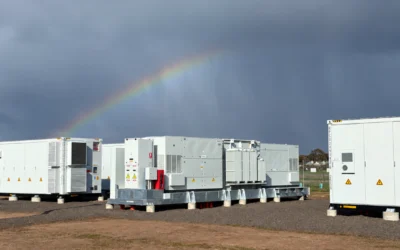
Potentia Energy, a joint venture co-owned by Enel Green Power and INPEX, has secured the first environmental approval for a grid-scale battery energy storage system (BESS) under South Australia’s new Hydrogen and Renewable Energy (HRE) Act.
The developer said yesterday (28 August) that its AU$400 million (US$261 million) 225MW/900MWh Emeroo BESS project, located approximately 15km northeast of Port Augusta, has received official approval for its Statement of Environmental Objectives (SEO) under the HRE Act, which came into effect on 11 July 2024.
The Emeroo BESS will be co-located with the already operational 275MW Bungala Solar Farm and is designed to deliver up to 4-hours of energy storage.
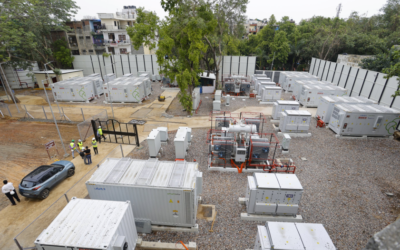
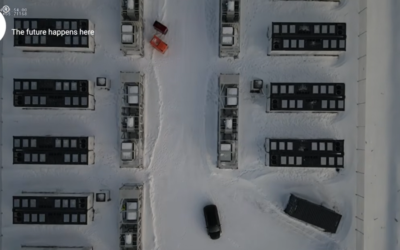
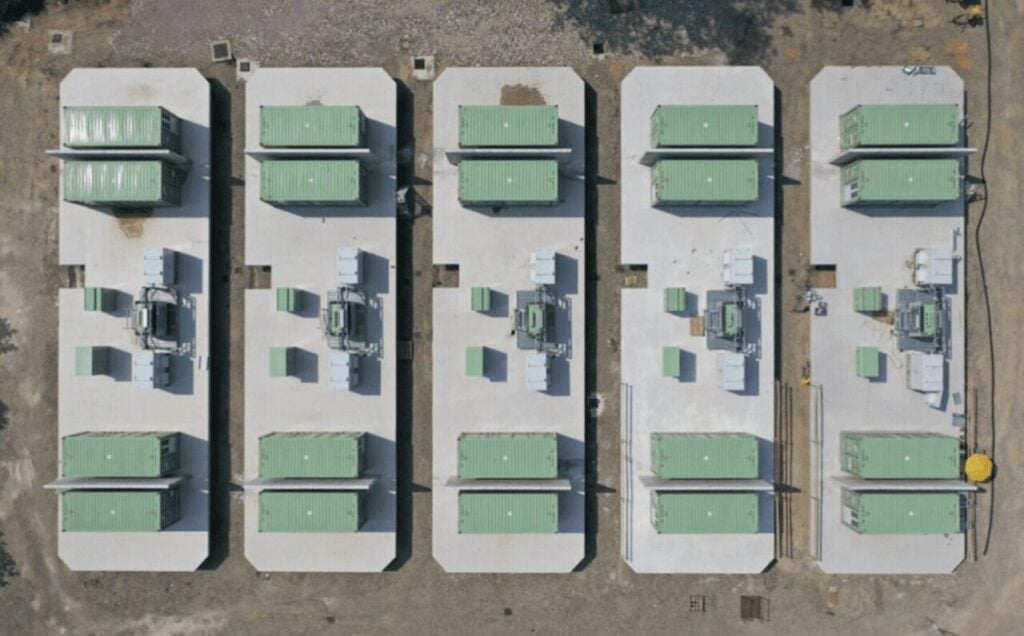
According to Potentia Energy’s project documentation, the Emeroo BESS will feature a modular design utilising shipping container-based battery units arranged in a grid pattern.
Try Premium for just $1
- Full premium access for the first month at only $1
- Converts to an annual rate after 30 days unless cancelled
- Cancel anytime during the trial period
Premium Benefits
- Expert industry analysis and interviews
- Digital access to PV Tech Power journal
- Exclusive event discounts
Or get the full Premium subscription right away
Or continue reading this article for free
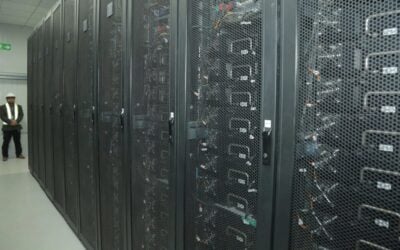
Each container will house lithium-ion battery modules, thermal management systems and state-of-the-art fire suppression technology. The facility will also include power conversion systems with inverters and transformers to efficiently manage electricity flow between the battery storage system and the grid.
The BESS will connect to the grid and the National Electricity Market (NEM) via ElectraNet’s Emeroo Substation.
The company submitted its License Application for the project to the South Australian government in early 2025, making it one of the first projects to test the new regulatory framework established by the HRE Act.
With the SEO approval now secured in August 2025, Potentia Energy is targeting the commencement of construction in late 2026, with projected commercial operation scheduled for early 2028.
South Australia’s Hydrogen and Renewable Energy Act
South Australia’s HRE Act, which came into effect in July 2024, represents a shift in how large-scale renewable energy projects are regulated in the state.
The legislation specifically targets grid-scale renewable energy and battery storage developments, streamlining approval processes while maintaining environmental safeguards.
Under the new regulatory framework, all grid-scale renewable energy developments must now be considered under the HRE Act rather than previous planning legislation. Existing developments already operating were required to obtain a license by July 11, 2025.
This regulatory evolution aligns with the Australian Energy Regulator’s (AER) assessment that increased energy storage capacity will be essential to managing daily and seasonal variations in NEM output.
South Australian energy and mining minister Tom Koutsantonis welcomed the development, highlighting the state’s leadership in renewable energy integration.
“South Australia has been a leader in renewable energy, in particular through our pioneering foray into grid-scale battery storage,” Koutsantonis said.
“We couldn’t have got to where we are – on track to 100% net renewable energy generation by 2027 – without good planning and world-leading legislation and policy.”
The minister also emphasised that the HRE Act represents “another example of our [South Australia’s] early leadership,” designed to accommodate South Australia’s growing appeal as an investment destination for renewable energy projects while ensuring a “coordinated, orderly and equitable approach to renewable energy infrastructure.”
South Australia predicted to experience reliability gaps from next year
South Australia has established itself as one of the leaders in grid-scale battery storage since hosting Australia’s first large-scale BESS at Hornsdale in 2017.
Originally commissioned in 2017 at 100MW/129MWh, the Hornsdale Power Reserve BESS was expanded in 2020 to 150MW/193.5MWh.
However, due to the uptake of variable renewable energy generation in the state, the Australian Energy Market Commission (AEMC) predicts that South Australia could experience reliability gaps from 2026-27.
Several large-scale BESS projects are set to come online in South Australia in the coming years. For instance, Copenhagen Infrastructure Partners’ Summerfield Battery, a 240MW/960MWh system featuring Canadian Solar’s SolBank 3.0 battery technology, commenced construction earlier this year and is expected to be operational in 2027.
Pacific Green’s Limestone Coast North Energy Park, recently acquired by Intera Energy for AU$460 million, will add 250MW/500MWh of storage capacity when operational in early 2027.
Our publisher, Solar Media, will host the Energy Storage Summit Australia 2026 on 17-18 March in Sydney. You can get 20% off your ticket using the code ESN20 at checkout.