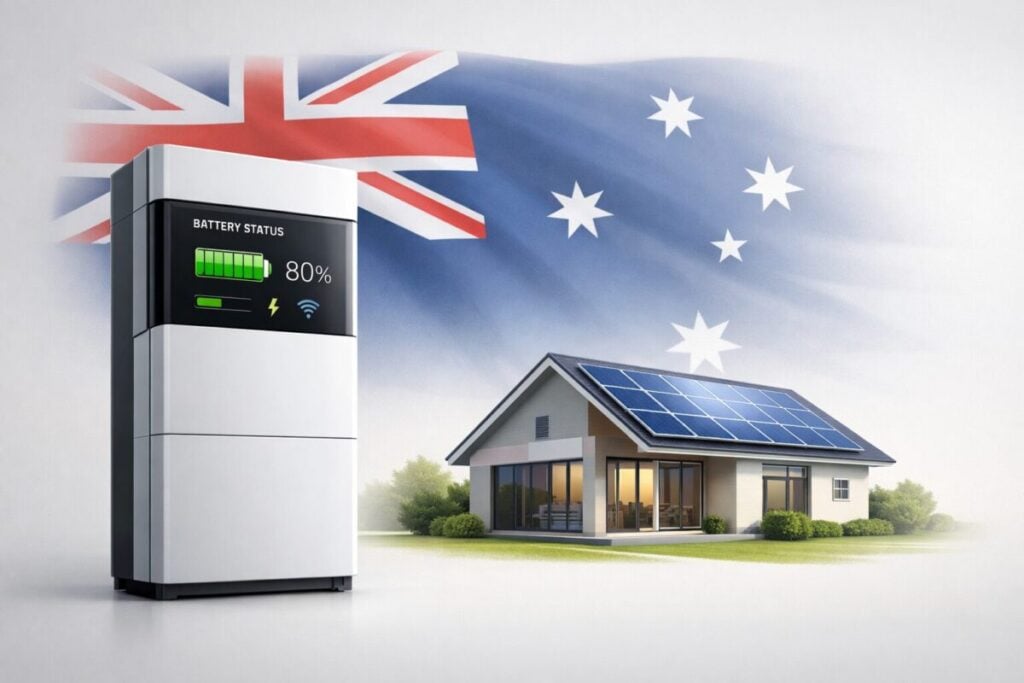
Australia’s federal Cheaper Home Batteries Program has passed 600,000 home battery storage systems sold, according to climate change and energy minister Chris Bowen.
Bowen did not give an installed capacity figure. Based on the programme’s average system size of about 28kWh, Energy-Storage.news estimates the 600,000 systems total roughly 16.8GWh, up from around 14GWh at 507,000 installations.
Bowen, who is also member for McMahon, announced the figure in a LinkedIn post, adding that more than half a million EVs have been sold in Australia and that “a majority of this take up is happening in our suburbs and our regions.”
In a second post, he said more than 75% of the systems were in regional and suburban areas. He said they were “not only saving their owners money, they’re putting down energy bills for everyone else as well.”
Try Premium for just $1
- Full premium access for the first month at only $1
- Converts to an annual rate after 30 days unless cancelled
- Cancel anytime during the trial period
Premium Benefits
- Expert industry analysis and interviews
- Digital access to PV Tech Power journal
- Exclusive event discounts
Or get the full Premium subscription right away
Or continue reading this article for free
He added: “What is good for the planet is good for the pocket as well.”
The milestone comes shortly after Bowen and Prime Minister Anthony Albanese announced that the Cheaper Home Batteries Program had officially passed 500,000 installations in August, with more than 507,000 households, small businesses and community organisations taking part. The government did not publish an official capacity figure for that milestone either.
The programme, administered by the Clean Energy Regulator, launched in July 2025 and cuts the upfront cost of small-scale BESS connected to solar PV by around 30%. The discount is delivered through small-scale technology certificates (STCs), which installers claim on the customer’s behalf, and eligible systems range from 5kWh to 100kWh.
Average system size has grown as uptake has risen, from about 25.2kWh at 250,000 installations to about 28kWh at 400,000, according to earlier programme figures. Uptake has been strongest outside the major cities, with electorates such as Hume and Macquarie in New South Wales, Wright in Queensland and Mayo in South Australia leading.
From AU$2.3 billion pledge to AU$7.2 billion programme
Labor took the programme to the May 2025 federal election as an AU$2.3 billion pledge, and Anthony Albanese’s Labor Party won the 2025 Australian federal election with a second consecutive term. At the time, Labor projected around one million new home BESS by 2030.
Within months, demand was outpacing installer capacity. Carl Binning, executive general manager of the scheme operations division at the Clean Energy Regulator, said at All-Energy Australia 2025 that the home battery rebate was processing around 8,000 applications weekly.
“The system and the capacity of our industry are just about full. So, we’re starting to see an increased backlog in order,” he said.
In December 2025, with 160,000 installations and more than 3.6GWh supported, the government expanded support to an estimated AU$7.2 billion (US$4.96 billion) by 2030, more than tripling the launch estimate and adding an expected 40GWh of storage. From 1 May 2026, the full discount applies only to the first 14kWh of a system, falling to 60% between 14kWh and 28kWh and 15% between 28kWh and 50kWh.
In March 2026, with more than 250,000 installations delivering 6.3GWh, the Cheaper Home Batteries Program was reportedly under review as the government sought budget savings, with options including an early wind-up, a smaller discount or limits on eligible system sizes.
The programme went ahead, and by 6 May 2026 Bowen said that Australia had installed 10.7GWh of home battery storage under the federal subsidy scheme across 380,712 systems. He said the take-up of EVs “pales in comparison to the alacrity” with which Australians had adopted subsidised home storage.
Never miss an Australian energy storage story. Sign up for our Australia newsletter and get the latest project announcements, policy updates and market analysis delivered directly to you.