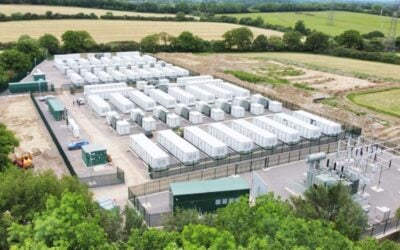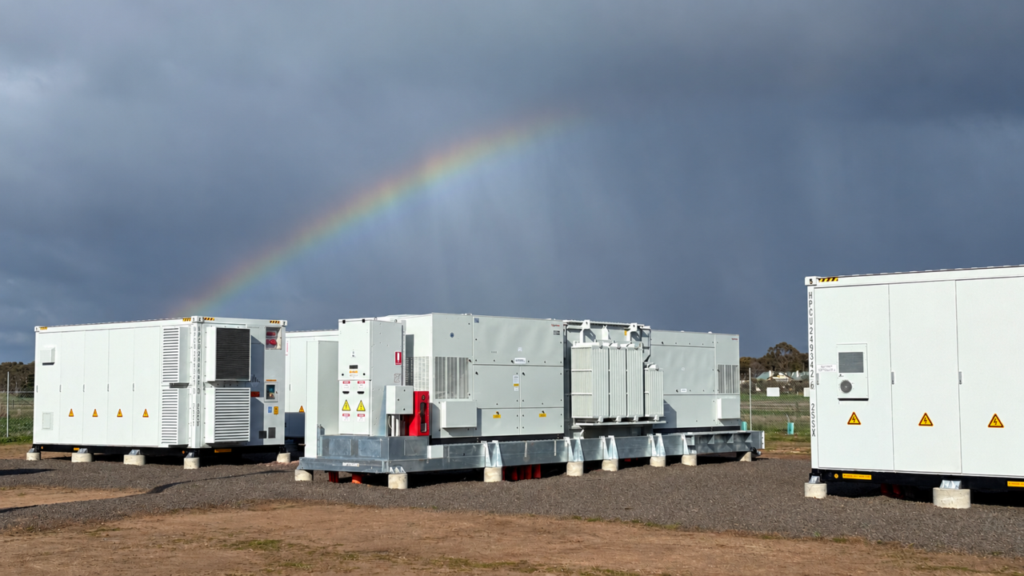
Spain-headquartered power electronics manufacturer Ingeteam has supplied power conversion systems (PCS) for around 65MW/130MWh of battery storage projects in Victoria, New South Wales (NSW) and South Australia.
Ingeteam announced on Monday (19 October) that the projects include standalone battery energy storage systems (BESS) and DC-coupled solar-plus-storage installations, with Jinko ESS, the energy storage business of solar PV module manufacturer JinkoSolar, as BESS integrator.
Ingeteam did not name the sites or their owners, but the announcement builds on earlier work between the two companies.
Energy-Storage.news reported in August 2025 that Ingeteam had been tapped to deliver inverter solutions for seven 5MW/10MWh BESS projects in Victoria, totalling 35MW/70MWh, with JinkoSolar as integrator.
Try Premium for just $1
- Full premium access for the first month at only $1
- Converts to an annual rate after 30 days unless cancelled
- Cancel anytime during the trial period
Premium Benefits
- Expert industry analysis and interviews
- Digital access to PV Tech Power journal
- Exclusive event discounts
Or get the full Premium subscription right away
Or continue reading this article for free
Those projects were implemented by ACLE Services for Sustainable Energy Infrastructure (SEI). Ingeteam did not say whether they form part of the 65MW/130MWh total announced this week.
Solar PV modules generate direct current (DC) electricity and battery storage stores it as DC, while the grid runs on alternating current (AC). A PCS converts electricity between the two, allowing a BESS to charge from and discharge to the grid.
The standalone BESS projects use Ingeteam’s INGECON SUN STORAGE FSK C-Series HV solution, sized at 4.986MVA (AC). Each installation places two inverters on a single skid, a pre-assembled platform that combines the conversion equipment and its control systems.
In DC-coupled hybrid projects, the solar PV plant and BESS are connected on the DC side and share a single inverter to connect to the grid, rather than each having its own inverter. This lets the BESS charge directly from solar generation without first converting it to AC.
Each DC-coupled site pairs a central PV inverter with 16 DC-DC buck-boost converters, which raise or lower the voltage so that the battery storage and solar PV array can operate through the same inverter.
Jorge Guillen, head of sales for PV and storage at Ingeteam Australia, said the company’s “ongoing collaboration with Jinko ESS reflects their confidence in our technology and local team.”
PCS manufacturers expand and consolidate
Ingeteam’s announcement comes as PCS suppliers expand manufacturing capacity and attract acquisition interest, driven by demand from both the energy storage and data centre markets.
Fellow Spain-headquartered manufacturer Power Electronics held a groundbreaking in September for a factory campus in Houston, Texas, with 40GW of annual production capacity when fully ramped up, bringing its worldwide capacity to 105GW.
In the same month, manufacturing group Flex agreed to buy US power electronics manufacturer EPC Power Corp in a US$4.4 billion deal.
Hitachi Energy, which bought Eks Energy after US system integrator Powin went out of business, has also signed a memorandum of understanding (MoU) to supply PCS for BESS in North American solar PV and storage projects, alongside EPC firm Linxon and tracker manufacturer FTC Solar.
Manufacturers are also competing on grid-forming (GFM) capability, where inverters help keep grid frequency stable, a role traditionally played by the large rotating mass of thermal generators.
In Germany, SMA Solar Technology’s Sunny Central UP-S platform became the first inverter certified to provide inertia to the German grid under the VDE FNN guideline Version 2.1, giving it access to the country’s new inertia market.
Never miss an Australian energy storage story. Sign up for our Australia newsletter and get the latest project announcements, policy updates and market analysis delivered directly to you.