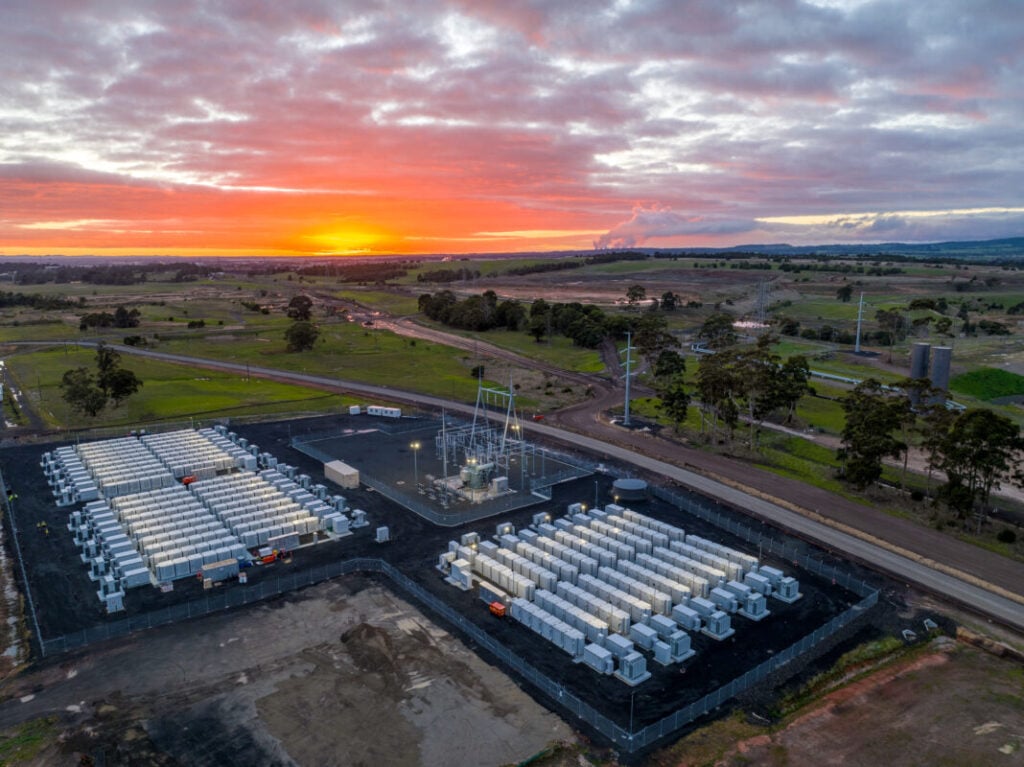
ENGIE’s Hazelwood battery energy storage system (BESS) expansion in Australia has moved closer to financial close after a state transmission declaration.
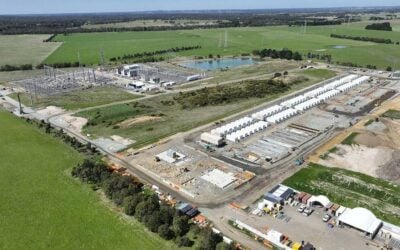
The expansion would add a 150MW/300MWh BESS with a 2-hour duration alongside the existing system at the former Hazelwood Power Station in Victoria’s Latrobe Valley, in the Gippsland region east of Melbourne.
The Victorian government said on 16 October 2026 that it had declared Hazelwood BESS Line Co Pty Ltd a Declared Transmission System Operator, a step that allows the project to use existing transmission infrastructure at the former power station site.
Jaclyn Symes, Victoria’s Minister for Energy and Resources, announced the declaration and described the expansion as another step in the state’s energy transition. The government did not give a date for financial close.
Try Premium for just $1
- Full premium access for the first month at only $1
- Converts to an annual rate after 30 days unless cancelled
- Cancel anytime during the trial period
Premium Benefits
- Expert industry analysis and interviews
- Digital access to PV Tech Power journal
- Exclusive event discounts
Or get the full Premium subscription right away
Or continue reading this article for free
The expansion would double the site’s power output to 300MW, with combined storage capacity of 450MWh across the two systems.
Construction is expected to create up to 370 jobs, according to the government, with completion expected in 2028. ENGIE has not disclosed either the project cost or the BESS supplier for the expansion.
The 1.6GW Hazelwood coal plant, which ENGIE operated, closed in 2017. Construction on the existing 150MW/150MWh BESS began in December 2021, with Fluence supplying its GridStack system and taking on operations and maintenance.
The existing system came online in June 2023 as Australia’s first large-scale BESS built on the site of a decommissioned coal plant. It trades in the National Electricity Market (NEM), the grid serving Australia’s eastern and southern states, providing energy arbitrage and grid support services.
ENGIE takes full control of Hazelwood
ENGIE, the French multinational utility and independent power producer (IPP), originally co-owned the BESS with a 70% stake alongside Eku Energy, the storage developer launched by Macquarie’s Green Investment Group, which held 30%.
In January 2026, ENGIE acquired Eku Energy’s 30% stake to take full ownership of the Hazelwood BESS, saying the deal reflected its strategy of growing its battery storage portfolio in Australia. Eku said at the time that the project had a pathway to expansion.
ENGIE also contracts capacity from BESS owned by other companies. In November 2024, it signed a virtual battery agreement for 40MW of developer Neoen’s 300MW/450MWh Victorian Big Battery near Geelong, to help manage its renewable energy generation and customer demand.
Victoria has legislated energy storage targets of at least 2.6GW by 2030 and 6.3GW by 2035, according to the state’s energy department, alongside a 95% renewable energy target for 2035.
Across the NEM, AEMO, the Australian Energy Market Operator, reported that installed battery capacity passed 8,000MW by the end of March 2026, and that Victoria’s average BESS price spread fell 41% to AU$86/MWh (US$60/MWh) in the first quarter as more capacity, including the 300MW/650MWh Mortlake BESS, came online.
AEMO later said that 9.1GW of new generation and storage reached full output in the 2026 financial year, with BESS making up 52% of its 75.4GW connections pipeline.
Never miss an Australian energy storage story. Sign up for our Australia newsletter and get the latest project announcements, policy updates and market analysis delivered directly to you.