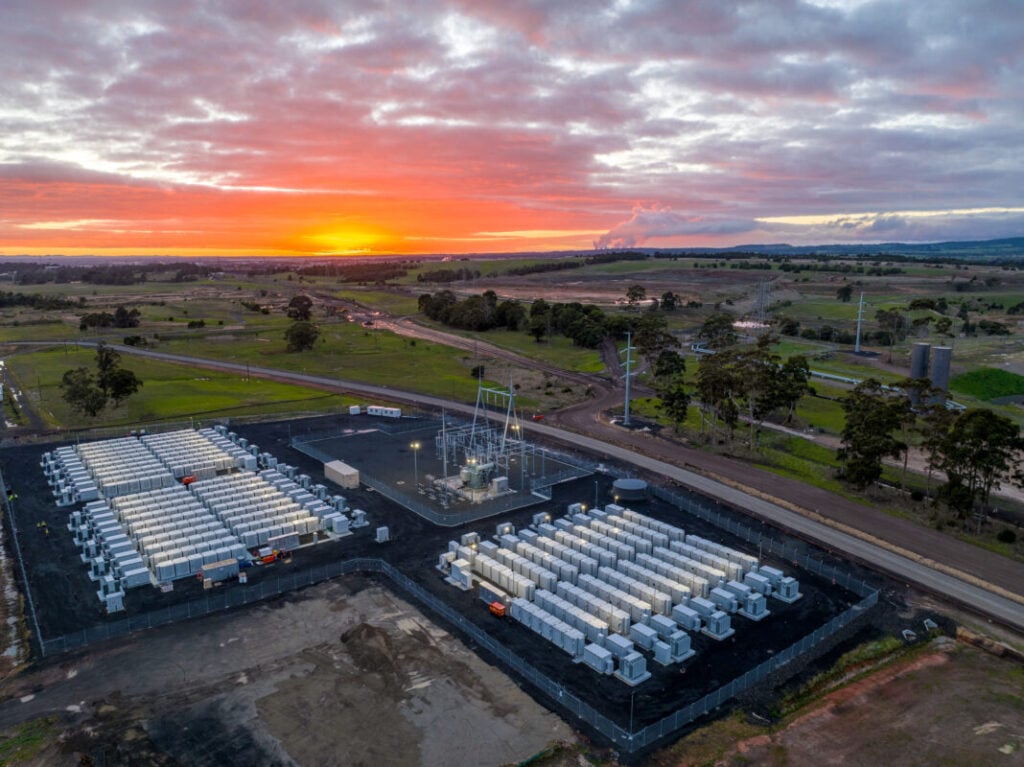
French utility Engie has acquired a 30% equity stake in the Hazelwood battery energy storage system (BESS) in Victoria, Australia.
This marks a new phase in the ownership structure of what was the country’s first grid-scale battery storage developed at the site of a decommissioned coal-fired power station. Engie now owns 100% of the BESS.
The project was delivered by Engie with developer Eku Energy, and technology and long-term services provided by Fluence. It was built with Engie holding a 70% stake and Eku holding the remaining 30%, which Engie has now bought out.
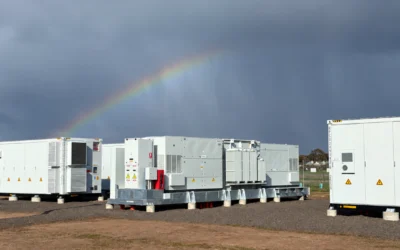
The 150MW/150MWh Hazelwood BESS is 1-hour duration and is located at the former Hazelwood coal plant in the Latrobe Valley, a site that ceased coal generation in 2017. Construction of the battery storage system project began in December 2021, and the system went online in June 2023.
Try Premium for just $1
- Full premium access for the first month at only $1
- Converts to an annual rate after 30 days unless cancelled
- Cancel anytime during the trial period
Premium Benefits
- Expert industry analysis and interviews
- Digital access to PV Tech Power journal
- Exclusive event discounts
Or get the full Premium subscription right away
Or continue reading this article for free
Several utility-scale battery storage systems have since been built on the site of coal-fired power plants, which are set to be decommissioned. This includes Origin Energy’s Eraring BESS, with the 1,770MWh first stage having recently gone online.
At the time, the project was positioned as a symbol of the region’s transition away from coal-fired generation toward flexible, low-emissions infrastructure. Funding for the project was provided by Engie alongside the Green Investment Group (GIG), which is owned by Macquarie Asset Management.
GIG later launched Eku Energy as a standalone energy storage developer in November 2022, transferring its global battery development portfolio into the new company. That portfolio included the Hazelwood BESS and, at the time of Eku Energy’s creation, GIG stated that the platform had a development pipeline totaling around 3GWh of energy storage projects.
Fluence supplied its GridStack sixth-generation battery energy storage solution to Hazelwood, marking the first deployment of that technology platform in Australia.
In addition to delivering the system, Fluence also provides operations and maintenance services for the asset, underlining the increasingly long-term role technology providers are playing in the performance and availability of large-scale battery storage projects.
Engie’s move to take a 30% stake formalises its position in the project following its role as a funding partner and reflects the company’s broader strategy of expanding its battery storage portfolio in Australia.
The Hazelwood BESS operates within the National Electricity Market (NEM), providing services including energy arbitrage and grid support in a region that has seen significant changes to generation mix following the retirement of coal assets.
Since the Hazelwood project went online, Eku Energy has continued to expand its development and acquisition activities across Australia and the wider region.
In Queensland, the company has partnered with LP Renewables on the proposed 1,600MWh Belah BESS, a large-scale standalone battery storage project intended to connect to the state’s transmission network.
Eku Energy has also lodged another 1,600MWh project, the Monduran BESS, for environmental assessment in Queensland, further highlighting its focus on utility-scale batteries designed to support grid reliability and renewable energy integration
Beyond Australia, Eku Energy has entered the New Zealand market through the acquisition of a utility-scale battery energy storage project, signaling its intention to build a trans-Tasman portfolio of grid-connected storage assets.
This article has been amended to clarify that Engie and Eku held 70% and 30% ownership of the Hazelwood project, respectively, until the latest transaction.
The Energy Storage Summit Australia 2026 will be returning to Sydney on 18-19 March. It features keynote speeches and panel discussions on topics such as the Capacity Investment Scheme, long-duration energy storage, and BESS revenue streams. ESN Premium subscribers receive an exclusive discount on ticket prices. To secure your tickets and learn more about the event, please visit the official website.