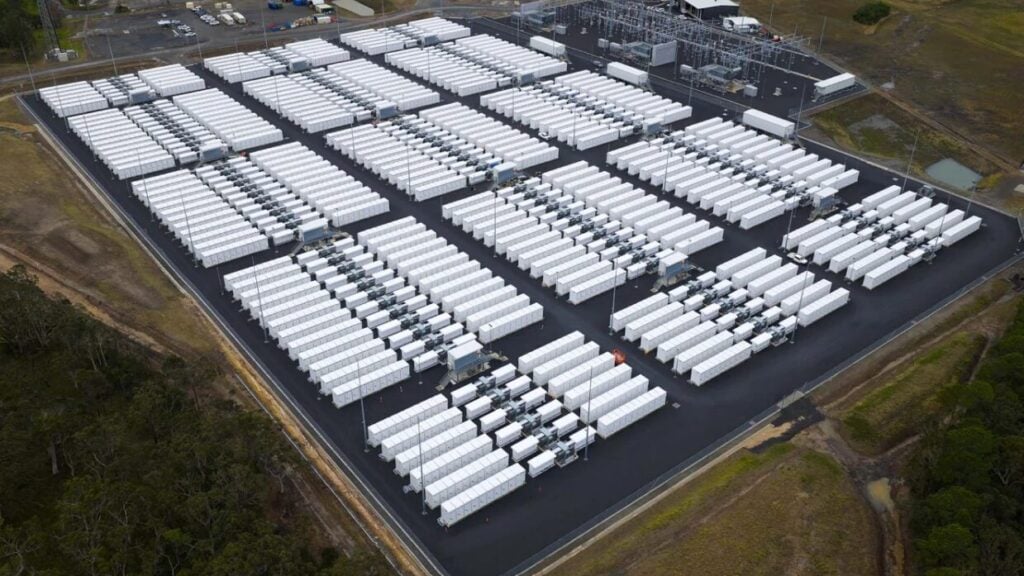
Australia’s National Electricity Market (NEM) connected 9.1GW of new generation and energy storage to full output in FY26, more than double the result achieved in FY25, according to AEMO’s latest 2026 quarterly connections scorecard published today (20 July).
The 34 projects that reached full output in FY26 delivered 12.9GWh of storage capacity alongside the 9.1GW of power generation, with AEMO noting that battery storage projects dominate the technology mix.
Total incremental output, including capacity still in commissioning at partial output levels, reached 10.5GW across the financial year, which runs to 30 June.
AEMO group manager for onboarding and connections, Margarida Pimentel, said the result demonstrated strong end-to-end performance across the pipeline.
Try Premium for just $1
- Full premium access for the first month at only $1
- Converts to an annual rate after 30 days unless cancelled
- Cancel anytime during the trial period
Premium Benefits
- Expert industry analysis and interviews
- Digital access to PV Tech Power journal
- Exclusive event discounts
Or get the full Premium subscription right away
Or continue reading this article for free
“A record 9.1GW of new generation and storage capacity reached full output in the last financial year, more than double the result achieved in FY25,” she said.
Pimentel also highlighted a record year for wind investment, with AEMO receiving 12 wind project applications totalling 5.2GW during FY26, the highest volume of wind applications recorded in a single year.
In the June quarter alone, 14 projects totalling 3.9GW reached full output, covering 2.7GW of battery storage, 0.5GW of solar-plus-storage, 0.4GW of solar and 0.2GW of wind.
A quarterly record of 32 project applications representing 6.9GW were also approved in the quarter, including 3.6GW of battery storage, 1.8GW of solar-plus-storage, 1.3GW of wind and 0.2GW of solar.
Across FY26 as a whole, registrations and application approvals reached 7.4GW and 14.2GW, respectively. Both figures were slightly lower than FY25, reflecting the higher base of the prior year, but the broader connections pipeline continued to expand, growing 42% from 53GW to 75.4GW.
Capacity in the application stage more than doubled across the year and proponent implementation grew by 30%.
Battery storage systems dominate a 75GW pipeline
Battery storage projects now account for 52% of total capacity across the 75GW NEM connections pipeline, with solar-plus-storage hybrid projects representing a further 18% and onshore wind 15%.
The growing weight of hybrid projects in the pipeline reflects a commercial shift well underway in the market. 2.4GW of solar projects commenced or completed processes to add a battery storage system during FY26, indicating that developers are increasingly treating storage as an integral part of their solar proposals rather than a separate asset class.
As previously reported by Energy-Storage.news, Australia became the world’s third-largest utility-scale battery storage market in 2026, with 4.3GW of large-scale battery systems reaching financial close in 2025 according to trade association Clean Energy Council, positioning Australia behind only the US and China in deployment scale.
In Q1 2026, AEMO’s last Quarterly Energy Dynamics report found that battery storage systems had more than tripled their daytime-to-evening energy shifting compared to the same period a year earlier, with average discharge reaching 359MW against 98MW in Q1 2025.
Alongside this, it is worth noting that grid-forming inverters now feature in 74% of Australia’s 33.2GW NEM battery storage pipeline, a penetration rate that reflects the commercial incentive of system-strength service contracts and the NEM’s growing need for grid-stability services as coal-fired generation retires.
For a broader explanation of how grid-forming inverter technology works, Energy-Storage.news has published a white paper in partnership with Kehua Digital Energy and TÜV Rheinland.
Battery storage projects are also the fastest technology to move through the connections process, a competitive advantage that has reinforced their dominant share of the pipeline.
AEMO’s 2026 Integrated System Plan calls for 35GW of short and medium-duration storage alongside 5GW of long-duration storage by 2050 to support the transition to a grid powered predominantly by solar and wind.
At the pace established in FY26, the near-term pipeline looks capable of meeting the early tranches of that target, though AEMO’s scorecard flags a growing challenge in the proponent implementation stage, where the median project duration increased from 14 to 18 months across FY26, with one third of projects having remained in that developer-led stage for more than two years.
Pimentel said design changes and equipment substitutions were among the key contributors to delays at that stage.
“Design changes and equipment substitutions can require additional assessment and rework, while the sale of projects, extended financing and commercial readiness activities are also contributing factors,” she said.
The pipeline’s capacity at the application stage is now 118% higher than a year ago, meaning the volume of projects queuing to convert to construction and commissioning will continue to test delivery timelines over the next two to three years.
Never miss an Australian energy storage story. Sign up for our Australia newsletter and get the latest project announcements, policy updates and market analysis delivered directly to you.
Our publisher, Solar Media (part of Informa Group), will host the Battery Asset Management Summit Australia 2026 on 25-26 August at Amora Hotel Jamison in Sydney. You can find out more about the Summit on the official website.