Fluence has netted a deal to onboard 1.1GW of solar and storage assets to its digital energy trading and bidding platform with AES Corporation, one of the energy storage technology provider’s parent companies.
The deal, announced today, covers an AES portfolio of independent power producer (IPP) projects in the Western US which will now use the Fluence IQ Bidding Application.
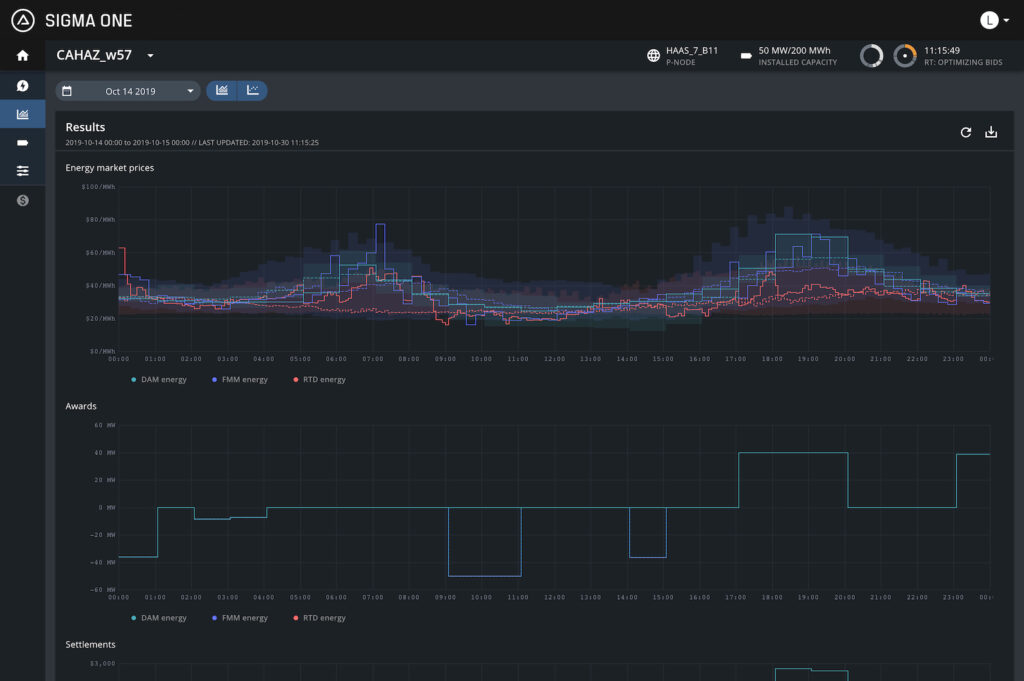
The artificial intelligence-enabled, machine learning-based software gives recommendations on when and how much to bid into auctions for energy and grid services on an hourly and daily basis.
It allows asset operators to make real-time decisions based on historical data and forecasting on metrics like expected energy generation and demand, weather and so on, optimising the revenues that can be earned from wholesale market opportunities.
Try Premium for just $1
- Full premium access for the first month at only $1
- Converts to an annual rate after 30 days unless cancelled
- Cancel anytime during the trial period
Premium Benefits
- Expert industry analysis and interviews
- Digital access to PV Tech Power journal
- Exclusive event discounts
Or get the full Premium subscription right away
Or continue reading this article for free
“By implementing and utilising cutting-edge automated bidding software for our projects, we will be able to improve grid reliability and efficiency while also supporting our customers’ green energy transitions in a safe and reliable way,” Leo Moreno, president of AES Clean Energy said.
Fluence, launched in 2017 as a joint venture (JV) between AES Corporation and Siemens, went public in an IPO that valued the company at just under US$5 billion last year.
It is best known as an energy storage system integrator and technology provider, with more than 3.6GW of energy storage already deployed or contracted for deployment in 30 different global markets.
However, Fluence has expanded its reach into the digital and software side of asset management and controls, largely since its acquisition of US energy storage AI and software provider Advanced Microgrid Solutions in 2020.
Since getting a contract to optimise market participation of a 182.5MW/730MWh battery energy storage system (BESS) in California a few months later, the company has added capabilities to manage bidding for renewable energy assets as well as battery storage.
It signed 2,744MW of Fluence IQ digital contracts during 2021.
Fluence CEO Manuel Perez Dubuc told this site at the beginning of the year that digital applications is now one of the company’s three main business lines, along with energy storage products and services.
“Significant demand for digital products that optimise assets – both renewable and storage,” was one of Perez Dubuc’s big takeaways of last year in our Year in Review 2021 blog series.
“The business model and economics of combining energy storage plus services plus digital optimisation is powerful, and we expect interest in that type of combination offering to grow.”
Although the platform is currently only available in the frontrunner California CAISO wholesale market and Australia National Electricity Market (NEM), availability in other regions is expected to come soon, sources close to the company have said.
“It’s currently available in the California and Australian energy markets with plans to expand that market availability globally this year,” Julian Jansen, Fluence’s growth and market development director for EMEA told Energy-Storage.news.
“It really helps renewable asset owners and operators to optimise the bidding and dispatch and make better, data-driven decisions in an increasingly complex and volatile market.”
Fluence has claimed its bidding platform can create revenue uplifts of 40% to 50% for battery energy storage and about 10% for standalone renewable energy assets in CAISO and NEM.
“Our software-as-a-service model enables us to rapidly integrate with customers’ assets, scale across geographies and technology types, and ensure superior performance as markets change,” Fluence SVP and chief digital officer Seyed Madaeni said.
Rivals in the energy storage technology provider space have launched similarly-themed offerings, including Wärtsilä’s Intellibidder platform and Tesla’s Autobidder.
Last week, Energy-Storage.news reported that Fluence has entered a long-term strategic partnership with another software-based clean energy company, Pexapark.
Pexapark has a suite of analytical tools and services offering market intelligence about renewable energy power purchase agreements (PPAs) and energy portfolio risk management optimisation solutions. Fluence customers will gain access to Pexapark’s energy market software while Pexapark will be able to benefit from Fluence’s own energy storage analytics capabilities.
Fluence has offered revenue guidance between US$1.1 billion and US$1.3 billion for 2022. Company executives were due to discuss its latest quarterly earnings today.