Copenhagen Infrastructure Partners (CIP) has acquired full ownership of the 104MW Gawara Baya wind-plus-storage project in North Queensland, Australia, from developer Windlab, with the project reaching financial close and moving into construction.
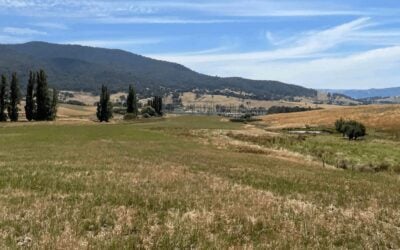
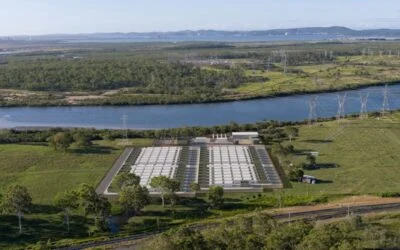
Gawara Baya is a hybrid renewable energy development combining a 408MW wind farm with a 104MW grid-forming inverter-equipped battery energy storage system (BESS), located approximately 65km south-west of Ingham on Gugu Badhun Country.
CIP acquired the project through its Copenhagen Infrastructure V (CI V) fund, taking 100% ownership from Windlab, an Australian renewable energy company with experience across wind, solar and storage projects.
The project has secured long-term energy offtake arrangements with Stanwell, Queensland’s state-owned generator, and UK-based energy and technology company SmartestEnergy, and is participating in the Australian government’s Capacity Investment Scheme (CIS), which underwrites long-term revenue for eligible generation and storage projects.
Try Premium for just $1
- Full premium access for the first month at only $1
- Converts to an annual rate after 30 days unless cancelled
- Cancel anytime during the trial period
Premium Benefits
- Expert industry analysis and interviews
- Digital access to PV Tech Power journal
- Exclusive event discounts
Or get the full Premium subscription right away
Or continue reading this article for free
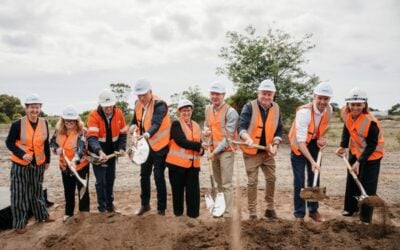
Construction is expected to inject AU$200 million (US$130 million) into the regional economy and support 500 jobs, alongside an AU$200,000 annual Community Benefit Fund for initiatives across the Hinchinbrook and Charters Towers local government areas.
Gawara Baya has been developed through what CIP and Windlab describe as a landmark Indigenous Land Use Agreement with the Gugu Badhun People, embedding cultural heritage protection, environmental stewardship and economic participation into the project.
The development also includes Australia’s first renewable energy biodiversity net-gain strategy, a voluntary commitment targeting measurable biodiversity improvement over the project’s operating life, backed by an initial AU$4 million investment delivered in partnership with Traditional Owners and regional conservation experts.
Gawara Baya adds to a broader pipeline of large-scale renewable energy projects Windlab has advanced through Australia’s federal approvals process.
The company holds a track record of taking more than 1GW of wind assets to financial close and has referred a further eight projects under the Environment Protection and Biodiversity Conservation (EPBC) Act.
Elsewhere in Queensland, a joint venture between Windlab and Squadron Energy referred the Bungaban Solar Project, a 500MW solar facility paired with a 500MW BESS, for EPBC assessment in August 2026, forming part of Windlab’s broader South Queensland Renewable Generation Hub anchored by a large offtake agreement with Rio Tinto.
Grid-forming battery storage adds to a growing portfolio for CIP in Australia
Grid-forming inverters can provide voltage and frequency support historically supplied by synchronous generators such as coal and gas plants, a capability regulators and network operators have identified as increasingly necessary as thermal generation retires from the National Electricity Market (NEM).
The acquisition adds to CIP’s portfolio of Australian battery storage activity, which includes both built and exited standalone BESS assets in the country.
In April 2026, CIP sold its entire stake in the 240MW/960MWh Summerfield Battery in South Australia to Palisade Investment Partners, a project the Danish investor had originally developed from financial close through to late-stage construction before divesting as it neared commercial operation.
That transaction followed a pattern CIP has repeated elsewhere in its portfolio, developing and de-risking assets before selling to longer-term infrastructure holders.
CIP’s activity in Australia is part of a broader global capital deployment strategy. The firm, which manages 15 funds and has raised around €43 billion (US$49.9 billion) to date, closed its Growth Markets Fund II at approximately US$3 billion in August 2026, targeting energy infrastructure across 15 high-growth, middle-income markets in Eastern Europe, Asia and Latin America.
Never miss an Australian energy storage story. Sign up for our Australia newsletter and get the latest project announcements, policy updates and market analysis delivered directly to you.