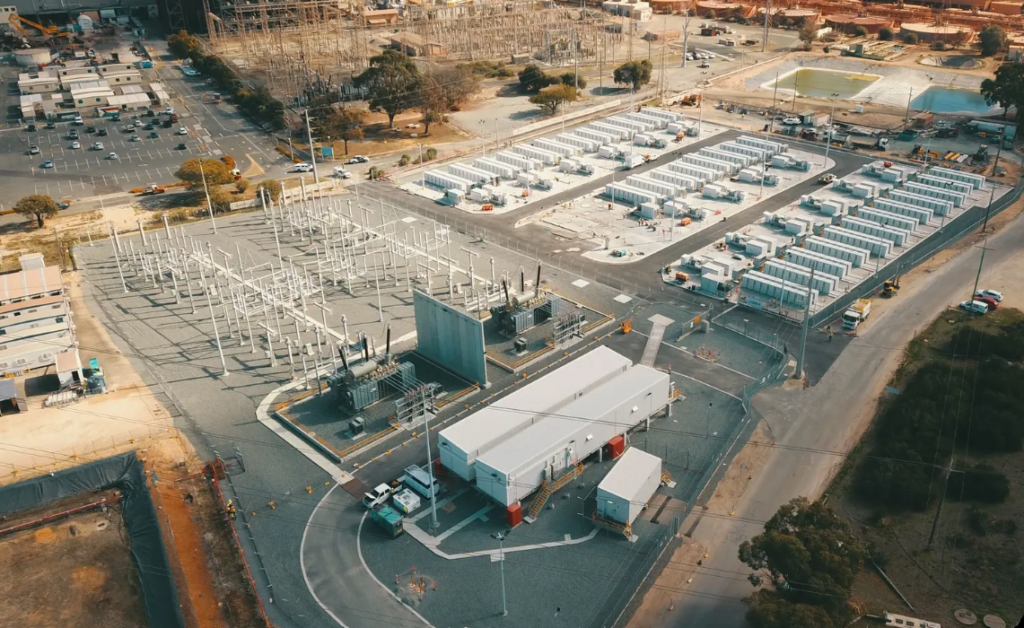
Western Australia’s Economic Regulation Authority (ERA) has fined state-owned energy company Synergy AU$1.2 million (US$785,600) after finding that a software error caused the company’s Kwinana battery energy storage system (BESS) to submit inflated price offers into the state’s Wholesale Electricity Market (WEM).
The ERA is Western Australia’s independent economic regulator, responsible for overseeing utility markets, including electricity, to protect consumers’ long-term interests.
Following an investigation, the regulator found that Synergy’s offers for energy from Kwinana caused inflated prices in the WEM due to an error in the company’s trading software.
The ERA estimated that the over-pricing increased wholesale energy costs by approximately AU$9.5 million over an eight-month period beginning in late 2023, with Synergy gaining around AU$850,000 in additional revenue as a result.
Try Premium for just $1
- Full premium access for the first month at only $1
- Converts to an annual rate after 30 days unless cancelled
- Cancel anytime during the trial period
Premium Benefits
- Expert industry analysis and interviews
- Digital access to PV Tech Power journal
- Exclusive event discounts
Or get the full Premium subscription right away
Or continue reading this article for free
Under WEM rules, companies bidding to sell electricity are required to do so at no more than their reasonable cost of production.
The ERA said its AU$1.2 million penalty reflected the revenue Synergy gained, the duration of the conduct, its material impact on market costs, and the company’s cooperation and remediation efforts.
Synergy corrected the software error once it became aware of the issue, cooperated with the ERA throughout the investigation, and admitted the breach.
As part of the ERA’s decision, Synergy must also provide full details of the software fix and, if the regulator considers it necessary, submit the solution to an independent audit.
ERA chair Steve Edwell said the penalty reflected the fact that the breach stemmed from an unintentional software error rather than deliberate conduct, while still reinforcing that non-compliance would not be tolerated.
“The ERA exists to ensure that vital utility services like electricity are delivered as efficiently as possible, to protect the long-term interests of Western Australian consumers,” Edwell said.
“This action serves as a reminder to all companies participating in the wholesale market that non-compliance, even when accidental, is not acceptable. We are closely monitoring the bidding behaviour of all participants in the wholesale market, and where we see non-compliance, we will take action.”
Edwell noted the case marks the ERA’s fourth serious finding against a generator since August 2025, pointing to a period of intensified regulatory scrutiny of bidding conduct in the WEM.
Synergy’s Kwinana battery storage portfolio comprises two systems located at the site of the existing gas-fired Kwinana Power Station.
Indeed, Kwinana BESS 1 is a 100MW/200MWh, 2-hour duration system, while Kwinana BESS 2, a 200MW/800MWh project requiring around AU$661 million in investment, completed construction in late 2024 and connects to the South West Interconnected System (SWIS), the grid serving Perth and other population centres across the state’s south-west.
The enforcement action lands against a backdrop of rapid battery storage expansion in Western Australia, deployed largely to support the state’s transition away from coal generation.
Synergy separately operates the 2,400MWh Collie battery, powered by CATL and currently the largest operational BESS in Australia, located at the state’s coal generation hub, which is scheduled to close by the end of the decade. Neoen operates a separate 2,200MWh system at the same Collie site.
That combined capacity has already reshaped how the SWIS operates. In May 2026, utility-scale battery storage supplied a record 37.2% of peak demand on the SWIS, one of the highest battery penetration levels recorded on an isolated grid globally, following a day in which renewables supplied 78% of generation.
Never miss an Australian energy storage story. Sign up for our Australia newsletter and get the latest project announcements, policy updates and market analysis delivered directly to you.