China continued to drive global grid-scale BESS commissioning activity in July, as the technology approaches the global installed gigawatt (GW) capacity of pumped hydro.
China installed grid-scale battery energy storage systems (BESS) totalling 4,756MW of power and 14,194MWh of capacity in July, 75.5% of the total deployed globally.
Globally, 6,292MW/17,581MWh of capacity came online, spread across 108 projects, bringing the total deployments in 2025 so far to 39,410MW/107,136MWh.
The data comes from market intelligence firm Rho Motion’s Battery Energy Stationary Storage Monthly Database, which states that the total cumulative installed BESS capacity globally is now 184.4GW/442.2GWh.
Try Premium for just $1
- Full premium access for the first month at only $1
- Converts to an annual rate after 30 days unless cancelled
- Cancel anytime during the trial period
Premium Benefits
- Expert industry analysis and interviews
- Digital access to PV Tech Power journal
- Exclusive event discounts
Or get the full Premium subscription right away
Or continue reading this article for free
That means BESS is fast-approaching the gigawatt capacity of installed pumped hydro energy storage capacity, which stands at nearly 200GW according to the International Hydropower Association. At this rate it should overtake it this year, if China keeps deploying as it has been.
However, note that pumped hydro’s much longer duration (typically 8-20 hours) means it will remain much larger by gigawatt-hour (GWh) capacity for some time.
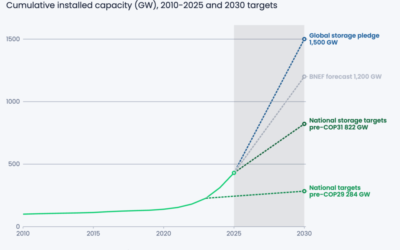
China has been the single-largest region for BESS deployments every month of 2025, but in July its figure was the highest proportion seen yet this year, as shown in the chart below.
Europe installed 171MW/257MWh, North America installed 915MW/2,029MWh, while Oceania/Australia deployed 350MW/700MWh. All of the latter came from one project.
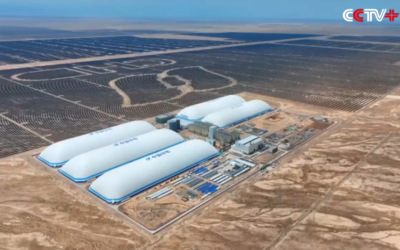
The largest project to come online in July was, unsurprisingly, also in China. That was the 950MWh CNNC Jiayuguan Mixed Energy Storage Project in Gansu. In fact, of the nine projects of 500MWh or above to enter operation, only one was located outside of China, Rho Motion said.
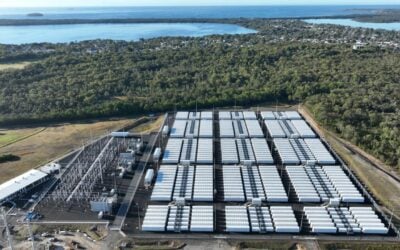
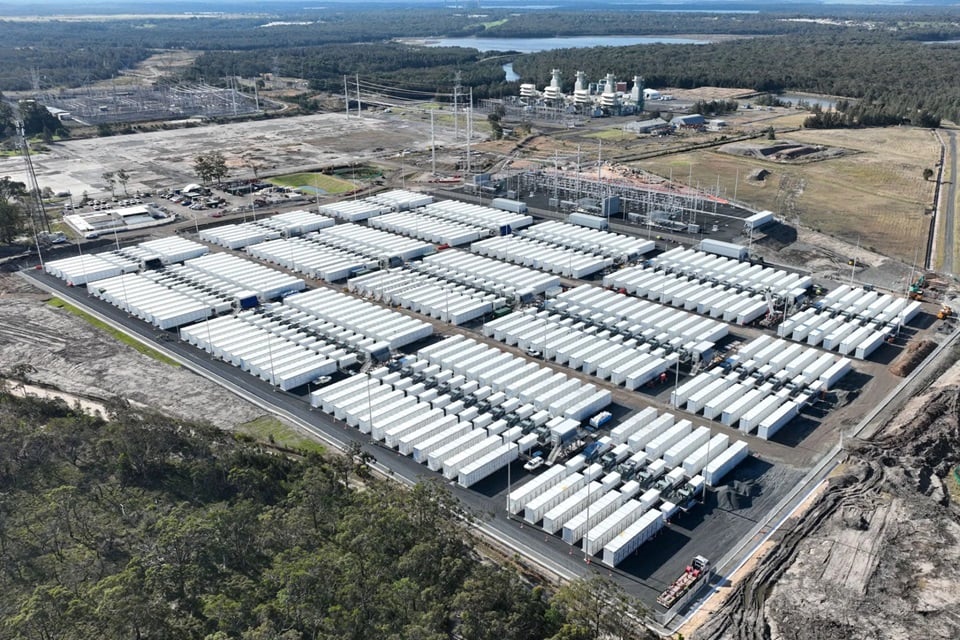
That was the phase one of the Waratah Super Battery, totalling 700MWh, in Australia. Energy-Storage.news interviewed the company behind that project, Akaysha Energy, about the development process shortly after.
The largest to have come online in North America was the Anole BESS in Texas, at 480MWh.
9GWh projects proposed, non-lithium projects come online
Projects totalling just over 91GWh of capacity entered the pipeline in July, Rho Motion said, two of which were over 9GWh each.
One, the 9.2GWh Prairie Song Reliability Project in California, was proposed by developer Coval Infrastructure as reported exclusively by Energy-Storage.news at the time. Meanwhile a 9GWh BESS in Inner Mongolia, China, entered construction. It is being built with BESS supplied by CATL.
Rho Motion also noted that 604MWh of the capacity that came online last month, nearly 10%, used non-lithium battery technology. All of them were in China, including the 4-hour, 400MWh VRFB (vanadium redox flow battery) SDIC Hami Yizhouqu Shichengzi Standalone Flow Battery Energy Storage Project in Hami, Xinjiang.
This article is part of a series of monthly deployment roundups, see previous ones here:
The lead image for this piece has been replaced since initial publication.