
We’re back with another BESS Industry Buzz after a short period off, tracking interesting hot takes and analysis from across the energy storage industry.
This week’s edition, put together by the entire Energy-Storage.news team, looks across technology and business topics. There’s industry views on a recent notable bankruptcy, things to look out for in battery energy storage system (BESS) contracts, data centre chat, US business plan hot takes and more.
See all the past editions of the BESS Industry Buzz here.
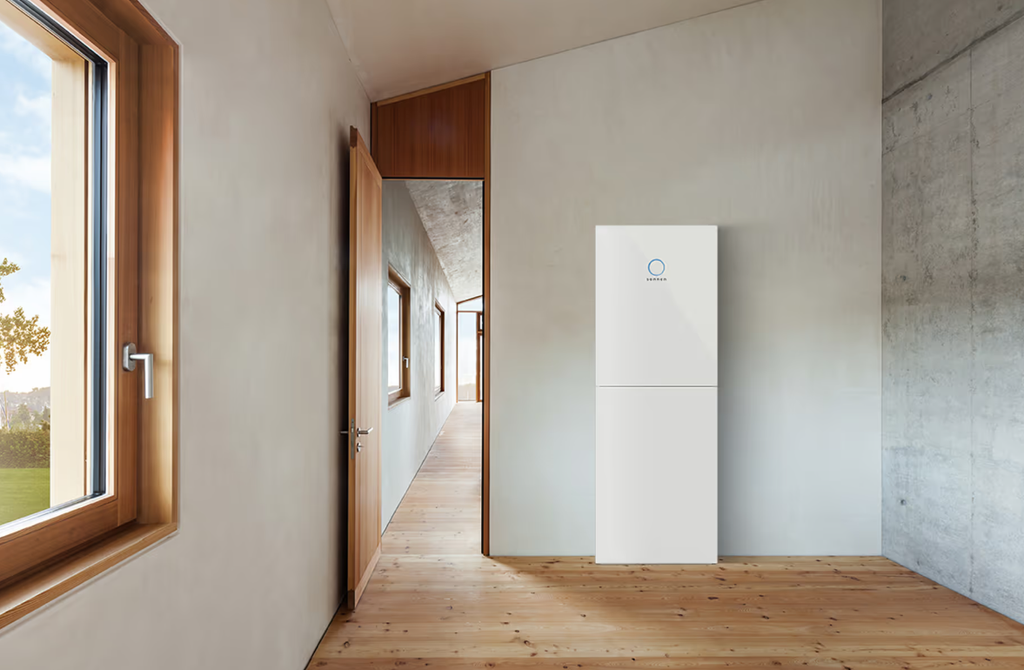
What happened at Sonnen?
German home battery and VPP pioneer’s insolvency announced last week raised eyebrows, happening two months after being sold by oil and gas major Shell. Handelsblatt reporter Kathrin Witsch’s post on it alluded to some of the accusations in her post, which has seen nearly 100 comments. See her post and the lively discussion (mostly in German) here.
Try Premium for just $1
- Full premium access for the first month at only $1
- Converts to an annual rate after 30 days unless cancelled
- Cancel anytime during the trial period
Premium Benefits
- Expert industry analysis and interviews
- Digital access to PV Tech Power journal
- Exclusive event discounts
Or get the full Premium subscription right away
Or continue reading this article for free
Dangers to look out for in BESS contracts
Claudius Jehle, founder and CEO of battery analytics firm Volytica Diagnostics, recently discussed some of the main contractual deficiencies and red flags in battery energy storage system (BESS) supply and long-term service agreement (LTSA) contracts. The worst example was one that required the BESS owner to cease operations entirely after certain operation thresholds were reached.
He asked other folk to comment with ‘juicy and scary stories’, see his post here.
BESS de-rating cuts in capacity markets across Europe
Capacity markets (CM) have emerged and continue to emerge as fertile ground for BESS to participate in across Europe. But, writes management consultancy 4Directions manager Maximilian Scholz, be wary of falling payments for the technology.
Europe Union’s proposed Industrial Accelerator Act (IAA) will do next-to-nothing for European battery production
Batteries are foundational to European industry’s future, but there is little provision that will increase demand for EU-made battery cells in the EU’s proposed IIA, as it stands. That’s from Xavier Sol, sustainable finance director at Transport & Environment (T&E), a Brussels-based advocacy group for clean transport and energy. See his post here.
‘Playbook for data centre infrastructure’
Google’s recent 1GW virtual power plant (VPP) partnership with Voltus and Microsoft’s energy deal with NiSource to serve an Indiana date centre with resources including large-scale BESS could be a “playbook” in bring your own capacity (BYOC), according to Sheldon Croome, president and AI infrastructure advisory Aureli Capital. See Sheldon’s post here.
Chasing price spikes is not a business plan in the US
Renewable energy strategist Alejandro Trevino Araiza at Energy Development Partners said a pattern is emerging in the US BESS market demonstrating that contracted long-term revenues are increasingly essential to the business case. US BESS costs are higher than the global average, revenues are heavily market-dependent and tax credit rules stricter than before. All of which adds up to mean that “storage pencils where there’s a contracted or capacity-backed revenue stream and a supply chain you can document. It struggles where the plan is ‘chase the price spikes,'” he wrote. See his post here.
BESS pivots from major players in other industries gather pace
The increasingly prominent trend for players in adjacent or sometimes unrelated industries to turn their hand to energy storage, particularly among EV manufacturers, was highlighted by Stanislav Maseyvch, founder and CEO at Greenvi AI, which is an AI agent builder for the renewables industry. Examples include Volkswagen, Honda, Fortescue and Eni Group. See his post here, which includes a handy infographic.
Revisit the Oregon Trail for the 21st Century
Did you ever play the Oregon Trail computer game? A group of industry boffins, including former Qcells man and current COO at TerraPro Solutions Nick Centera unveiled a sort of modern version of the much-loved strategy, adventure and survival game for the power industry, called Power Trail. Lots of folks are already talking about it, and the challenge of planning a network with the player’s choice of solar, BESS, wind and, of course, data centre resources, all while keeping the lights on and staying in the black. Read Nick’s post and give the game a try here.
Romanian grid capacity filled up
A serious, real-world example of that power system planning in action was drawn attention to by Sunai Cadir, founder and CEO of BRES Energy, a utility-scale solar, wind, BESS and hybrid project developer in Romania. The Romanian grid has reached its limit, or as Cadir wrote, the grid is “closed.” All 10 zones are fully accounted for in the 2028 to 2037 timeframe as things stand, making projects with already secured grid connections a “goldmine,” he claimed. Read the post here.
‘10 days of revenue a year, silently eroding’
The median BESS site over-reports its availability by 2.6%, which adds up to roughly 10 days of lost revenue a year, according to Dr Kai-Philipp Kairies, CEO of BESS analytics company ACCURE Battery Intelligence. Kairies presented ACCURE’s Banking BESS report at All-Energy Australia in Melbourne this week, as the NEM nears 10GW of grid-scale BESS and owners and operators shift “from a build mindset to operational excellence.”
Anyone taking their OEM’s availability definition and EMS reporting “as gospel” is very likely missing out, he wrote, although much of the loss is avoidable because it comes from “small, recurring outages that rarely get fixed.” See his post here.
How BESS and pumped hydro reacted to storms Austen and Boelo
Robin Hawkes, who works in data visualisation at energy supplier Octopus Energy, played back a week of grid data to show when BESS and pumped hydro assets stored and discharged energy during storms Austen and Boelo in the UK. His split view showed that the storage assets “tend to perform similar actions at the same time.” The Dinorwig pumped hydro plant in North Wales stored a cumulative 37GWh over the week, while Coalburn BESS on its own stored a cumulative 10GWh, he wrote. See his post here.
