
How should BESS owner-operators be thinking about augmentation of their projects further down the line?
Battery cells in battery energy storage systems (BESS) degrade over time, meaning eventually the systems will need to be augmented with additional capacity. When that happens depends on the usage but also whether a system has been overbuilt, which is very common.
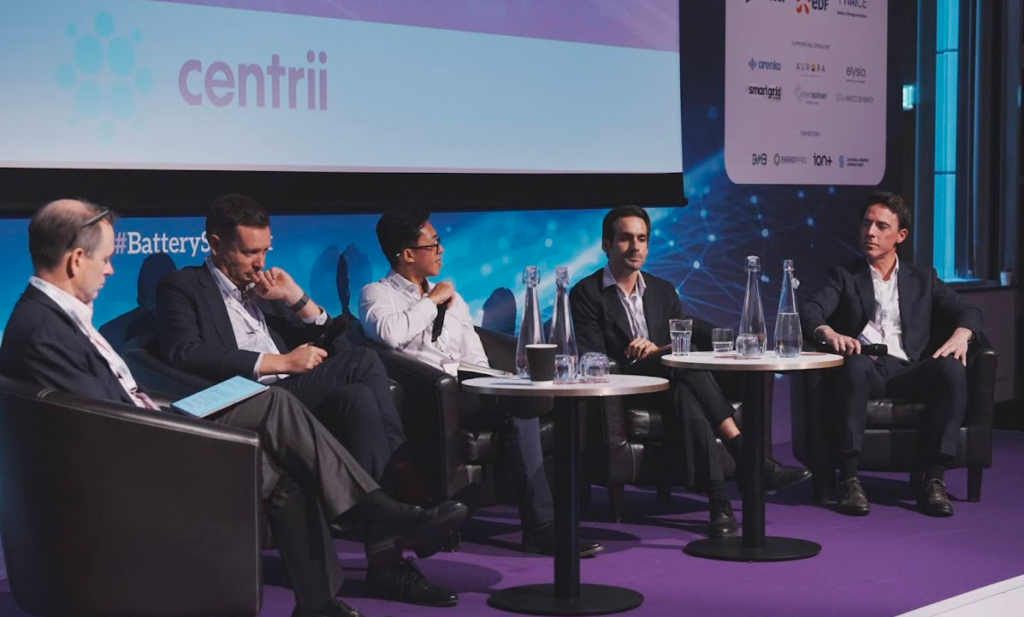
The topic of augmentation was a key one at the Battery Asset Management Summit UK & Ireland 2026 earlier this month, held in London by our publisher Solar Media, part of Informa Connect.
Executives from owner-operators and developers Fotowatio Renewable Ventures (FRV), Gore Street Capital, TagEnergy and BW ESS gave their views and advice regarding augmentation on various panel discussions across the two days of the event.
Try Premium for just $1
- Full premium access for the first month at only $1
- Converts to an annual rate after 30 days unless cancelled
- Cancel anytime during the trial period
Premium Benefits
- Expert industry analysis and interviews
- Digital access to PV Tech Power journal
- Exclusive event discounts
Or get the full Premium subscription right away
Or continue reading this article for free
Build some assumptions around augmentation into your model
Javier Arrue, investment director at BW ESS, said you need some assumptions around augmentation built into your model from the start.
Talking on the ‘Investor Expectations in 2026: What Has Changed Since Financial Close?’ panel, he said that you need to track the market but also that BESS supply developments were making life a bit easier for augmentation planning.
“You can’t know exactly how the market will evolve over five to ten years, but you can get a sense of it. We were among the first to move from the historical 2-hour duration to 3.3 hours (with its Bramley project). And you can sense in the wholesale spread how renewable generation is benefiting from longer durations — that shows up in the wholesale revenue curves. I expect that trend to continue, because we’re going to see more intermittent generation entering the system to meet rising demand,” he said.
“It’s also interesting to see battery manufacturers now defaulting to 4-hour systems. That supports delaying augmentation as you’re adding extra capacity to your batteries, which is a benefit. We’ll need to keep monitoring how the market evolves and how much intermittent capacity enters the system, to assess whether duration and augmentation expectations need adjusting.”
And don’t enter into a long-term agreement?
On the ‘Floor, Toll or Merchant? Structuring Revenue Risk for 2027’ panel discussion, someone in the audience asked how you factor augmentation into long-term service agreements (LTSAs) for BESS.
Ricardo Folgado, managing partner for owner-operator TagEnergy, essentially said that doing so is a challenge and so, for multiple reasons, the company tends to stay away from such contracts.
“From experience, what I would say is that long-term contracts are not ideal for various reasons. So our preference is to stay away from very long-term contracts because by definition they’re restrictive,” Folgado said.
“You want to sell the assets, you want to recontract, you want to augment, you want to do something, and you’re locked in, so they’re not ideal. That’s probably an obvious thing to say, but my advice would probably be to not enter into a long-term contract.”
Have a good energy management system (EMS)
LTSAs were the key focus of the ‘LTSA Trap: What Operators Are Getting Wrong’ panel discussion, which we wrote a dedicated piece on during the event.
When augmentation came up, Gore Street Capital’s senior asset manager, David Harris, said that having a good EMS is key.
“I think when it comes to state of health (SOH), the point where it really matters is when you start to augment your sites because then you have a site that’s in two halves where you might be able to dispatch at full power one half of your site for a full hour, but then your more degraded older part of the site might only last 50 minutes,” he explained.
“So that’s where you really need to have a good EMS in place that can telemeter the right values and discharge each unit at different rates, perhaps, but maintain a declared level for that full hour, or where it can.”
Debt financing rarely accounts for augmentation, so expect a wave of new deals in c.7 years
Matthew Paul, head of debt origination at the London branch of banking group Intesa Sanpaolo, said that debt financing wouldn’t normally price or take into account augmentation.
“The inevitability of augmentation isn’t something we currently bake in or give credit for on day one in debt sizing — we size debt against the project as it stands. The uncertainty of augmentation or repowering is a risk we can’t quantify on day one. We’re happy for augmentation to happen, but we’re not pricing it in upfront,” he explained, also on the ‘‘Investor Expectations in 2026’ panel.
“I have seen a facility with the ability to raise additional debt based on agreed parameters in the event of augmentation, but that’s not a day-one known quantity. For us to give credit for something like that down the line, it would need to be fully contracted, fully funded, with no doubt as to when, how much, and who’s doing it.”
His fellow panellist Pablo Zalvide, structured finance and M&A lead for UK BESS at FRV, said he therefore expects a wave of financings for augmenting projects in the medium term.
“In a few years, there will be a wave of projects needing refinancing. Even where debt sizing was based on a 15-year warranty duration, most financing in place today is structured as mini-perm, around seven years. That means a wave of projects will come up for refinancing, potentially with outdated duration assumptions by that point. I’d expect a good portion of those projects to pursue augmentation at the point of refinancing,” he said.
“Another factor will be the LTSA structure — it’s increasingly common to see LTSAs that run for shorter periods, around five years, with an assumption that a third-party operator will take over afterwards. That creates a potential gap in third-party operation and in preserving warranty levels. It will be interesting to see how that plays out.”
Zalvide noted that the firm had not done an augmentation on a project yet.
Augmentation risk is under-priced currently
On ‘The CAPEX Shock: Lessons from the Last Price Cycle’ panel discussion, the speakers were asked what long-term risks are currently being underpriced.
Gore Street’s project development manager, Michael Darzi, highlighted augmentation and repowering (replacing a project’s batteries completely) as one such risk, both from an availability-revenue perspective and a technology interoperability one.
“Generally, how we tend to think about it is we oversize our original system, in order to accommodate a much easier kind of augmentation strategy and installation, to reduce the impact on availability, and as a result, the impact it will have on your revenue,” he explained.
“But also I think there is a wider risk around compatibility between technologies and the control system. Because, yes, let’s say we might go with one technology provider when we build our system, but as technology evolves, maybe that supplier will no longer be relevant in the market, or maybe we like someone else’s technology. How does that play with the existing technology? How do the EMS and the PPC controller also have an impact? So these are kind of like all design considerations that we need to factor in initially and have that detailed conversation from the initial design stage, thinking five years or 10 years potentially ahead.”
Lessons from a real-life augmentation
Gareth Dauley, CEO of renewables development and services firm KOE Group, gave a presentation and Q&A on an example of real-life augmentation it is undergoing on a UK BESS project.
He said a major challenge was that, as the market had developed, the project was now at the smaller end of the market. This meant the major OEMs in the market had no interest in working with the firm on augmenting it.
In the example he gave, the batteries were only three years old and had degraded to 87%, so they were still perfectly usable. But they weren’t compatible with new BMS software and so couldn’t be ‘added to’, and had to be replaced entirely. The firm worked with integrator SolaX Power to repower the site.
