The transition to new energy technologies, including grid-scale and vehicle batteries, can help fossil-fuel-dependent countries improve their energy security.
That’s one of the top line takeaways of the BloombergNEF (BNEF) New Energy Outlook 2026 report, published last week, which provides what the market intelligence firm claims are “credible pathways the energy world may be headed for” over the next decade and through 2050.
These pathways are modelled along multiple scenarios, including the base case Economic Transition Scenario (ETS) led by technology and representing the most likely outcome. The Net Zero Scenario (NZS), meanwhile, models a pathway aligned with the goals of the 2015 UN Paris Agreement on climate, limiting global temperature rise to below 2°C.
Much has already changed since the 2025 edition of the report, BNEF said, including the war in the Persian Gulf, which represents the third major shock to the global energy system this decade. The ongoing war has once again brought energy security concerns into focus, like the COVID-19 pandemic and the Russian invasion of Ukraine that preceded it.
Try Premium for just $1
- Full premium access for the first month at only $1
- Converts to an annual rate after 30 days unless cancelled
- Cancel anytime during the trial period
Premium Benefits
- Expert industry analysis and interviews
- Digital access to PV Tech Power journal
- Exclusive event discounts
Or get the full Premium subscription right away
Or continue reading this article for free
BNEF emphasised that technologies such as solar PV, battery storage, electric vehicles (EVs) and heat pumps can help nations improve their energy security. Even where coal is a domestically available resource, it will be outcompeted on cost in the long term, falling to half its current utilisation level by 2050 under the ETS.
BNEF energy storage analyst Isshu Kikuma directly addressed the impacts of the war, including the Strait of Hormuz closure, when interviewed for a recent Energy-Storage.news article, alongside fellow analysts Iola Hughes at Benchmark Mineral Intelligence and Dan Finn-Foley of Intertek CEA.
Kikuma said that markets relying on oil-linked gas, “such as those in Asia or Europe,” are currently seeing elevated power prices.
“Higher power prices, driven by spot gas prices, can improve the economics of energy storage, particularly in markets with high renewable penetration, especially solar, due to a wider intraday power price spread,” the analyst said.
The world has missed its window to limit global warming to 1.5°C by 2100. However, under the NZS, BNEF has modelled that it is technically and economically feasible to remain consistent with a peak temperature rise of 1.81°C by 2049 and 1.73°C by the end of this century.
A record US$2.3 trillion was invested in energy transition technologies in 2025, which BNEF said is largely consistent with its projections of capital needs under its ETS. Energy transition investment is set to rise by 19% between 2031 and 2035, with transport accounting for 58% of the increased spend.
However, investment is still far short of projections under the NZS. This would require annual investment in low-carbon tech to average US$4.8 trillion between this year and 2030 and US$7.7 trillion between 2031 and 2035.
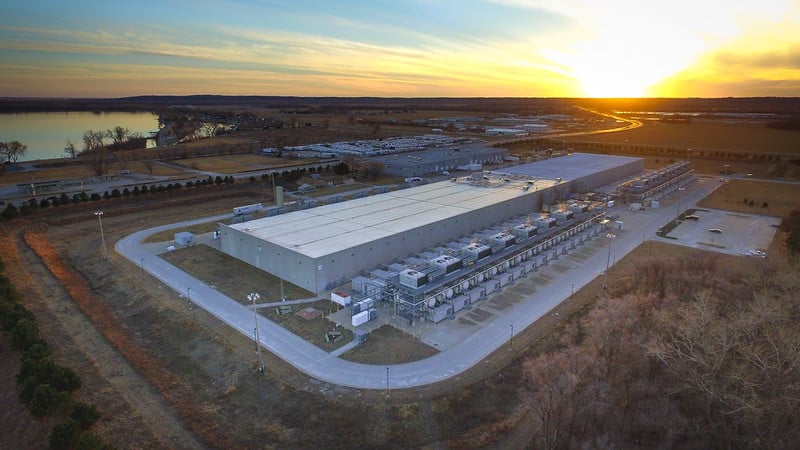
Another recent and unavoidable macro trend is the surge in data centres and their energy demand. Data centre electricity use is expected to triple by 2035, with data centres estimated to account for 23% of power demand in PJM, 18% in Malaysia, and 15% in the UK. Could drive major capacity expansion by 2050, requiring around 1,000GW of utility-scale solar, 400GW of battery storage, 370GW of gas and 110GW of coal generation capacity.
Data centres will likely drive a rise in global power sector emissions by 6% by 2035, according to BNEF, with 51% of the incremental generation serving data centres coming from new and existing fossil fuel generators.
Solar and batteries
As reported by our colleagues at PV Tech in their industry-focused coverage of the BNEF report last week, solar becomes the leading power generation source in the ETS by 2032. The world added 655GW of new solar PV generation capacity in 2025, versus 75GW in 2016.
The stationary battery storage industry in 2026 is roughly where solar was in 2020, both in terms of installed gigawatts and the highly fragmented manufacturing landscape of a market moving away from subsidies, according to BNEF.
Installing batteries to mitigate the daytime depression of power prices, as solar generation creates duck curves, is a far simpler solution than lengthy and complex power market reforms aimed at recovering “missing money.”
The increasing commoditisation of battery products is driving down prices faster than BNEF previously expected, leading the firm to substantially raise its outlook for battery deployment over 10- and 25-year timelines.
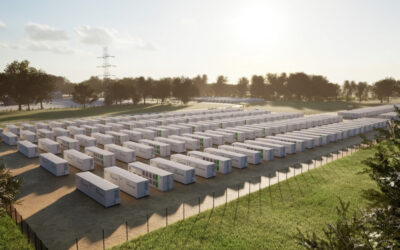
BNEF anticipates battery deployment to go from 223GW in 2025 to 3.8TW by 2050, a 17-fold increase.
Global leaders China and the US will see a relative slowdown in adoption, driven by recent policy changes.
In China, pumped hydro energy storage (PHES) and other flexibility resources will be increasingly called upon as the nation scales back its battery deployment ambitions.
In the US, restrictions on foreign entity of concern (FEOC) imports and investment introduced in the ‘One, Big, Beautiful Bill Act’ (‘OBBBA’) will limit developers’ ability to source low-cost battery energy storage system (BESS) technologies from China.
Battery storage deployment faces economic limits as renewable energy penetration rises, with battery utilisation declining as solar and wind expand, reducing project economics. In other words, as the penetration of variable renewable energy (VRE) increases, batteries may see less than full daily cycling. This will weaken returns for BESS investments and constrain the scale of growth.
Despite growth in the long-duration energy storage (LDES) segment, BNEF has not seen sufficient uptake of these technologies to model their impact on the grid over the same 10 to 25-year period. The firm, which published its first dedicated report on the market in 2024, said it will continue to closely monitor LDES development.
The power sector is the single biggest driver of emissions reduction, with the shift away from coal towards renewables, energy storage and gas accounting for 60% of emissions abatement by 2050. Electrification is the second biggest.
BNEF recently published the H1 2026 edition of its Energy Storage Outlook report dedicated to the sector. It tallied 112GW/307GWh of global deployments in 2025, outperforming the firm’s expectations.
In that report, BNEF forecasted 158GW/459GWh of new additions this year, despite a global slowdown in solar PV and wind installation growth. Its analysts predicted annual non-pumped hydro energy storage additions to almost double over the next decade to reach 308GW by 2036, by which time cumulative installations would reach 2.9TW/10.5TWh.