That’s according to Benedikt Deuchert, head of business development and regulatory affairs for German battery energy storage system (BESS) developer and EPC firm Kyon Energy.
Managers of the UK’s largest BESS owner-operator Gresham House Energy Storage Fund (GRID) discussed recent investment news and future strategy this week.
The German network regulator’s decision to maintain grid fee exemptions for battery storage “ensures that billions in private investment remain directed” into the market, Energy-Storage.news has heard.
Germany’s energy system regulator has confirmed that BESS projects coming online by 4 August 2029 will be exempt from charging and discharging grid fees, opening up investment again after months of uncertainty.
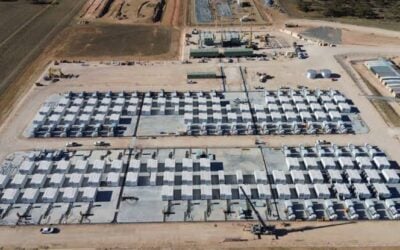
Australia has emerged as the world’s third-largest utility-scale battery energy storage market, with 4.3GW of large-scale battery storage systems reaching financial close in 2025.
The transition to new energy technologies, including grid-scale and vehicle batteries, can help fossil-fuel-dependent countries improve their energy security.
The situation and uncertainty around grid connections and grid fees in Germany is evolving, possibly enabling market participants to look beyond the August 2029 grid fee exemption cut-off date – although uncertainty is still very high.
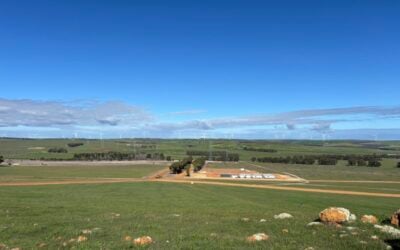
Singapore-based Equis has launched GreenPoint Energy, a wholly owned subsidiary consolidating its Australian renewable energy and battery storage operations under a dedicated platform with a 2.5GW portfolio of 12 battery energy storage systems (BESS) and wind projects across every National Energy Market (NEM)-connected state.