
Energy storage and battery market experts speak with Energy-Storage.news about current and possible supply chain and downstream impacts of the US and Israel’s war on Iran.
At the end of February, the US and Israel started a war with Iran, launching multiple airstrikes and assassinating Ayatollah Ali Khamenei.
In response, Iran launched retaliatory missile and drone strikes, strategically targeting energy infrastructure, and notably, closed the global energy trade route, the Strait of Hormuz.
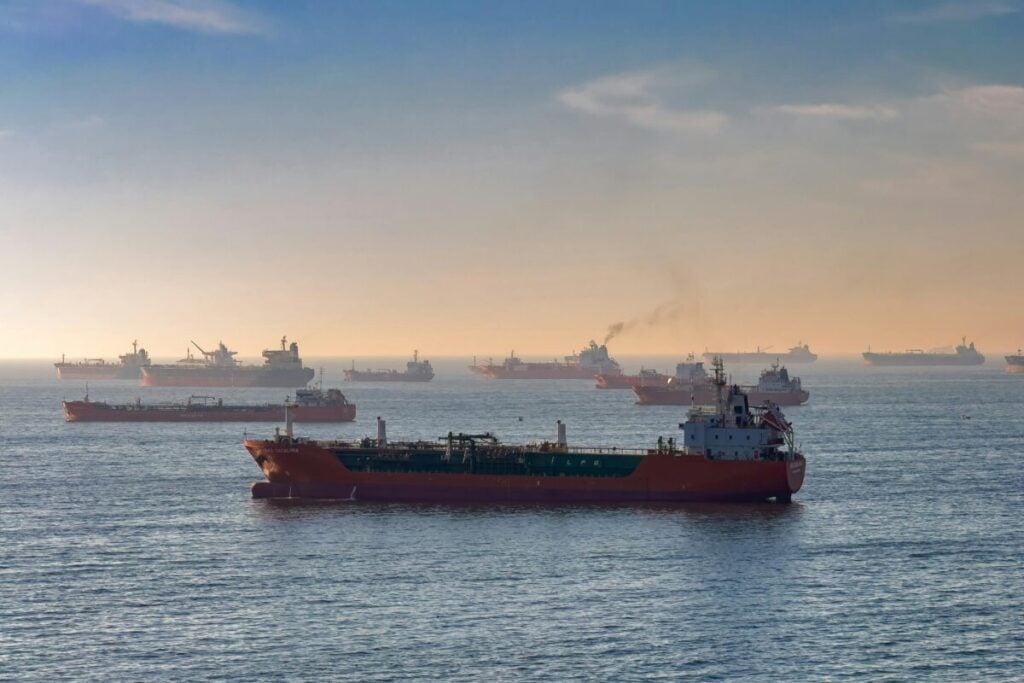
The Strait of Hormuz lies between the Persian Gulf and the Gulf of Oman. It is the only maritime route from the Persian Gulf to the open ocean, making it a vital chokepoint for worldwide energy transportation.
Try Premium for just $1
- Full premium access for the first month at only $1
- Converts to an annual rate after 30 days unless cancelled
- Cancel anytime during the trial period
Premium Benefits
- Expert industry analysis and interviews
- Digital access to PV Tech Power journal
- Exclusive event discounts
Or get the full Premium subscription right away
Or continue reading this article for free
Closure of the Strait
According to news outlet Reuters, hours after the US-Israeli strikes, Iran’s Islamic Revolutionary Guard Corps (IRGC) stated that ships were not permitted to pass through the Strait of Hormuz.
The area contains mines, and Iran has attacked ships attempting to pass through or used navigation-blocking technology.
Since the announcement of the closure, multiple countries have been allowed to pass through, according to Iran, including China, Russia, India, Iraq, and Pakistan. For a time, the route absolutely remained closed to vessels from the US and Israel.
On 12 April, Trump announced a US naval blockade of the Strait, following failed cease-fire negotiations. Reuters has reported that traffic in the Strait is still well below pre-war levels, and China has called the US’ actions “dangerous and irresponsible.”
This, in turn, has caused oil prices to fluctuate significantly. As of 1 April 2026, multiple financial outlets reported a US national average for gasoline at US$4.06 per gallon. Other countries that depend on imported oil have had to implement retail fuel price caps and various other measures.
Our colleagues at UK site Solar Power Portal reported that analysis of public shareholdings and reports published by non-profit groups Campaign Collective and the End Fuel Poverty Coalition shows that bosses at UK and international energy companies have made millions in personal share value since the crisis began.
Additional reporting showed that Great Britain has saved around £7 million (US$9.49 million) a day since the start of the conflict, as domestic solar PV and wind capacity have mitigated the need for imported gas.
As The Guardian has recently reported, the top 100 oil and gas companies have made more than US$30 million every hour in unearned profit in the first month of the US-Israeli war in Iran.
Effects of the closure
The closure has particularly impacted countries in Asia. The BBC reported that authorities in South Korea and Thailand announced plans to limit fuel prices, Vietnam’s finance ministry is preparing to temporarily eliminate taxes on fuel imports, and the Philippines implemented new energy-saving measures.
For the battery storage industry, the effects have been more nuanced than those observed in the oil and gas industry.
Isshu Kikuma energy storage analyst at BloombergNEF (BNEF) explains, “We haven’t seen direct impacts on energy storage markets, although shipping and manufacturing costs for some equipment may rise due to soaring oil prices. China, not the Middle East or the US, dominates battery supply chains, shielding direct impacts.”
However, the closure is affecting power markets in ways that could benefit energy storage economics. Kikuma noted that wholesale power prices are typically determined by the marginal generator, often a gas-fired power plant, and in some markets, gas prices are linked to oil prices through liquefied natural gas imports.
“Markets that rely on oil-linked gas, such as those in Asia and Europe, are experiencing elevated power prices,” Kikuma says. “Higher power prices, driven by spot gas prices, can improve the economics of energy storage, particularly in markets with high renewable penetration, especially solar, due to a wider intraday power price spread.”
He notes that the US is an exception, as domestic gas prices are generally not linked to Middle Eastern oil prices and remain largely insulated from global gas price dynamics.
“For markets relying on fossil fuels, the current geopolitical tension has pushed up energy and power costs. This could present a significant opportunity for low-carbon solutions, including energy storage,” Kikuma says. “However, whether this incident accelerates the energy transition depends on how each market views its energy security and how long the current market environment persists. Businesses typically need to see structural changes and long-term certainty before making investment decisions.”
He highlights that even with elevated spot fuel prices, businesses may not immediately switch to low-carbon options “unless they expect a structural shift away from fossil fuel dependence toward independent, low-carbon solutions.”
In this context, renewables and storage could provide reduced reliance on fuel imports once projects are built. “Renewables and batteries are capital goods, meaning import dependence is lower than for fossil fuels, which are consumables,” Kikuma explaines. “Imports are typically needed only once to build renewable energy and storage projects, rather than continuously for fuel supply.”
Supply chain pressures and Middle East project risk
Iola Hughes, head of research at battery market intelligence provider Benchmark Mineral Intelligence, characterised the war’s impacts as “largely two-sided: it may delay some projects in the near term, but it strengthens the structural case for renewables and energy storage by increasing the value of dispatchable, geopolitical-risk-free, non-fossil-fuel flexibility.”
She identifies specific supply chain vulnerabilities, stating, “Conflict-related shipping disruptions and risks in the Strait of Hormuz are raising costs and complicating logistics for parts of the battery supply chain. This is particularly true for copper, cobalt, and nickel, given their reliance on sulfur and sulfuric acid.”
Hughes warned that higher input costs matter significantly because “battery and renewable-energy projects are capital-intensive: higher energy prices, freight costs, insurance premiums, and financing costs can all squeeze project economics and delay procurement decisions.”
The Middle East itself has emerged as a significant energy storage hub, creating direct project-level risks. “Benchmark is currently tracking over 50GWh of projects planned to enter operation by the end of 2027 that may be impacted by the conflict,” Hughes explains. “Most of these projects involve Chinese contractors and suppliers, and deliveries would likely need to pass through the Strait.”
Despite near-term challenges, Hughes sees potential for accelerated deployment, “The current geo-economic environment and energy shock are likely to support BESS and renewables build-out, as countries seek greater energy independence to reduce exposure to imported oil and gas. Asian markets, where reliance on imports from the Middle East is most pronounced, will likely see the strongest reaction to this, particularly for residential and small-scale batteries that can be deployed quickly.”
She notes that Chinese battery producers are well-positioned to respond, “Given the dramatic expansion and overcapacity in BESS manufacturing in recent years, the Chinese market is well equipped to react to any increase in demand. Illustrative of this are the share prices of Chinese battery producers, such as CATL, BYD and Sungrow, which reportedly have recently gained more than US$70 billion in market capitalisation.”
The sulfur bottleneck
Dan Finn-Foley, director of energy storage market intelligence at Intertek CEA, emphasised the difficulty of forecasting in the current environment: “The layers of uncertainty surrounding the conflict in the Middle East make any forecast, near or short-term, an exercise in ‘ifs’ rather than ‘whens’. The scale of disequilibrium rests not only on the duration of the hostilities, but the time frame before we can achieve some ‘return to the norm’ following wide-spread regional disruption and complex infrastructure repairs.”
He notes that immediate impacts on storage remain limited: “For now, the impacts on the storage industry remain mostly long-term. While energy and transportation are meaningful components of the cost stack of a BESS, they are dwarfed by other factors. The recent spike in lithium prices, for instance, is likely to have a more immediate impact, and for the US market the effect of tariffs dwarfs even that.”
Finn-Foley identified a vulnerability that has received less attention, sulfur, stating, “Sulfur, which is quietly embedded into the battery supply chain, is increasingly emerging as a pain point. It is a required ingredient for lithium refining, which is highly localised in China, which imports a large portion of its sulfur from the Middle East. Sulfuric acid is also used in the refining of cobalt and the production of phosphoric acid, needed for producing cathode active materials. A tightening supply of sulfur could put additional pressure on cathode prices already strained by lithium anti-involution policies.”
He also notes that oil price shocks are likely to affect battery costs through multiple pathways, “Petroleum is a key input for battery anodes (petroleum coke), separators (plastics like polyethylene), electrolyte (solvents like ethylene carbonate), and other key electrode additives (PVDF, carbon black, etc.).”
Looking at potential long-term downsides, Finn-Foley warns, “Any economic pain would hit the renewable energy industry just as it would other markets, and in some areas potentially harder, as a more cautious mindset from investors could disproportionately affect renewables and storage given their large up-front costs.”
Despite the challenges, Finn-Foley identifies potential upsides for the BESS market, “A sustained spike in energy prices could accelerate EV adoption, for both heavy and light-duty vehicles. This is the first large-scale energy crisis that coincides with the widespread availability of reliable and affordable electric vehicles, so persistently high fuel prices could nudge the market further towards electrification, increasing power demands and driving further technical innovation and economies of scale for lithium-ion batteries.”
He adds, “A renewed push towards energy independence, particularly for markets in Asia and Europe with fewer trade barriers to Chinese BESS, could create significant long-term demand upside.”
Whether the closure of the Strait of Hormuz proves to be a catalyst for accelerated deployment or a temporary disruption will depend on how long the current environment persists, and whether governments and businesses interpret it as a temporary shock or a structural shift requiring new energy strategies. Regardless, the short and long-term effects are becoming increasingly difficult to ignore.
