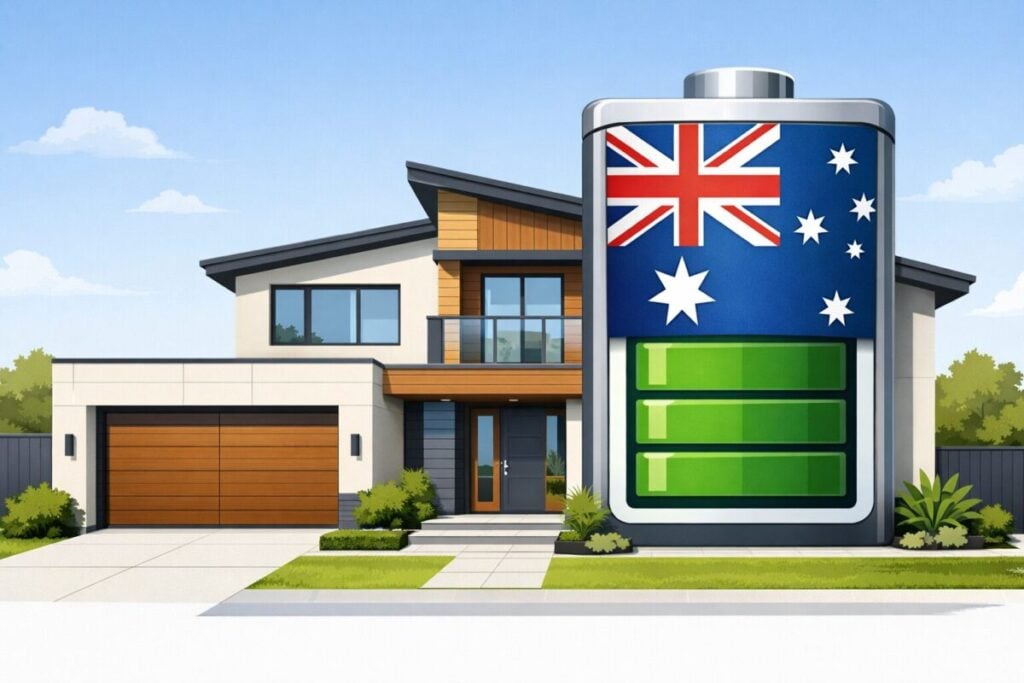
More than 507,000 households, small businesses and community organisations have installed a home battery storage system under Australia’s Cheaper Home Batteries Program, according to figures announced by Prime Minister Anthony Albanese and Energy Minister Chris Bowen.
The Cheaper Home Batteries Program is a federal subsidy scheme administered by the Clean Energy Regulator that discounts the upfront cost of small-scale battery systems connected to solar panels by 30%.
The scheme launched in July 2025 following the re-election of the Albanese government, and is budgeted at AU$7.2 billion (US$4.68 billion) over four years, more than three times the AU$2.3 billion initially projected when the policy was announced.
Bowen said uptake had been concentrated outside major cities, with electorates such as Hume, Mitchell, Greenway and Macquarie in New South Wales, Wright in Queensland, and Mayo in South Australia among the strongest adopters.
Try Premium for just $1
- Full premium access for the first month at only $1
- Converts to an annual rate after 30 days unless cancelled
- Cancel anytime during the trial period
Premium Benefits
- Expert industry analysis and interviews
- Digital access to PV Tech Power journal
- Exclusive event discounts
Or get the full Premium subscription right away
Or continue reading this article for free
In some electorates, he said, more than 10% of houses now have a battery installed under the scheme.
Based on figures released under the programme, average system capacity has risen steadily as installations have climbed, from around 25.2kWh at the 250,000-installation mark, to 28.1kWh at 380,712 installations, to 28.0kWh at 400,000 installations.
As such, on the average capacity per installation recorded in the programme’s earlier updates, the 507,000 milestone would equate to approximately 14GWh of cumulative battery storage capacity, though the government’s announcement did not include an official capacity figure.
From launch to half a million installations in just over a year
The programme’s growth has been tracked in stages since its introduction. By early May 2026, Bowen disclosed that 380,712 home battery storage systems had been installed, representing 10.7GWh of storage capacity, a figure he said had outpaced uptake of the government’s parallel electric vehicle (EV) tax discount.
Speaking at the Smart Energy Conference 2026, Bowen described the response as taken up “with gusto” by Australian households.
That followed an earlier update in which the Clean Energy Regulator’s executive general manager, Carl Binning, said the scheme was processing around 8,000 applications per week, reflecting the pace at which installers and households were engaging with the subsidy in its first several months.
In May 2026, Australia passed 400,000 installations and 11.2GWh of cumulative capacity in under a year, a rate of deployment that outstripped the government’s own initial projections for the scheme.
The programme itself emerged from the Labor government’s re-election in the 2025 federal election, having been a central pillar of its energy policy platform, with the result seen at the time as a boost for the renewables and storage sector’s policy certainty going into the new parliamentary term.
Around half of the installations recorded under the programme have been paired with new or upgraded solar systems, according to earlier government figures. This showcases the extent to which households are combining battery storage with fresh or expanded rooftop solar capacity rather than retrofitting batteries onto existing systems alone.
The scale of residential battery deployment achieved under the programme is beginning to be felt at the system level.
Battery storage systems installed under the scheme are increasingly cited by the government as easing pressure on the grid during the evening peak and moderating wholesale electricity prices, a dynamic separate from but complementary to the growth of grid-scale battery storage capacity, which has continued in parallel across the National Electricity Market (NEM).
Never miss an Australian energy storage story. Sign up for our Australia newsletter and get the latest project announcements, policy updates and market analysis delivered directly to you.
Solar Media (part of Informa Group) will host the Battery Asset Management Summit Australia 2026 on 25-26 August at the Amora Hotel Jamison in Sydney, bringing together asset owners, operators, trading teams and optimisers to address revenue strategy, lifecycle management and operational performance across Australia’s fast-growing battery storage fleet.
Readers of Energy-Storage.news can get 20% off their tickets using the code ESN20 at checkout. Find out more about the Summit on the official website.