Australia’s national Clean Energy Finance Corporation (CEFC) has invested to help a 100MW/200MWh battery storage project reach financial close.
CEFC has committed to lending AU$35.5 million (US$23.06 million) for France-headquartered clean energy developer and independent power producer (IPP) Neoen’s Capital Battery project, under construction in the Australian Capital Territory (ACT).
In the process, the council also found a co-lender, infrastructure fund manager Infradebt, which will match the CEFC investment. It’s the first time CEFC has made an arrangement of this type in a project financing.
It is however the third large-scale battery storage facility CEFC has helped fund. Both previous efforts were also for Neoen projects: Hornsdale Power Reserve in South Australia and the Victorian Big Battery, notable as being Australia’s first >100MW battery energy storage system (BESS) and the country’s current largest BESS respectively.
Try Premium for just $1
- Full premium access for the first month at only $1
- Converts to an annual rate after 30 days unless cancelled
- Cancel anytime during the trial period
Premium Benefits
- Expert industry analysis and interviews
- Digital access to PV Tech Power journal
- Exclusive event discounts
Or get the full Premium subscription right away
Or continue reading this article for free
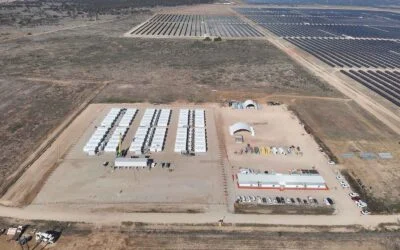
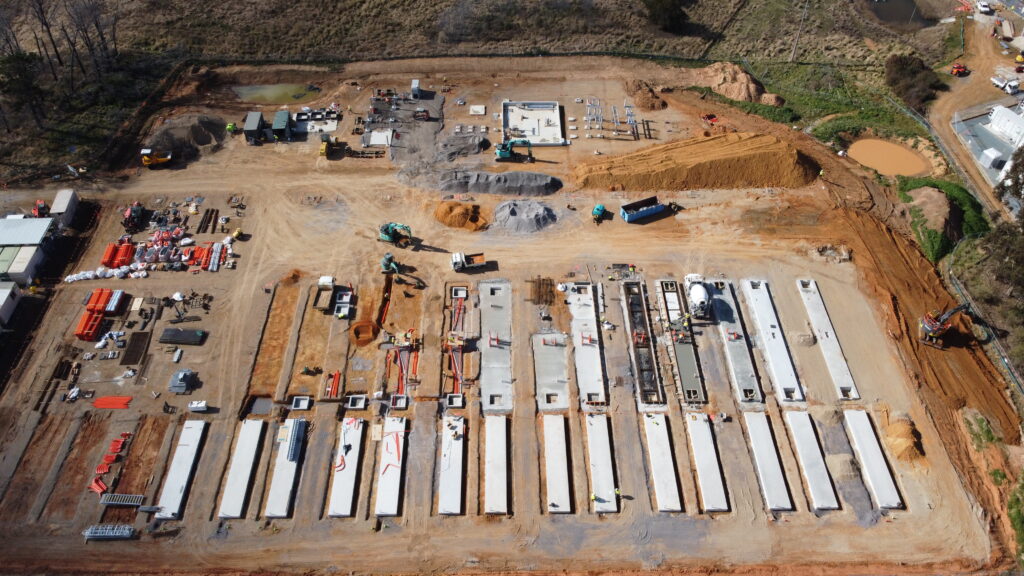
Neoen announced today that the Capital Battery has reached financial close, sharing a photo of the construction site on Twitter. As reported by Energy-Storage.news in December 2021, work began late last year as Neoen issued a Notice to Proceed to construction and technology partners Doosan Heavy Industries and Construction and Doosan GridTech.
The IPP won the project through a competitive solicitation held by the ACT government in 2020. The state government had been seeking a BESS of at least 50MW output as part of a Renewables Reverse Auction, the fifth tender of its type in the ACT.
The tender awarded projects at record-low average prices of AU$50 per MWh. Neoen’s win included a contract to supply 100MW of wind energy from its Goyder Renewables Zone project in South Australia, along with the BESS award.
Although the tender award had been for a BESS of 50MW, Neoen said last year that it had seen demand surge for battery storage and the services it can provide, leading it to double the facility’s planned size.
This rapid increase in demand was borne out in the company’s half-year 2022 financial results. Neoen reported €39.3 million revenues from energy storage activities, driven mainly by money earned from its Australia projects, an increase of nearly three times from €13.4 million in H1 2021.
Long-term revenues backed by AGL ‘virtual battery’ contract
The Capital Battery project is underpinned by a so-called ‘virtual battery’ contract Neoen signed with major power generator-retailer AGL. As reported by Energy-Storage.news in April, AGL will leverage a 70MW/140MWh portion of the BESS’ stored energy under a seven-year contract.
What makes it a ‘virtual’ deal is that AGL will use the system to participate in the National Electricity Market (NEM) through a grid connection in New South Wales, far away from where the BESS is being constructed in Canberra.
Neoen emphasised at the time that deal was announced that the system will be capable of providing network services as agreed with the ACT government in addition to being available for AGL to use.
The system is scheduled to go into operation in the first half of 2023.
“As Australia raises its ambitions to reach net zero emissions with new targets, we must heighten our focus on developing the enabling technologies that will be critical to our success. Battery storage is key to our ability to decarbonise the energy sector,” CEFC CEO Ian Learmouth said.
“These projects require substantial, tailored investment solutions, reflecting their high start-up capital costs and emerging and untested revenue models, alongside the ongoing development of the market for the risk mitigation services that batteries can provide.”
Learmouth said the CEFC’s lending for Neoen’s three projects helped demonstrate the “economic and grid stability case for large-scale batteries”.
Neoen currently has a total 576MW of battery storage in operation or construction in Australia and plans to build more, including a recently proposed 1GW/4GWh project in a Western Australia community with close historical and present day links to the coal industry.