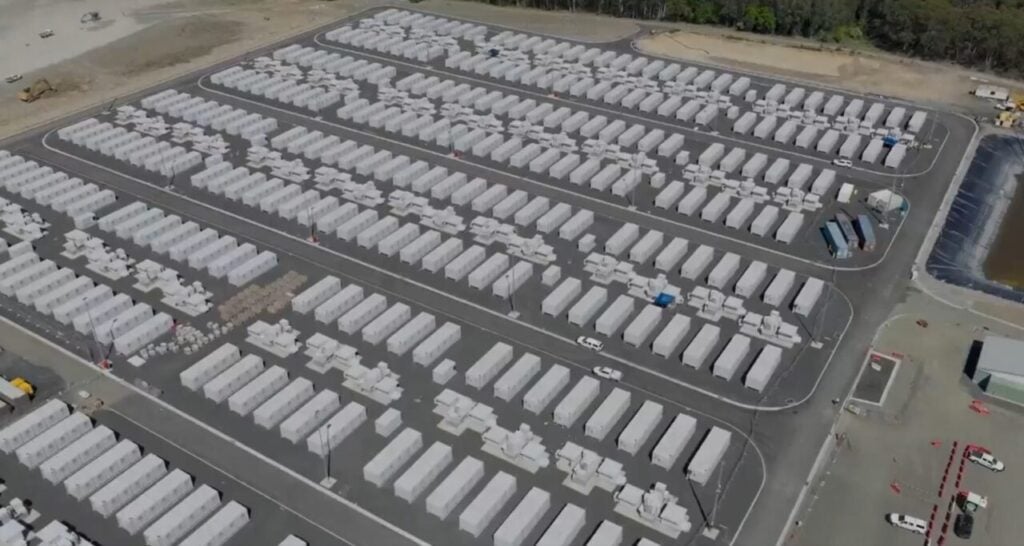
Origin Energy has referred a new battery energy storage system (BESS) project, Eraring BESS North, for assessment under Australia’s Environment Protection and Biodiversity Conservation (EPBC) Act.
The application intends to add 500MW and approximately 4,942MWh of storage capacity at its Eraring Power Station site in New South Wales.
Origin Energy is one of Australia’s largest energy companies, operating as both a generator and retailer across electricity, gas and renewable energy.
The new project would operate alongside the company’s existing Eraring BESS, already one of the largest in Australia.
Try Premium for just $1
- Full premium access for the first month at only $1
- Converts to an annual rate after 30 days unless cancelled
- Cancel anytime during the trial period
Premium Benefits
- Expert industry analysis and interviews
- Digital access to PV Tech Power journal
- Exclusive event discounts
Or get the full Premium subscription right away
Or continue reading this article for free
Together, the two facilities would provide a combined maximum registered active power output of around 1,200MW and a combined accessible energy storage capacity of approximately 8,600MWh, subject to detailed design, according to the referral document.
The scale of the facility would also make it significantly larger than the likes of Akaysha Energy’s newly operational 850MW/1,680MWh Waratah Super Battery in New South Wales, which is labelled as Australia’s “most powerful battery storage system” and Synergy’s 500MW/2,400MWh Collie BESS in Western Australia, currently Australia’s largest battery storage system in terms of capacity.
Expanding on one of Australia’s largest battery storage systems
The existing Eraring BESS has been delivered in stages, all contracted to Wärtsilä, the Finnish marine and energy technology group. The first stage, a 460MW/1,770MWh system, commenced commercial operations in January 2026.
Greg Jarvis, Origin’s executive general manager of energy supply and operations, described the milestone on LinkedIn at the time as delivering the “largest approved BESS in the Southern Hemisphere” by capacity.
The stage was developed through partnerships with multiple contractors beyond Wärtsilä, including Enerven, Jacobs, Lumea and Transgrid, and its 460MW output and nearly four hours of discharge duration were designed to provide frequency regulation, voltage support and energy arbitrage services, alongside storing daytime solar generation for release during peak demand periods.
A second stage, a 240MW/1,030MWh addition, was approved in July 2024, equipped with grid-forming inverters to support network stability, and built using Wärtsilä’s GEMS Digital Energy Platform operating in virtual synchronous machine mode to deliver synthetic inertia and short-circuit current capability.
Wärtsilä was then contracted in December 2024 to deliver a third stage, adding a further 700MWh and converting the first stage from a 2-hour to a 4-hour duration system, using the company’s modular Quantum energy storage solution.
Incidentally, Wärtsilä has just split its energy storage business off into a joint venture (JV) with German solar PV manufacturing group RCT Solutions. The new company, Valo, which is a 50:50 JV, officially launched last week.
Once complete, the three stages will bring the existing Eraring BESS to 700MW and 2,800MWh, which Origin has said would deliver the largest total dispatch duration of any operating or under-construction battery storage system in the Southern Hemisphere.
Eraring BESS North would be electrically separate from this existing facility, with its own dedicated grid connection to TransGrid’s switching station rather than sharing the existing BESS’s connection infrastructure.
The proposed project would require up to 22 hectares, of which roughly 11 hectares sit within the existing Eraring BESS project boundary on previously disturbed land, with the remainder adjacent to it.
Construction is expected to begin in 2028 and take approximately 2.5 years, targeting commercial operations in early to mid-2031, subject to regulatory approvals. Once operational, the facility is anticipated to have an operating life of up to 25 years.
Origin’s referral attributes the expansion to structural change in the National Electricity Market (NEM) as coal-fired generation retires.
The document cites the 2023 closure of Liddell Power Station and the scheduled retirement of Eraring itself, together removing around 2,880MW of dispatchable generation from the market, as the largest single generation exit in Australian electricity history.
The proposed expansion extends a pattern of battery storage investment that Origin has pursued at its retiring thermal generation sites elsewhere in the NEM.
The company’s 300MW/650MWh Mortlake BESS in south-west Victoria, built on the site of its Mortlake Power Station and using Fluence as main contractor, commenced commercial operations in August 2026, connecting directly to AusNet’s 500kV switchyard and using grid-forming inverter technology similar in function to Eraring’s second stage.
Never miss an Australian energy storage story. Sign up for our Australia newsletter and get the latest project announcements, policy updates and market analysis delivered directly to you.