The government of New South Wales (NSW) in Australia has said the state’s single biggest ever investment in infrastructure will go towards enabling renewable energy additions across its networks.
NSW’s ruling Liberal Party made a series of announcements today ahead of unveiling its 2022-2023 State Budget on 21 June.
Among those, Treasurer and Minister for Energy Matt Kean said, will be A$1.2 billion (US$0.85 billion) of funding to fast-track the buildout and upgrading of transmission networks to accommodate huge, multi-gigawatt Renewable Energy Zones (REZ).
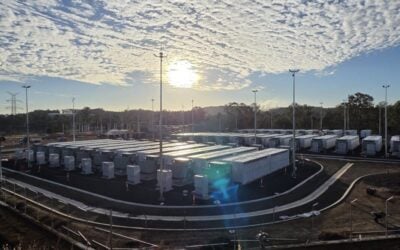
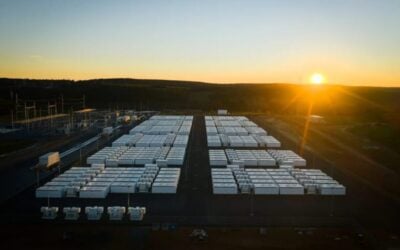
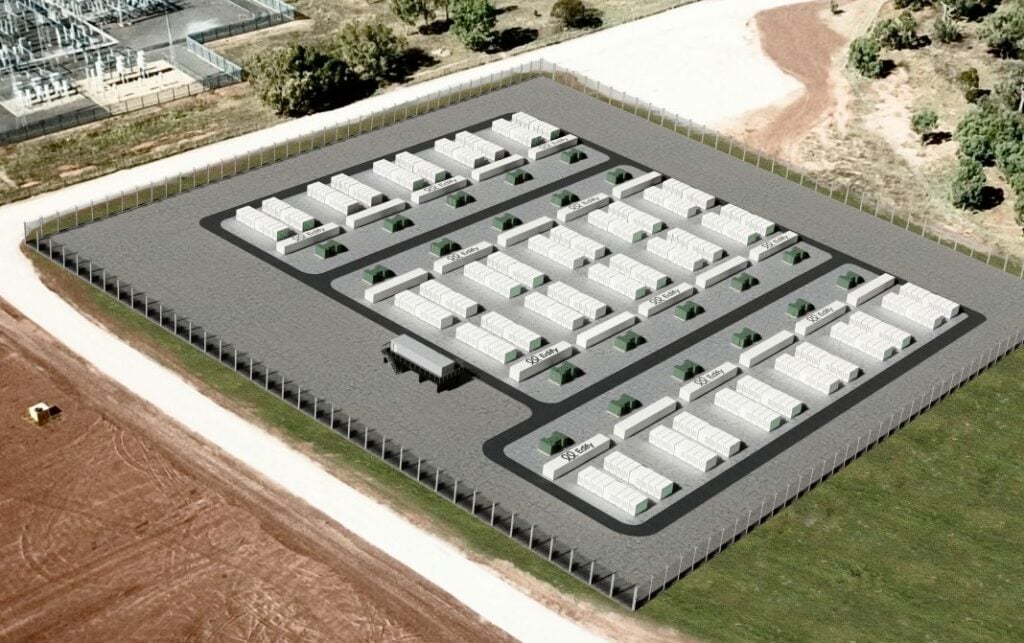
Kean announced that the first project to benefit will be the Waratah Super Battery, a 700MW/1,400MWh battery energy storage system (BESS) designed to act as a kind of ‘shock absorber’ and enable power lines to operate at high capacity.
Try Premium for just $1
- Full premium access for the first month at only $1
- Converts to an annual rate after 30 days unless cancelled
- Cancel anytime during the trial period
Premium Benefits
- Expert industry analysis and interviews
- Digital access to PV Tech Power journal
- Exclusive event discounts
Or get the full Premium subscription right away
Or continue reading this article for free
In March, the NSW government opened a tender process for the project, which has also been touted as one of a number of new energy resources that can help replace Eraring coal plant, a 2,880MW generating station that owner Origin Energy wants to close by 2025.
Waratah Super Battery would go into service before the Eraring plant closes, while Origin Energy itself has said that another 700MW BESS the power company wants to build, along with a virtual power plant (VPP) with up to 2GW of connected resources, could further fill in that gap combined with growth in renewable energy generation.
If it were built today, the battery system would be the largest of its kind in Australia, with that title currently taken by the 300MW/450MWh Victorian Big Battery BESS in the state of Victoria that went online at the beginning of this year.
Waratah Super Battery would alleviate transmission line constraints and increase capacity across New South Wales to send power to demand centre areas like Sydney and Newcastle.
REZ are ‘modern day power stations’
“Renewable Energy Zones are modern day power stations, providing cheap and clean power for the homes and business of NSW. This is the State’s largest ever investment in infrastructure for renewable energy and is expected to help create 2,700 direct construction jobs across the State,” Kean said.
The minister added that the A$1.2 billion invested by the state could unlock a further A$14 billion in private investment. There is also about 16GW of large-scale renewable energy capacity represented by 50 proposed projects that the government said may never get off the ground without the transmission network being improved and expanded to accommodate them.
Funding, through a designated so-called Transmission Acceleration Facility, would be a “critical step in unlocking the new generation needed to improve competition, lower power prices and secure a brighter future for households and business,” Kean said, especially in the wake of the Russian invasion of Ukraine and persistent unplanned outages at Australia’s existing coal fleet, which have contributed to electricity price rises.
“Fast-tracking the construction of renewable energy is the best way to reduce our exposure to these risks and take advantage of cleaner, cheaper power sources.”
In February, sister site PV Tech reported that the NSW government received applications for nearly 40GW of renewable energy and energy storage projects for the state’s proposed Hunter-Central Coast Renewable Energy Zone (REZ), equating to about A$100 billion and including 24 solar PV farms and 35 BESS projects.
Similarly, a few weeks prior, about 34GW of proposals were received in a tender for another, the South-West NSW REZ, about 10 times the available capacity.
An article last year in Vol.28 of our quarterly technical journal, PV Tech Power, looked at how REZ plans across Australia could help restore investor confidence in the country’s renewable energy market, as well as the case for transmission upgrades and the likely impacts of state and Federal government policies.
On a related note, Energy-Storage.news has heard that at a targeted deployment of electricity storage for renewable energy could be an effective way for the Federal government to enable decarbonisation, while making networks robust and supply stable at lowest cost to the public.
A A$20 billion public corporation the new administration of Prime Minister Anthony Albanese of the Labor Party has promised to facilitate investment in infrastructure could perhaps be best directed to creating a Renewable Electricity Storage Target (REST) scheme, Bruce Mountain of the Victoria Energy Policy Centre (VEPC) told this site.