Private equity fund SoftBank Vision Fund has officially signed off on a Memorandum of Understanding (MOU) with Saudi Arabia’s Public Investment Fund (PIF) to develop 3GW of PV and energy storage capacity within Saudi Arabia.
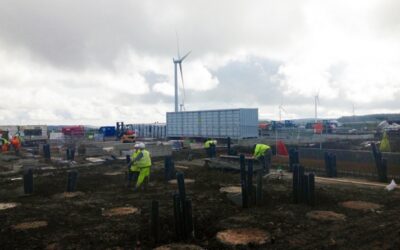
No one moment took energy storage into the mainstream of the UK power system more than the outcome of National Grid’s August 2016 tender for Enhanced Frequency Response (EFR). Reporter David Pratt examines the business case behind Vattenfall’s first EFR project and asks what grid operators and regulators’ next moves are likely to be.
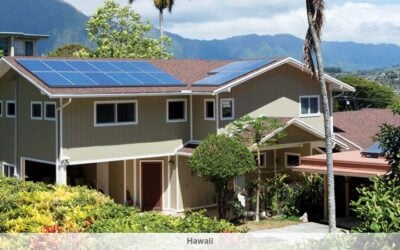
The Hawai‘i Public Utilities Commission has approved two new programmes expanding its customers’ abilities to install rooftop PV and energy storage systems, while also clarifying the terms of its existing programmes.
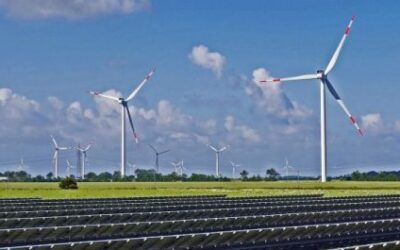
The Clean Energy Finance Corporation (CEFC) and the Australian Renewable Energy Agency (ARENA) have both financed the Kennedy hybrid solar, wind and storage project in north Queensland, which is being developed Windlab and Eurus Energy.
Australia’s government has dropped plans for introducing a Clean Energy Target (CET) post-2020, opting instead for a technology-neutral plan that it claimed would prioritise reliability and bringing prices down.
Electricity and heat generator and retailer Vattenfall is developing a third party model for energy storage deployment, which will see the Swedish firm deploy batteries alongside UK solar farms.
Submissions for Thailand’s first 300MW hybrid PPA scheme, which encourages use of energy storage to supplement renewable energy generation, are due by 20 October.
Anesco is investigating how it could adopt flow batteries into future projects instead of lithium as a response to growing uncertainty around the future of storage de-rating in the capacity market, Clean Energy News can reveal.
State-run coal mining and power firm NLC India has auctioned a 20MW solar PV project to be combined with 28MWh of energy storage capacity in the Andaman and Nicobar Islands.