California’s Assembly Appropriations Committee advanced two virtual power plant (VPP) bills aimed at reducing energy rates in the US state.
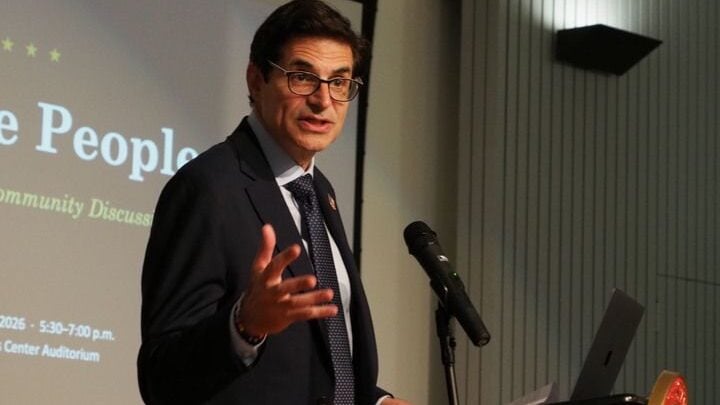
Advanced by the Committee on 13 August, Senate Bill 905 (SB 905) and SB 913 were both authored by California State Senator Josh Becker.
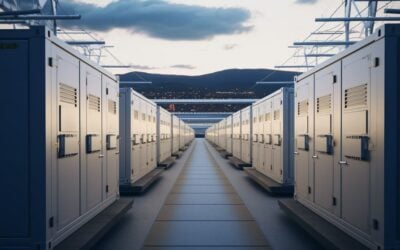
SB 913 would require the California Public Utilities Commission (CPUC) to establish a valuation methodology for customer-sited battery energy storage systems (BESS) to export energy onto the grid at times of grid stress.
Separately, a California Independent System Operator (CAISO) staff proposal will go to the Board of Governors on 26 August. The CAISO proposal allows exports from behind-the-meter (BTM) batteries to participate in the statewide energy market. This clears the way for fleets of customer batteries to qualify for resource adequacy (RA) with the full amount of stored energy that can be made available on demand
Try Premium for just $1
- Full premium access for the first month at only $1
- Converts to an annual rate after 30 days unless cancelled
- Cancel anytime during the trial period
Premium Benefits
- Expert industry analysis and interviews
- Digital access to PV Tech Power journal
- Exclusive event discounts
Or get the full Premium subscription right away
Or continue reading this article for free
SB 905 would establish a grid utilisation metric that measures the load factor on each segment of the distribution grid. This would expose which circuits and substations can host substantially more energy without costly expansions, by shifting usage away from peak hours.
Many circuits currently operate significantly below capacity most of the time, and at full capacity for only a small number of hours per year.
After establishing the grid utilisation metric, the CPUC could readily mandate annual improvements in grid utilisation rates. To comply with rising standards, utilities would create load flexibility programmes incentivising customers to move their electricity usage to off-peak periods.
Beyond requiring these programmes to achieve net reductions in overall utility costs, SB 905 would not prescribe specific programme design requirements.
If the VPP bills pass a vote of the full Assembly this month they will be sent to Governor Gavin Newsom for his signature.
Industry group California Solar & Storage Association (CALSSA) noted that bills follow the legislature allocating additional funding to the Demand Side Grid Support (DSGS) programme last month.
DSGS is the state’s current VPP programme, which had more than 1GW of participation from customer batteries in 2025. Newsom proposed using funds from a different expiring programme to keep DSGS operating until the end of 2026.
Participants will be shifted to the CPUC’s Emergency Load Reduction Programme (ELRP), “a 5-year pilot programme designed to pay electricity consumers for reducing energy consumption or increasing electricity supply during periods of electrical grid emergencies.”
Funding was scheduled to run out in the middle of the 2026 programme season. The additional funds are expected to cover participation for the remainder of this year while the legislature considers whether to allocate funds for 2027.
In June, Energy-Storage.news Premium interviewed Arnab Pal, executive director of Deploy Action, a nonprofit dedicated to accelerating California’s decarbonization efforts. Pal discussed DSGS and the transition of participants to ELRP:
“DSGS is not meant to be a permanent solution. It’s an inelegant but effective way of being able to pull these demand-side resources in situations where otherwise there might be blackouts. We need a bridge for the next two to three years, and this program has worked really well at the CEC. Why would we change something that’s working really well?”
He continued, “The PUC, for all of its strengths, speed is not one of them. So, our whole thing is let’s keep it here for two or three years, and then let’s develop the appropriate marketplace so these resources can be used most cost-efficiently.”
CALSSA similarly noted, “While DSGS is a good bridge to a long-term programme, it depends on allocations from the state budget. Full access to the RA market from SB 913 would create a programme that does not have this allocation need.”
The advancement of these bills also follows recent news from the California Energy Commission (CEC) that the state’s BESS resources now exceed 21,000MW.
When Newsom assumed office in 2019, California’s grid had under 700MW of battery storage capacity. As of 7 August, that figure has surged to 21,112MW—a more than 2,500% increase over seven and a half years. This capacity now represents approximately one-third of the state’s peak demand, which topped 63,000MW during the September 2022 heat wave.
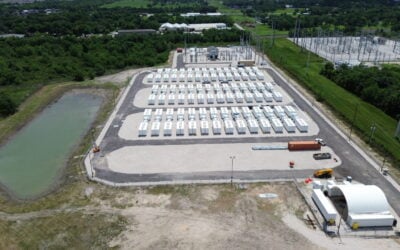
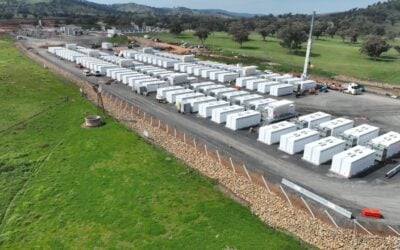
Of the total 21,112MW of battery storage capacity, approximately 16,000MW is supplied by 310 utility-scale BESS within the state, with an additional 2,000MW provided by utility-scale facilities in Nevada and Arizona.
These resources operate within the CAISO grid, which serves roughly 80% of California’s population.
The remaining 3,000MW comes from over 300,000 smaller BESS deployed at residential homes, schools, farms, businesses, and industrial sites statewide.
Battery Asset Management Summit USA 2026 will be held 15-16 September in Garden Grove, California, hosted by Energy-Storage.news publisher Solar Media (part of the Informa Group). The agenda emphasises addressing the roles of AI, cybersecurity, and second-life applications, broken down into two tracks: Technical Asset Management and Commercial Asset Management. This year, the conference is also co-located with Solar & Storage Finance Summit USA. Visit the official site for more details.