
Primergy director of project engineering and Energy Storage Awards 2026 judge, Aaroh Kharaya, on key trends transforming the battery storage stack.
Back in April 2021, I wrote an article for Energy-Storage.news reflecting on what our industry learned during the pandemic. In that piece, I highlighted the shifting business models of system integrators, the transition toward modular, containerised products, and the emerging critical importance of fire safety codes such as NFPA 855.
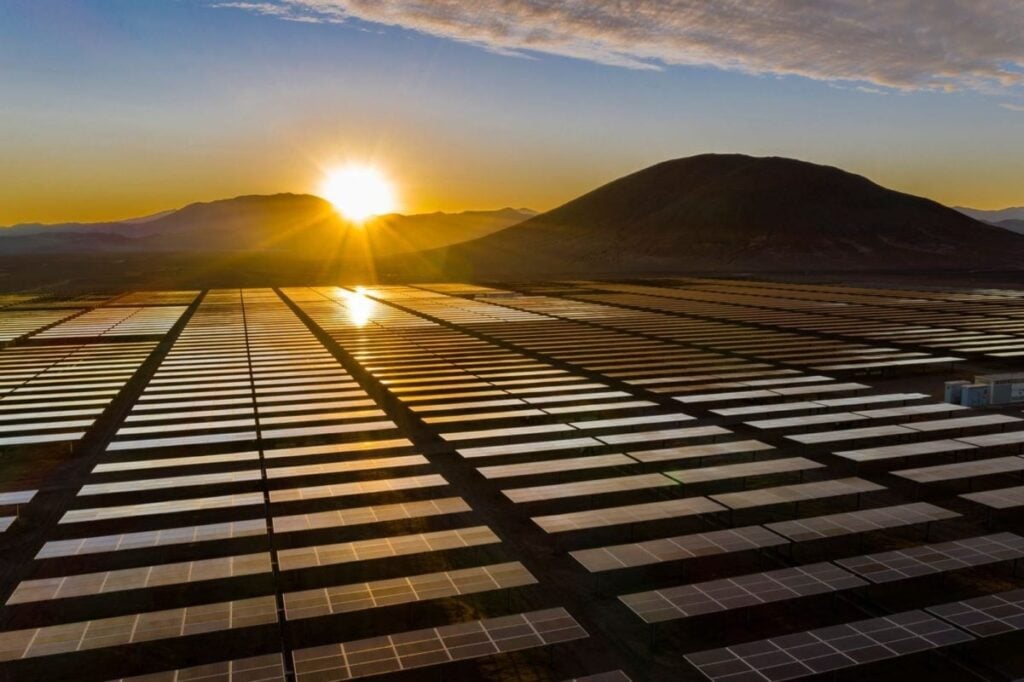
I haven’t written a follow-up since, partly because most of my time has gone into building Gemini, a 690MW solar PV plant paired with a 380MW / 4-hour battery system roughly 30 miles outside Las Vegas.
Touted as the world’s largest DC-coupled solar-plus-storage project when it came online in 2024, Gemini sits at an intersection of engineering choices that the rest of the US fleet is only now starting to adopt.
Try Premium for just $1
- Full premium access for the first month at only $1
- Converts to an annual rate after 30 days unless cancelled
- Cancel anytime during the trial period
Premium Benefits
- Expert industry analysis and interviews
- Digital access to PV Tech Power journal
- Exclusive event discounts
Or get the full Premium subscription right away
Or continue reading this article for free
We’re now more than halfway through 2026. With H.R. 1, the ‘One Big Beautiful Bill Act’ (‘OBBBA’) in the rearview mirror, the industry is navigating its sweeping effects on project development, supply chain, and safe harbouring. It is time to take a fresh look at where utility-scale energy storage is going.
Before getting into the trends, let me frame this for those outside the deepest weeds: a modern battery energy storage system is not just batteries; it is a stack. It includes a DC block (the lithium-ion battery container itself), a bi-directional power conversion system, a medium-voltage transformer, a block controller, and an energy management system (EMS).
Every one of the trends below is happening at a different layer of that stack.
1. Grid-forming inverters with black start capability become table stakes
For the better part of a decade, grid-forming (GFM) inverter capability was a premium feature. That is ending. In September 2025, the Electric Reliability Council of Texas (ERCOT) approved new Advanced Grid Support requirements, meaning any storage project signing a standard interconnection agreement on or after 1 April 2026 is obligated to provide GFM features. Once the largest competitive storage market sets this bar, the rest of the US ISOs are expected to quickly follow.
The driver behind GFM ubiquity is not just reliability; it is the massive build-out of data centres. Hyperscalers are unwilling to sit through long interconnection queues and are turning to behind-the-meter (BTM) generation tied with storage for speed-to-power. Once you invite solar, fuel cells, gas engines, and the grid onto the same medium-voltage bus, something must form and maintain voltage and frequency. Expect major original equipment manufacturers (OEMs) to make GFM the default mode within their next product cycle, and black start capability to become mainstream.
2. Inverter OEMs climb the value chain towards block controllers
In my 2021 Energy-Storage.news article, I alluded to the evolving business models in energy storage and the challenges facing full-scope integrators, highlighted by the surprising exit of industry leader NEC Energy Solutions. Today, the vacuum created by those challenges is not being filled by pure play integrators.
Instead, inverter manufacturers are moving up the stack and proactively offering block controllers. The economic logic is simple: the inverter vendor already owns the most operationally critical control loop on the site, so owning the block controller is the next logical step. While they aren’t completely taking over the EMS/dispatch side yet, developers should be actively asking inverter vendors about these offerings.
3. NFPA 855 (2026) mandates installation-level fire testing
In 2021, following battery fires in Arizona and the UK, I noted that robust fire safety mechanisms and testing would become critical for the industry. Fast forward to today, and that regulatory momentum has arrived.
The 2026 edition of NFPA 855 represents a consequential change in US stationary storage safety regulation. While previous editions allowed authorities to lean on unit-level UL 9540A test data alone, Large-Scale Fire Testing (LSFT) is now required alongside UL 9540A. This test must prove that a fire involving one ESS unit will not propagate to its neighbour. Every serious DC block OEM and fully-wrapped integrator must now meet these requirements, making installation-level fire testing the market standard.
4. Building-based BESS is effectively dead; container is the form factor
Five years ago, I predicted that modular architecture was taking over and that the traditional 40-foot International Organization for Standardization (ISO) container design would likely disappear. Today, modular outdoor containers are indeed the undisputed standard.
A second-degree effect of the 2026 edition of NFPA 855 is that building-based BESS has become untenable to build and operate. Once installation-level fire propagation testing is mandatory, an outdoor container with verified non-propagation behaviour offers a far cleaner permitting story than a building full of racks.
There are no major companies investing in boilerplate rack-based offerings intended for a building. If your project pencil still includes an indoor BESS, it is time to re-run the design.
5. The energy-density race moves from the DC block to the site
The cell-format roadmap is evolving fast. While the industry moved from 280Ah lithium iron phosphate (LFP) cells to 314Ah over the last couple of years, it has now converged on 5xx Ah as the “golden balance point”. This larger format takes meaningful cost and complexity out of the stack while allowing 20-foot containers to stay under vital transport weight limits.
However, the more interesting nuance is that the competitive surface has moved beyond the DC block. Leading OEMs are now competing on site-wide energy density (megawatt-hours per acre or per square foot). When talking to suppliers in 2026, do not stop at the cell spec. A vendor who can provide the same nameplate inside a smaller footprint gives you lower civil, cable, transformer, and land costs.
6. US LFP cell and DC-block manufacturing arrives
The US is in the middle of a structural shift from being a net importer of cells and integrated DC blocks to reshoring them at scale for the domestic market. Companies are repurposing EV cell lines into prismatic LFP production specifically for stationary storage.
The macro logic here is twofold. First, slower electric vehicle (EV) demand has created excess US cell capacity. Second, OBBBA layered on Foreign Entity of Concern (FEOC) rules that mandate a rising share of non-FEOC project costs—reaching 75% by 2030.
This combination of long-tenor tax certainty and aggressive non-FEOC thresholds is pulling manufacturing onshore and cementing LFP as the chemistry of choice. While non-lithium chemistries are losing their unique selling point regarding thermal-runaway immunity, companies involved are finding promising traction in the 100-hour ultra-long-duration space for AI data centres.
7. Independent battery analytics moves from nice-to-have to insurable infrastructure
Over the last several years, leading independent battery analytics providers have built platforms that ingest operational telemetry to produce third-party-validated state of health (SoH) estimates and cell-level imbalance detection.
These platforms are now starting to be priced into the underwriting process, with some backing their analytics with insurance-style guarantees underwritten by major insurers. A surprising share of effective capacity is lost not to cell ageing but to rack-level imbalance. Third-party analytics can identify that imbalance, giving asset owners the exact data they need to push for corrective action.
Putting the trends together
If you read these trends as a single picture, what you see is a market that is rapidly maturing in seven directions at once:
- The control layer is getting smarter and more grid-aware
- The integration layer is consolidating around vendors who can credibly own the inverter and block controller
- Installation-level fire testing is mandatory
- Building-based BESS is effectively dead; container is the form factor
- Cells are getting bigger, making sites more dense
- The supply chain is moving onshore, anchored in LFP and underwritten by tax credits with sharp non-FEOC strings attached
- Third-party analytics is quietly becoming the connective tissue that lets insurers, lenders, and operators trust the asset over a 20-year life
For developers, the practical implication is clear: the procurement and design decisions you make in 2026 will look very different from the ones made in 2023. The next five years of US storage will reward the operators who get the stack right at every layer.
About the author
Aaroh Kharaya is director of project engineering at Primergy. Aaroh Kharaya is a California-licensed Professional Engineer, IEEE Senior Member, and recognised practitioner in utility-scale energy storage engineering with more than a decade of experience spanning project development, system architecture, and technical due diligence. At Primergy, he has contributed to the design and delivery of more than 1.5 GW of battery energy storage projects worldwide.
Primergy’s Aaroh Kharaya is among the expert judges for the Energy Storage Awards 2026, hosted by our publisher. Solar Media (part of the Informa Group). Entries are open now until 4 September 2026 ahead of the ceremony in London, UK, on 19 November. Visit the Energy Storage Awards 2026 website for more details and to enter.
