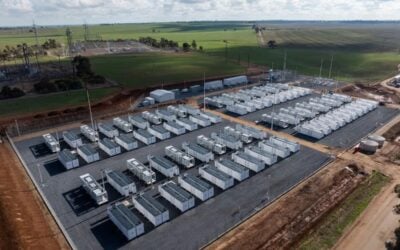
South Australia’s first Firm Energy Reliability Mechanism (FERM) tender has awarded agreements to six battery energy storage projects totalling 1,334MW and 5,336MWh.
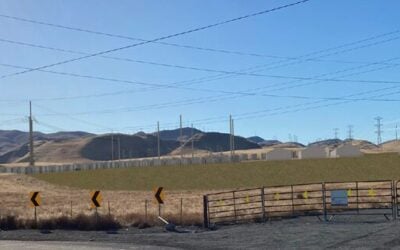
The California Energy Commission (CEC) has approved a 400MW/3,200MWh grid-scale battery storage project through the state planning agency’s Opt-In Certification Program.
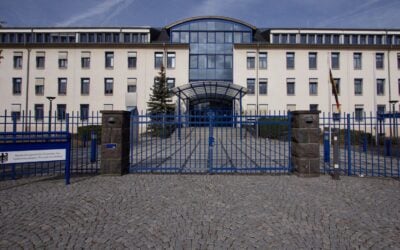
Germany’s energy system regulator has confirmed that BESS projects coming online by 4 August 2029 will be exempt from charging and discharging grid fees, opening up investment again after months of uncertainty.
While Germany is often described as the ‘hottest’ energy storage market in Europe, growing uncertainty on multiple policy and regulatory topics has led to a ‘cooling’ of investor interest.
India is seeing its first major grid-scale battery storage deployments, but efforts to domesticate the upstream supply chain are still at an early stage.
Battery energy storage systems (BESS) have emerged as the defining feature of Australia’s Capacity Investment Scheme (CIS) Tender 7, with 2GW/7.9GWh of co-located energy storage successful.
Australia has emerged as the world’s third-largest utility-scale battery energy storage market, with 4.3GW of large-scale battery storage systems reaching financial close in 2025.
The transition to new energy technologies, including grid-scale and vehicle batteries, can help fossil-fuel-dependent countries improve their energy security.
The situation and uncertainty around grid connections and grid fees in Germany is evolving, possibly enabling market participants to look beyond the August 2029 grid fee exemption cut-off date – although uncertainty is still very high.