The situation and uncertainty around grid connections and grid fees in Germany is evolving, possibly enabling market participants to look beyond the August 2029 grid fee exemption cut-off date – although uncertainty is still very high.
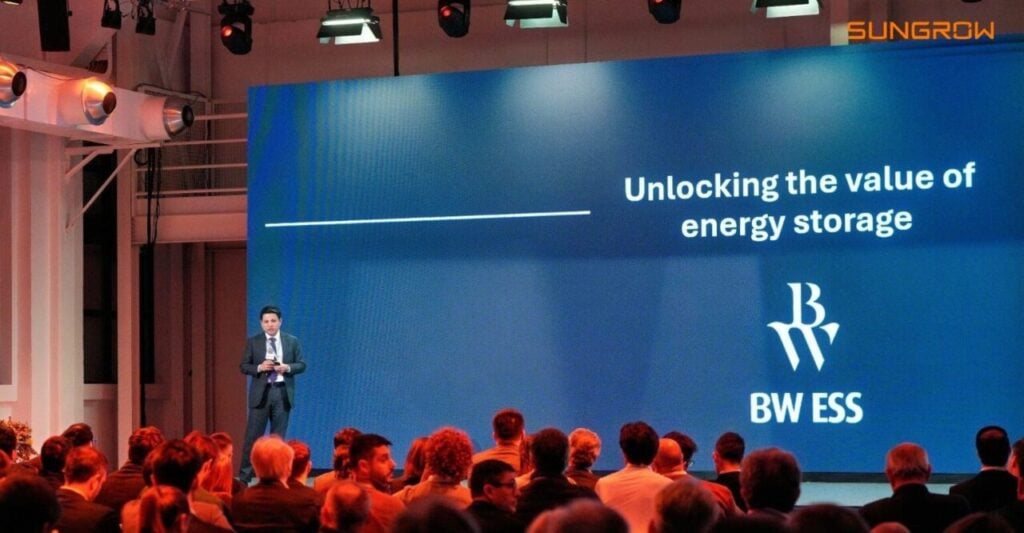
That’s partially based on comments from Roberto Jimenez, executive director at BW ESS, a battery energy storage system (BESS) owner-operator, ahead of next month’s Energy Storage Summit at The Battery Show Europe, in Stuttgart, Germany (9-11 June).
Discussing the headline topics in the market today, Jimenez said: “Germany remains one of Europe’s most exciting markets. Development premiums remain high for ready-to-build project.”
“But, the market will be changing soon. Over the past few months, the transmission system operators (TSOs) have rolled out a maturity-based process. We expect (regulator) BNetzA to issue a consultation paper on the grid fees in June. Market participants are beginning to price 2029+ projects.”
Try Premium for just $1
- Full premium access for the first month at only $1
- Converts to an annual rate after 30 days unless cancelled
- Cancel anytime during the trial period
Premium Benefits
- Expert industry analysis and interviews
- Digital access to PV Tech Power journal
- Exclusive event discounts
Or get the full Premium subscription right away
Or continue reading this article for free
The grid fees he refers to are the charging and discharging costs levied on consumers and generators. Energy storage is, by default, charged for both. The exemption from or reduction in those fees for storage is something of a hallmark of a more storage-friendly market.
Germany has given energy storage projects 20-year exemptions if the project comes online before 4 August 2029, with the future beyond that less clear.
So the fact that participants are pricing projects for beyond 2029 at all is interesting considering that uncertainty, though one would assume there is a steep discount being applied to account for that risk.
The possibility has been raised by some commentators that the exemption could cease even for those that do make it online before the August 2029 date.
Georg Gallmetzer of Eco Stor, an EPC-turned-storage-IPP with some of the largest projects in Germany, said that uncertainty is very high.
“A view of BnetzA on grandfathering terms will be published on May 27th 2026. A grandfathering deadline anticipation prior to August 4th 2029 is likely,” he added.
‘Grandfathering’ means protecting projects that are operating under existing rules or regulations from changes in rules or regulations. A grandfathering deadline before 4 August 2029 would represent the real, effective date that a project would need to come online for long-term exemption.
Initial round of CM not open for storage
Another key regulatory topic that has emerged in Germany recently is the capacity market (CM). This is an important revenue stream for large-scale BESS in the UK, Belgium, Poland and Italy.
However, assessment of a recent consultation paper indicates a low likelihood that BESS can participate in the initial round, Jimenez said, though adding that there will be future rounds.
The low likelihood is because the initial round will require a discharge duration of 10 hours, Gallmetzer pointed out.
BW ESS is the energy storage deployment arm of maritime and energy group BW Group. It is active across Europe and Australia, with its most advance portfolios of operational projects in the UK and Sweden. Its development in Germany is earlier-stage, with pipelines announced in partnership with developers Mirai Power and Zelos respectively.
Energy-Storage.news‘ free webinar next week, The Impact of Germany’s Ramp Constraints and Grid Limitations on the Energy Storage Business Case, sponsored by Clean Horizon taking place 2 June 2026 at 11am CEST. This webinar will provide a comprehensive overview of the current grid constraint landscape in Germany, with a focus on what it means in practice for the storage business case.