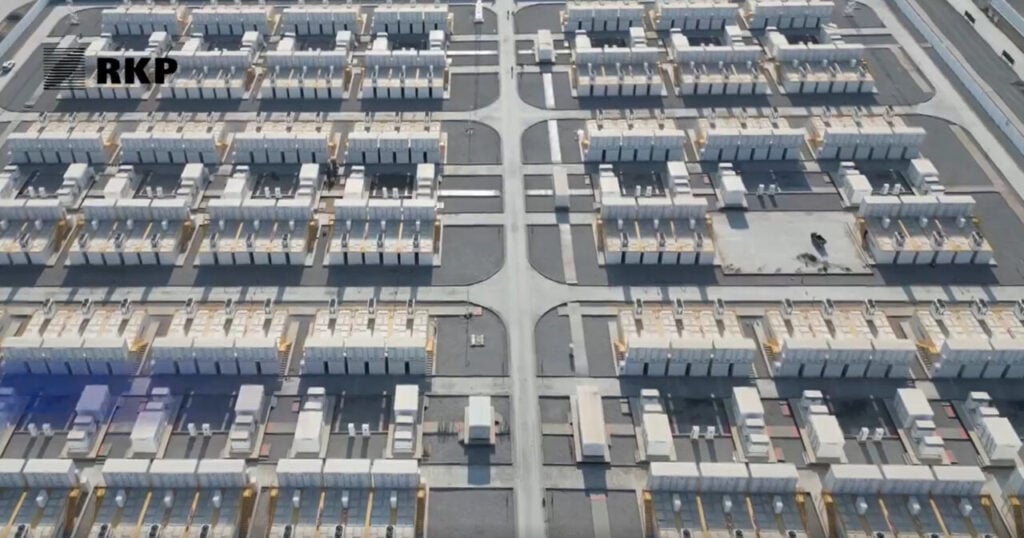
Technology provider Rongke Power has completed a 175MW/700MWh vanadium redox flow battery project in China, the largest of its type in the world.
The Dalian and Hong Kong-headquartered company announced the completion of the project on business networking site LinkedIn yesterday (6 December), providing a video of the finished project.
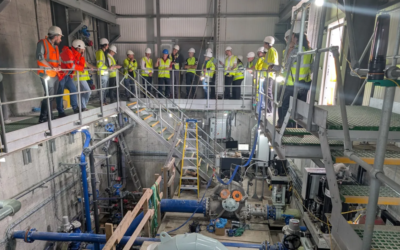
The Xinhua Ushi ESS Project is a 4-hour duration project using vanadium redox flow battery (VRFB) technology, one of the more commercially mature long-duration energy storage (LDES) technologies available on the market today.
The project will enhance grid stability, manage peak loads and integrate renewable energy, Ronke Power said on its website. It is located in the city of Ushi, and will provide grid forming, peak shaving, frequency regulation and renewable integration, Ronke added.
Try Premium for just $1
- Full premium access for the first month at only $1
- Converts to an annual rate after 30 days unless cancelled
- Cancel anytime during the trial period
Premium Benefits
- Expert industry analysis and interviews
- Digital access to PV Tech Power journal
- Exclusive event discounts
Or get the full Premium subscription right away
Or continue reading this article for free
Mikhail Nikomarov, partner at Boston Consulting Group and CEO of the VRFB arm of vanadium producer Bushveld, Bushveld Energy for nearly a decade until July 2024, commented on the post.
“700MWh is a large battery – regardless of technology. Unfortunately, VRFBs (or any flow battery technology) of this size are only happening in China,” he said.
Ronke Power is also the company behind what was previously the world’s largest VRFB system, a 100MW/400MWh project in Dalian. The first phase of the project was commissioned in 2022, and is expected to eventually double in size, but no update has been issued since the first phase came online, and the Ushi project is now the larger of the two.
In July, Ronke said that it completed what it claimed was the world’s first black start test of a large-scale thermal power unit using its flow battery technology at the Dalian project. Black start involves restoring power to the grid following a blackout, and requires grid-forming capabilities.
The Dalian and Ushi projects are the firm’s two main large-scale projects, alongside smaller projects in Shenyang and Zongkyang, totalling 5MW/10MWh and 6MW/36MWh respectively.
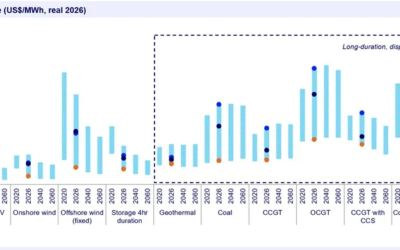
Flow batteries are one of the most commercially mature LDES technologies, alongside pumped hydro energy storage (PHES), but still have a much higher capex requirement than lithium-ion batteries, which dominate the energy storage market today. BloombergNEF did a deep dive on the costs of different LDES technologies, including flow batteries, earlier in the year, covered by Energy-Storage.news.