
Although relatively new to the energy storage space, pressure-sensitive adhesive (PSA) tape is used for protection, security and flexible configuration of equipment in many industries.
Functional bonding and protection tapes, built on multiple pressure-sensitive adhesive (PSA) technologies, have proven to be especially suitable for industries with exacting standards.
These include sectors adjacent to battery energy storage systems (BESS), such as electric vehicles (EVs), as well as many other areas, from aerospace to building and construction.
PSA tape, as the name suggests, sticks fast without the need for a separate adhesive and can create strong bonds that eliminate the need for heavy, cumbersome fixing solutions. They can also embed functional materials and serve an important purpose in thermal management and dielectric performance.
Try Premium for just $1
- Full premium access for the first month at only $1
- Converts to an annual rate after 30 days unless cancelled
- Cancel anytime during the trial period
Premium Benefits
- Expert industry analysis and interviews
- Digital access to PV Tech Power journal
- Exclusive event discounts
Or get the full Premium subscription right away
Or continue reading this article for free
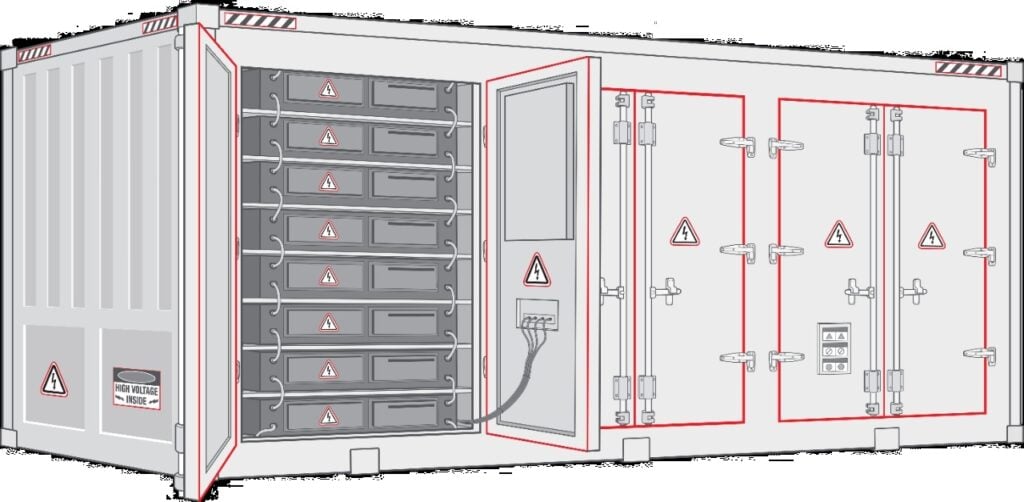
Within the battery storage industry, meanwhile, PSA tape solutions can make containers and batteries alike safer, more efficient and easier to assemble. For example, the thinness of tape can enhance system-level energy density.
However, says Bob Sherman of Argent, one of the speakers in the upcoming Energy-Storage.news webinar ‘Future forward: New ways to improve BESS thermal and dielectric performance,’ it’s clear that tapes aren’t yet well understood in the energy storage industry.
While the automotive and EV sectors now have specifications for tape and accepted applications, this is yet to happen in battery storage, due to the “newness of the field.”
That means engineers are missing out on, for example, some “very creative” solutions that precision die-cut converter Argent and tape manufacturers such as our webinar guests Avery Dennison produce and distribute.
“We’re getting rid of a coating. Instead of an expensive powder coat, we’re going to put this Volt Tough™ PET film on there, and that’s not in their minds at all,” Sherman says.
“When you have a chief engineer looking holistically at producing BESS containers, when you start looking at all the potential surface area and multiply that out, that’s a compounding effect,” says Max VanRaaphorst, business development manager for e-mobility and automotive at Avery Dennison Performance Tapes North America.
“PSA tapes can enable thinner solutions, which then gets compounded drastically. Because it’s much thinner, you can really maximise energy density. That’s a huge value in these systems,” VanRaaphorst says.
“There’s a performance benefit as well. We talk about dielectric performance. Having a thickness variation of plus or minus five microns means that there’s significantly less chance of hotspots that lead to battery degradation. In the worst-case scenarios, that can lead to a thermal runaway effect,” he says.
Tape comes in different forms, selected based on their uses and various applications across different battery storage system and subsystem components. Defining the main applications, it’s really about what each PSA tape technology can do, says Max VanRaaphorst.
“Tapes are utilised to bond in gasket materials, bond in functional foams and other types of materials to keep out the environment, to protect ingress of the area. They’re also utilised throughout the pack for dielectric protection,” he says.
“Whether that’s around prismatic cells or on cooling components or within the structure itself, [tapes] enable these very thin and effective dielectric layers.
Another key aspect is utilising these to bond with functional materials for thermal runaway mitigation between cells, modules, and other key areas where you need to protect sensitive materials throughout the structure; tape is utilised to secure them in place.”
There are also some unique tapes Avery Dennison offers that allow for “a really robust and creative venting strategy within the BESS structure.”
Easy to use, long-lasting
The key, Bob Sherman says, is to use the right tape for the right job. Once that box is checked, tapes can be handled and used with minimal dwell time. Peel the release liner off by hand or with an automated system, apply the tape and sufficient force to engage the pressure-sensitive adhesive. That’s it.
Additionally, the tape supply can be customised to suit a customer’s process. If individually cut parts are needed, or a roll, a spool, pads or any other form factor, specialists such as Argent can adapt to that. Conversely, when specialised coatings are used, the process can be much more rigid and less flexible.
“The adaptability also makes tapes easier to use from a customer standpoint,” Bob Sherman says.
Learn more about PSA tape and how it can optimise processes and solve problems that affect battery storage project success, from design to long-term operation and everything in between.
Details of next week’s webinar are immediately below this story. For now, Max VanRaaphorst explains why he is confident PSA tape is a solution that can work for the battery storage sector.
Today’s BESS industry is built less on a gold rush of merchant batteries (although this business still booms around the world) and increasingly on a foundational concept that, as energy infrastructure, energy storage assets need to last a long lifetime in service. That too applies to tape.
“We have designed and utilised PSAs that have been in the field in external applications for 30-plus years. We have confidence in the technology. We design and make recommendations with that in mind,” he says, adding that PSAs are fully polymerised and very resilient to long-term ageing and Avery Dennison has the data to prove that.
“Secondly, we have been aware of this transition to BESS, and therefore the potential increased requirements of durability and long life; we have developed specific products where we look at accelerated ageing.”
Sign up for the free webinar Future forward: New ways to improve BESS thermal and dielectric performance, with sponsor Argent and special guest Avery Dennison taking place on 27 October 2026 at 12:00 pm EST.
This session is intended for engineers and other decision-makers in the BESS manufacturing industry focused on designing systems that maximise energy density while ensuring safety and manufacturing efficiency. Attendees will learn how pressure-sensitive-adhesive (PSA) tape solutions can help them achieve those ends. Registrants can also view the session on-demand a few working days after broadcast.
