Developer Ikigai Energy and LDES firm RheEnergise have signed an MOU to develop a pipeline of projects in Italy using the latter’s ‘high-density hydro’ (HD Hydro) technology.
The partnership between the two companies will assess sites and develop projects in Italy using RheEnergise’s technology.
The technology is based on traditional pumped hydro energy storage (PHES) but uses a high-density fluid which is 2.5x more energy-dense than water, reducing the required height differential between reservoirs by 40% for the same output. This could open up more sites for pumped hydro projects.
Ikigai is primarily known for its battery energy storage system (BESS) activity, having to-date mainly been active in the UK and Italy markets. It was one of the early movers in the UK market while in 2025 signed a deal with investor CIP for projects in Italy.
Try Premium for just $1
- Full premium access for the first month at only $1
- Converts to an annual rate after 30 days unless cancelled
- Cancel anytime during the trial period
Premium Benefits
- Expert industry analysis and interviews
- Digital access to PV Tech Power journal
- Exclusive event discounts
Or get the full Premium subscription right away
Or continue reading this article for free
The companies said Ikigai is bringing its experience in developing and attracting investment for projects while RheEnergise is bringing technology and engineering know-how. Ikigai said it sees HD Hydro as a cost-effective way to add long-duration energy storage (LDES) capacity in Italy and Europe.
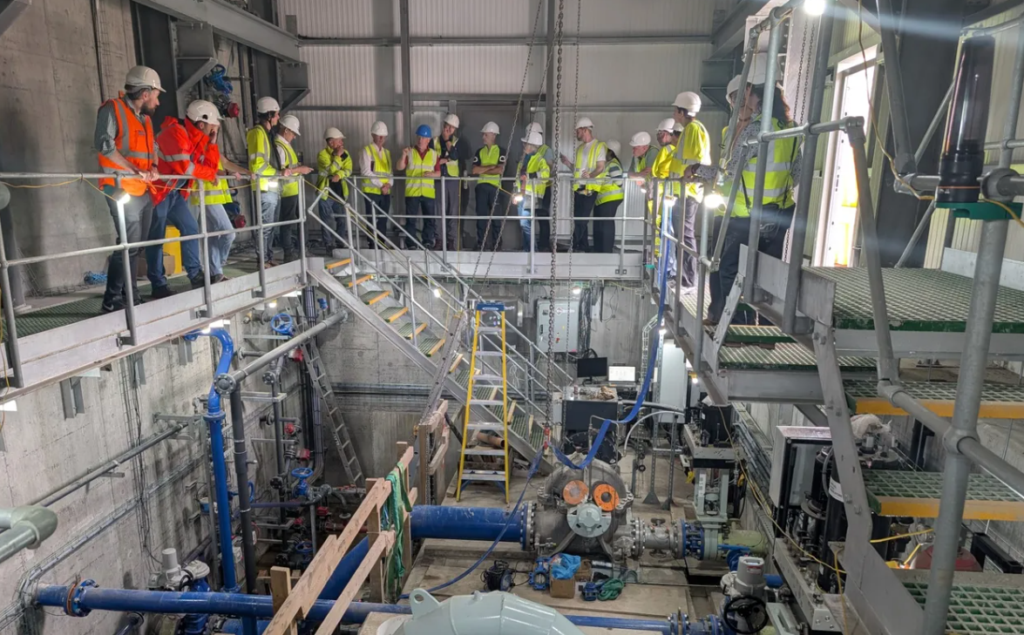
RheEnergise is UK-based and recently completed its first demonstrator project in Devon, UK. The 500kW project was launched in 2024 and then completed at the start of 2026 (covered by our sister site Solar Power Portal). The company was very vocal on the UK’s LDES cap-and-floor scheme but ultimately no projects using its tech were among the 16 shortlisted winners announced in summer.
Commenting on the announcement, Castiglioni said: “Developing a 2.8GW BESS pipeline across Italy gives us first-hand insight into what it takes to deliver successful projects, supported by strong relationships with key stakeholders, including MASE and Terna. As Italy’s wind and solar capacity grows, so does the need for long-duration storage. Together with RheEnergise, we are identifying sites with suitable topography and viable grid connections, ideally alongside wind farms, with commercial viability and bankability guiding our approach from the outset.”
Italy as a grid-scale storage market can be described as ‘skipping the step’ that the UK went through of initially short-duration projects which have gradually increased over time. From having very little capacity online, deployments in Italy are going to soar off the back of the MACSE and capacity market (CM) auctions with many projects at 6- or 8-hours duration. Pumped hydro can provide that or even more, up to around 20 or higher, cost-effectively.